I'm very excited to share with you that Lindsay Anderson: Cinema Authorship has now been published! This book is one of the outcomes of the project I worked on for three years at Stirling University 'The Cinema Authorship of Lindsay Anderson' and it is so satisfying to see it in print. I'm really enjoying reading back through it and I'm sure it's going to lead to more viewings of his films and lots of happy memories of cataloguing!
The Lindsay Anderson project was the reason I started this blog way back in February 2009
and I still find it hard to believe sometimes that I got to spend 3
years cataloguing and researching in the Lindsay Anderson Archive - I do
love being an archivist!
The book is published by Manchester University Press and is available on Amazon.
Showing posts with label Archives. Show all posts
Sunday, 4 November 2012
Wednesday, 3 October 2012
Dreams of wings
A rather whimsical post to ease myself back into my archive related blogging (it's been all about the sewing this summer). I came across this magazine cover (the back cover) when we were doing some recent appraisal work on a large collection. There were some real gems in there and this advert, from a Japanese magazine, really caught my eye - what does it all mean?! I really can't work it out - the only wings women have that I can think of are from certain sanitary products that I can't imagine men aspire to using! so what? is it just a weird translation? or maybe it means 'men' as 'mankind' and is talking about architecture as a tribute to God and angels? Or could it be to do with the lapels on his jacket? Any suggestions warmly welcomed.
In a very unprofessional way I forgot to note the date of this magazine, or it's title - but it's too good not to share!
| Advert from Japanese magazine |
Labels:
advertisements,
appraisal,
archive,
Archives,
Institute of Education
Friday, 11 May 2012
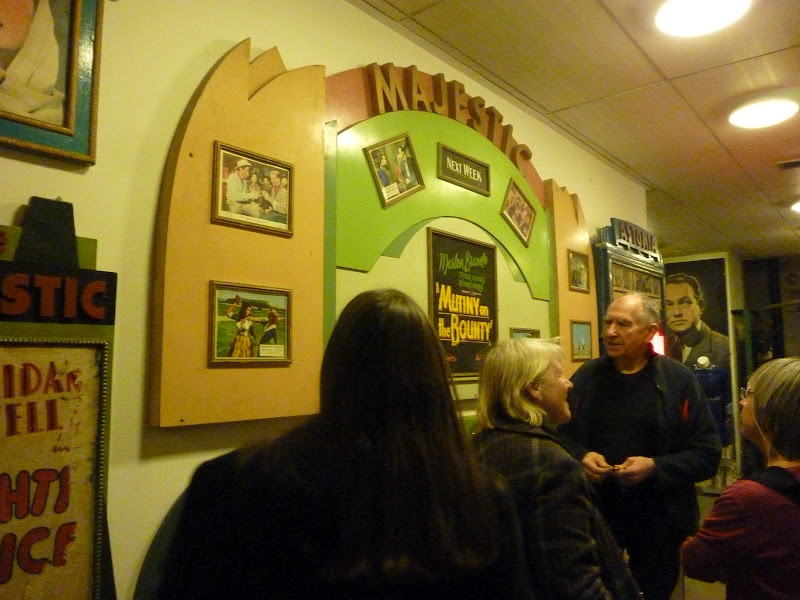
Visit to the Cinema Museum, London
This is a post I originally wrote as a piece for the newsletter of the London Region Archives and Records Association (I still have to concentrate not to say Society of Archivists!). I've altered it slightly since and included a few more photographs. The newsletter is available here.
London Metropolitan Archives (LMA) have a monthly film club: a free drop-in event with ‘screenings of archive films from LMA and other organisations, occasional guest speakers and plenty of opportunity for discussion'. Sounded perfect - two of my favourite things, film and archives - together! When I saw the March film club was a visit to the Cinema Museum in Elephant and Castle I was even more excited as I'd been meaning to visit for years. Emily, the organiser of the Film Club, was very friendly and arranged to meet everyone outside. She had arranged for us to have a tour and a film screening.
Ronald Grant was our host for the evening and he told us the story of the development of the film museum, the history of the building (it was previously a workhouse where a young Charlie Chaplin spent time), and a great history of film itself. Ronald started working as an apprentice projectionist with Aberdeen Picture Palaces Ltd at the age of 15. On moving to London he worked for the BFI and the Brixton Ritzy. A trip back to Aberdeen led to a chance encounter with his old employer who showed him warehouses full of artefacts from the cinema chain he had worked with. In order to save these from being destroyed he returned to London with a large quantity of artifacts and film equipment which formed the basis of the museum (there more on the history of the museum on their website.
The collection has continued to grow since then and covers everything you could think of from the doors and display boards of the cinema to the interior fixtures, film projectors and the films themselves (over 17 million feet of film), film journals, books and magazines, uniforms of staff from the cinemas, posters and original artwork, publicity stills and photographs of cinemas, and I’m sure lots more that I’ve missed out!
Ronald was a fantastic tour guide, weaving his personal history in and around all the objects and artefacts in the museum. He also showed us the space they use for doing events including film screenings and sessions with film makers and actors – I’ll definitely be going back!
The evening ended with an archive film screening of a selection of films including some a film made about the last tram in London ( 1952) and, to my delight, a film by the New Zealand film-maker Len Lye which I think (I knew I should have written this up when I got home that night!) was A colour box (1935). I would highly recommend a visit to anyone interesting in film, film archives and film history.
Unfortunately I couldn’t make it to the April meeting of the film club so I can’t report on how that went but I’m looking forward to the May Film Club on Wednesday 23rd May. Information on the dates of the upcoming film clubs are available here.
London Metropolitan Archives (LMA) have a monthly film club: a free drop-in event with ‘screenings of archive films from LMA and other organisations, occasional guest speakers and plenty of opportunity for discussion'. Sounded perfect - two of my favourite things, film and archives - together! When I saw the March film club was a visit to the Cinema Museum in Elephant and Castle I was even more excited as I'd been meaning to visit for years. Emily, the organiser of the Film Club, was very friendly and arranged to meet everyone outside. She had arranged for us to have a tour and a film screening.
| Exterior of the Cinema Museum, photo by me |
| Category Board featuring 'H' for Horrific!, photo by me |
| I really liked this carved poster frame with Mutiny in the Bounty (which starred Richard Harris) in the centre, photo by me |
The evening ended with an archive film screening of a selection of films including some a film made about the last tram in London ( 1952) and, to my delight, a film by the New Zealand film-maker Len Lye which I think (I knew I should have written this up when I got home that night!) was A colour box (1935). I would highly recommend a visit to anyone interesting in film, film archives and film history.
Unfortunately I couldn’t make it to the April meeting of the film club so I can’t report on how that went but I’m looking forward to the May Film Club on Wednesday 23rd May. Information on the dates of the upcoming film clubs are available here.
Tuesday, 1 May 2012
'A Confederacy of Dunces' - a missing manuscript and a found history
This is the story of a researcher who went searching for a manuscript and discovered the memories he found instead were more valuable - I just loved this when I read it so thought I'd share it!
Cory MacLauchlin has recently published a biography of the writer John Kennedy Toole. Butterfly in the Typewriter: the Tragic Life of John Kennedy Toole and the Remarkable Story of the Confederacy of Dunces tells the long and sad tale of John Kennedy Toole and his novel A Confederacy of Dunces. MacLauchlin tells how, after writing the book, Toole corresponded with an editor for two years. When after this time they still could not agree on the revisions Toole shelved the manuscript. He didn't write any more novels and after suffering a mental breakdown committed suicide at the age of 31 in 1969. However the story of the book didn't end there as Toole’s mother found the manuscript and eventually found a supporter for it in the author Walker Percy, who found a publisher. It went on to win the Pulitzer Prize in 1981. However the original manuscript which Toole's mother passed on to Walker Percy has never been found.
MacLauchlin states that
The subsequent deflation when he realises it is a copy and not the original is quickly dispelled when Lynda Martin offers to recount her memories of John Kennedy Toole. I think this bit of the article is a wonderful example of the importance of oral history, of the first-hand record, the completely not-impartial sharing of stories, of life. Cory MacLauchlin expresses it far more eloquently than me here:
Cory MacLauchlin has recently published a biography of the writer John Kennedy Toole. Butterfly in the Typewriter: the Tragic Life of John Kennedy Toole and the Remarkable Story of the Confederacy of Dunces tells the long and sad tale of John Kennedy Toole and his novel A Confederacy of Dunces. MacLauchlin tells how, after writing the book, Toole corresponded with an editor for two years. When after this time they still could not agree on the revisions Toole shelved the manuscript. He didn't write any more novels and after suffering a mental breakdown committed suicide at the age of 31 in 1969. However the story of the book didn't end there as Toole’s mother found the manuscript and eventually found a supporter for it in the author Walker Percy, who found a publisher. It went on to win the Pulitzer Prize in 1981. However the original manuscript which Toole's mother passed on to Walker Percy has never been found.
MacLauchlin states that
"I have been researching and writing about Toole for seven years, digging through archives, interviewing his friends and family, trying to decipher Toole’s character, his fears, his desires, his angels and demons. And I have often contemplated that missing manuscript. "He tells how he almost thought he had found it when talking to Lynda Martin, the sister of Toole's best friend in High School. He flies on a plane to go meet her, full of excitement at possibly finding the original manuscript.
The subsequent deflation when he realises it is a copy and not the original is quickly dispelled when Lynda Martin offers to recount her memories of John Kennedy Toole. I think this bit of the article is a wonderful example of the importance of oral history, of the first-hand record, the completely not-impartial sharing of stories, of life. Cory MacLauchlin expresses it far more eloquently than me here:
Earlier that morning, I thought I was going to find a rare artefact of literary history, which would help me gain a clearer picture of Toole’s descent towards suicide. But Lynda’s memories were far more profound to me than dissecting how Toole edited his famous novel. Of course, I had to report to my agent and my editor that I had not found the manuscript. But I took heart in what Lynda freely offered me: a vivid portrait of a young aspiring artist, exploring a city filled with unique characters. No documents in the Toole Papers offered such a depiction, a depiction far more valuable than his manuscript.As he says, of course he would still like to find the original manuscript some day and I don't intend to denigrate the importance of original manuscripts in my re-telling of this story either. When I thought was so lovely about this story was his surprise at what he did find, at these wonderful memories which won't be around forever and which, unlike the manuscript, could not still be discovered another 30/40 years down the line.. until of course MacLauchlin turned up to find the manuscript and instead ended up filming her oral testimony of John Kennedy Toole.
Friday, 30 March 2012
Archival links in published books
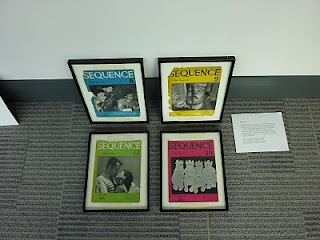
I think this is a tendency in all archivists really, or in anyone who loves their jobs - finding connections everywhere! In my case I always seem to find archive connections in what I'm reading, listening to, talking to friends about, or going to see in exhibitions. I'm still really enjoying reading through Raymond Chandler's published letters in The Raymond Chandler Papers (sadly reaching the end of the book now!). I was particularly happy when I came across a Lindsay Anderson link (if you're new here then I should point out that I spent 3 years working at Stirling University Archives cataloguing parts of Lindsay Anderson's archive). Towards the end of the book there is a letter from Raymond Chandler to the editor of Sequence magazine. This is undated but is in amongst the early 1952 letters which would have been about right given the content of the letter.
Sequence was a film journal started by Lindsay Anderson, Gavin Lambert and Peter Ericsson. It started in 1948 and fourteen issues were published, the final in 1952. I still get so happy when I come across links to Lindsay Anderson so of course my first thought was to check the catalogue. I knew I'd catalogued all the Sequence correspondence and I didn't have any memory of a Raymond Chandler letter but of course there's no way of remembering everything you've catalogued! Unfortunately it's not there so the original of the letter didn't make it to the Lindsay Anderson Archive. In the book the authors say that Raymond Chandler's archive is held between the Bodlein and UCLA, though neither of these have their Chandler collection catalogued to item level online so I can't even see which archive holds Chandler's carbon copy of the letter he sent.
It's disappointing the letter isn't in the Lindsay Anderson Archive but then it would be impossible for an archive collection ever to be 'complete'. Maybe the letter is in the archive of one of the other founders of Sequence (Gavin Lambert's papers are at the Howard Gotlieb Archival Research Centre in Boston) , maybe it ended up with someone else who was a fan of Chandler, or maybe it just got lost of misplaced at some point before the collection arrived at the University. We'll never know I suppose.
Interestingly, there is a mention of Raymond Chandler in the Sequence series of the Lindsay Anderson Archive. It's in section LA/4/1/6 'Letters from readers and subscribers to Sequence' and is a letter from J. B. Priestley to a Mr Panting and my catalogue description reads
“I hate to see the magazine fold. There is so little intelligent writing about films, so little that walks delicately but surely between the avant garde type, which is largely a reflection of neuroticism, and the deadly commercial stuff. I think you have been a little too hard at times on English films, which even when not top notch do give you the feeling of moving around in a civilised world – something which the Hollywood product falls pretty short of as a rule. Even if you had been less intelligent, I should be sorry to see you go. Sight and Sound is all very well so far as it goes. I suppose it is subsidised, and everything that is subsidised compromises, and everything that compromises ends up by being negative."
| Sequence covers, ready to go up as part of an exhibition at Stirling Uni ©Lindsay Anderson Archive, University of Stirling |
It's disappointing the letter isn't in the Lindsay Anderson Archive but then it would be impossible for an archive collection ever to be 'complete'. Maybe the letter is in the archive of one of the other founders of Sequence (Gavin Lambert's papers are at the Howard Gotlieb Archival Research Centre in Boston) , maybe it ended up with someone else who was a fan of Chandler, or maybe it just got lost of misplaced at some point before the collection arrived at the University. We'll never know I suppose.
Interestingly, there is a mention of Raymond Chandler in the Sequence series of the Lindsay Anderson Archive. It's in section LA/4/1/6 'Letters from readers and subscribers to Sequence' and is a letter from J. B. Priestley to a Mr Panting and my catalogue description reads
Thanks for sending a copy of Sequence; and expressing interest in an article on Raymond Chandler.It's dated 30/05/1949 so I wonder if there was an article in Sequence which discussed Raymond Chandler's writing, either novels or screen writing, or a film adaptation of one of his books. Mr. Panting seems an odd name but I seem to remember that the authors of Sequence would sometimes write under pseudonyms. I know from the Raymond Chandler Papers that Chandler knew Priestley, but I don't know when from - the earliest mention of Priestley in the book is from 1951. I'm going to have delve a bit further into this sometime, starting with another good look through Sequence - a good excuse for a visit to the new BFI library at Southbank!
Tuesday, 13 March 2012
Archives and the filmmaker - Pedro Almodóvar
Sticking to the same format as their previous '..Archives' books on the Ingmar Bergman and Stanley Kubrick Archives, Taschen have released 'The Pedro Almodovar Archives'. This book came out in October 2011 according to Amazon but somehow it managed to pass me by. All three of these books look very beautiful, are well laid out with high quality reproductions and very well researched. However I'm only going on having seen them online as at roughly £100 a pop I can't afford to buy one!
It's an interesting concept, particularly in the case of Almodóvar, as the film director himself is authorising and controlling the use of his archive to project an image of himself which, we assume, is the image which he wants people to believe in and buy into. Here's a quote I found from the Taschen web page for the book:
For this unprecedented monograph, Pedro Almodóvar has given TASCHEN complete access to his archives, including never-before-published images, such as personal photos he took during filming. In addition to writing captions for the photos, Almodóvar invited prominent Spanish authors to write introductions to each of his films, and selected many of his own texts to accompany this visual odyssey through his complete works.It's not that I think the use of personal archives in the construction of self-image is a new idea, or a bad idea. It's just interesting to see it in this form. As well as constructing self-image these books really seem to glorify the archives (would fetishises be too strong a word?) in a way that equates their uniqueness with something exclusive that can be yours if you can afford the asking price. With the added incentive to get in there quick to ensure you get an' actual piece of the archive' in the form of a piece of film strip, in the Almodovar book from 'Volver' (2006). I'm all for glorifying archives, it's just a shame when there's such a price tag attached. However I'm happy it's available online for a browse through, and, you know, if anyone wanted to buy me a copy I certainly wouldn't say no!
Wednesday, 1 February 2012
On reading other people's letters
The joys of cataloguing correspondence - I'm sure I've gone on about it plenty on this blog, and on my work blog so apologies if you're bored of it by now. There's a real feeling of privilege I get when reading someone else's correspondence. I hasten to add this doesn't mean I steal people's mail or anything like that - I 'm very lucky in that I get to read other people's mail as part of my job! I also enjoy reading edited collections of correspondence such as The Raymond Chandler Papers.
The letters can be quite hard-going sometimes, particularly when he's suffering from writer's block or has finished up working on a film script. Like with any collection of letters, you really get the sense that you're getting to know the individual, and for me, they also give a real sense of the richness of archives - but then I'm slightly archive-obsessed!
One of my favourite exchange of letters so far has been about Farewell, my Lovely. The title of the book was the cause of some disagreement. In a letter to fellow writer George Harmon Coxe on 27 June 1940 Chandler explains that the publishers wanted to call his second novel The Second Murderer. Chandler goes on to say 'when I turned the manuscript in they howled like hell about the title, which is not at all a mystery title, but they gave in. We'll see. I think the title is an asset. They think it is a liability'. Apparently this book was largely ignored by the critics and the publishers blamed this, at least partly, on the title. I really enjoyed Farewell, my Lovely when I read it recently but I've yet to see the film - I can't imagine anyone else but Humphrey Bogart as Philip Marlowe!
The book includes some non-fiction writing alongside the letters and, as it's topical at the moment I thought I'd include a piece he wrote on the Oscars. In 1946 Chandler, fed up and jaded from working for Hollywood studios, had moved to La Jolla to focus on his own writing. However, he returned to Los Angeles to report for 'The Atlantic Monthly' on the 1946 Oscar ceremony. Here are some of my personal highlights from his report:
‘in the motion picture business we possess an art medium whose glories are not all behind us. It has already produced great work, and if, comparatively and proportionately, far too little of that great work has been in achieved in Hollywood, I think that’s all the most reason why in its annual tribal dance of the stars and big-shot producers Hollywood should contrive a little quiet awareness of the fact. Of course it won’t. I’m just daydreaming.’
‘If you can go past those awful idiot faces on the bleachers outside the theatre without a sense of collapse of the human intelligence; if you can stand the hailstorm of flash bulbs popping at the poor patient actors who, like kings and queens, have never the right to look bored; if you can glance out over this gathered assemblage to what is supposed to be the elite of Hollywood and say to yourself without a sinking feeling, ‘in these hands lie the destinies of the only original art form the modern world has ever conceived’; if you can laugh, and you probably will, at the cast-off jokes from the comedians on the stage, stuff that wasn’t good enough to use on their radio shows... if you can do all these things with grace and pleasure, and not have a wild and forsaken horror at the thought that most of these people actually take this shoddy performance seriously ... if you can do all these things and still feel the next morning that the picture business is worth the attention of one single intelligent, artistic mind, then in the picture business you certainly belong.”
It doesn't really sound like a whole lot has changed in Hollywood, or at the Oscars, does it?!
| [photo by me] |
The letters can be quite hard-going sometimes, particularly when he's suffering from writer's block or has finished up working on a film script. Like with any collection of letters, you really get the sense that you're getting to know the individual, and for me, they also give a real sense of the richness of archives - but then I'm slightly archive-obsessed!
One of my favourite exchange of letters so far has been about Farewell, my Lovely. The title of the book was the cause of some disagreement. In a letter to fellow writer George Harmon Coxe on 27 June 1940 Chandler explains that the publishers wanted to call his second novel The Second Murderer. Chandler goes on to say 'when I turned the manuscript in they howled like hell about the title, which is not at all a mystery title, but they gave in. We'll see. I think the title is an asset. They think it is a liability'. Apparently this book was largely ignored by the critics and the publishers blamed this, at least partly, on the title. I really enjoyed Farewell, my Lovely when I read it recently but I've yet to see the film - I can't imagine anyone else but Humphrey Bogart as Philip Marlowe!
The book includes some non-fiction writing alongside the letters and, as it's topical at the moment I thought I'd include a piece he wrote on the Oscars. In 1946 Chandler, fed up and jaded from working for Hollywood studios, had moved to La Jolla to focus on his own writing. However, he returned to Los Angeles to report for 'The Atlantic Monthly' on the 1946 Oscar ceremony. Here are some of my personal highlights from his report:
‘in the motion picture business we possess an art medium whose glories are not all behind us. It has already produced great work, and if, comparatively and proportionately, far too little of that great work has been in achieved in Hollywood, I think that’s all the most reason why in its annual tribal dance of the stars and big-shot producers Hollywood should contrive a little quiet awareness of the fact. Of course it won’t. I’m just daydreaming.’
‘If you can go past those awful idiot faces on the bleachers outside the theatre without a sense of collapse of the human intelligence; if you can stand the hailstorm of flash bulbs popping at the poor patient actors who, like kings and queens, have never the right to look bored; if you can glance out over this gathered assemblage to what is supposed to be the elite of Hollywood and say to yourself without a sinking feeling, ‘in these hands lie the destinies of the only original art form the modern world has ever conceived’; if you can laugh, and you probably will, at the cast-off jokes from the comedians on the stage, stuff that wasn’t good enough to use on their radio shows... if you can do all these things with grace and pleasure, and not have a wild and forsaken horror at the thought that most of these people actually take this shoddy performance seriously ... if you can do all these things and still feel the next morning that the picture business is worth the attention of one single intelligent, artistic mind, then in the picture business you certainly belong.”
It doesn't really sound like a whole lot has changed in Hollywood, or at the Oscars, does it?!
Labels:
Archives,
correspondence,
Hollywood,
Oscars,
Raymond Chandler
Wednesday, 16 November 2011
Wednesday wonders - webinar on website editing training
So the wonder is.. it worked! Call me pessimistic but an online training session which required 3 different types of software and which would be 'attended' by people of varying levels of techy knowledge, well let's just say I wasn't convinced it would work. However, I am happy to admit I was wrong. The session went really well, we could all hear each other and see the screen of the trainer, Fiona Beckett.
I recently took up the voluntary post of Web Officer for the London Region of the Archives and Records Association (previously the Society of Archivists) and the training session was to help all the web and communication officers use the new ARA website.
This is how the London region homepage looks at the moment - nothing really wrong with it but it could do with a few images maybe? I've edited webpages before and obviously use blogger, as well as Wordpress for work, so uploading images and attachments isn't a problem. However what I didn't know was that when adding images and attachments to this website we also add them to the content management system so now I know how to do that properly so the information is stored sensibly and is easily located in the future.
There was lots of useful information that will hopefully help with encouraging more members to use the community section and I'm looking forward to getting on with updating and changing the web pages. I guess the issue is trying to make logging in and using the London region pages worthwhile - that means starting debates and discussions, posting interesting information on events, photographs of previous events and, well anything else that would be useful to archivists in London. Anyone got any suggestions?
So, now I can go and experiment with the London region webpages - I'll keep you posted!
I recently took up the voluntary post of Web Officer for the London Region of the Archives and Records Association (previously the Society of Archivists) and the training session was to help all the web and communication officers use the new ARA website.
This is how the London region homepage looks at the moment - nothing really wrong with it but it could do with a few images maybe? I've edited webpages before and obviously use blogger, as well as Wordpress for work, so uploading images and attachments isn't a problem. However what I didn't know was that when adding images and attachments to this website we also add them to the content management system so now I know how to do that properly so the information is stored sensibly and is easily located in the future.
There was lots of useful information that will hopefully help with encouraging more members to use the community section and I'm looking forward to getting on with updating and changing the web pages. I guess the issue is trying to make logging in and using the London region pages worthwhile - that means starting debates and discussions, posting interesting information on events, photographs of previous events and, well anything else that would be useful to archivists in London. Anyone got any suggestions?
So, now I can go and experiment with the London region webpages - I'll keep you posted!
Sunday, 23 October 2011
Treasures from the Archives - Wanda
On looking through the London Film Festival brochure all the films that immediately appealed to me were from, yes, you've guessed it the 'Treasures from the Archives' strand. Then, when the reality of my bank balance hit I had to whittle down what I was going to see to a select few, well a select one actually - Wanda.
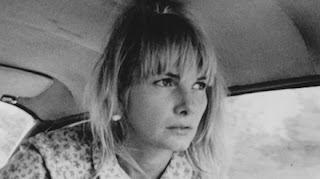
I hadn't heard of the female director Barbara Loden before but the description in the brochure really appealed to me - a 'neo-realist gem... a rural Pennsylvanian housewife embarked on a flight to nowhere.. Wanda floats through her own life as if witness to it'. After recently rewatching Lindsay Anderson's The White Bus with Patricia Healey's depiction of another girl passively watching her own life drift past, I was intrigued by Wanda and am pleased to say my curiosity was well rewarded!
I obviously hadn't read the brochure properly as I didn't notice that Ross Lipman, who restored the film at UCLA, would be introducing the film. This was such a nice surprise as he gave a brilliant description of the problems facing him with the restoration of a film which was originally meant to look lo-fi and gritty. The story with Wanda is one that I've heard so many times before sadly, a film lab was closing down and called UCLA to ask if they wanted a look before the stock all went in a skip. Lipman found the reels for Wanda a day before they were due to be chucked and lost forever. In an article about the film from the Guardian (17/10/201) Lipman told the story of his discovery of the reels, marked 'Wanda', "Unspooling them on my workbench I quickly realised they were the original camera rolls, and that was only the beginning. The film was shot on a beautiful, unfaded Ektachrome reversal stock: any potential restoration would perhaps look better than even the original release. One day more and the original would have gone to landfill."
I realised when Ross Lipman got up on the stage that I recognised him and when he started talking about other American neo-realist films 'Killer of Sheep' and 'The Exiles' I remembered - I'd heard him talking about the preservation of The Exiles when I went to see it at UCLA (which I never actually got round to writing about, except here, before I went). He explained how until relatively recently there wasn't much talk of American neo-realism as so many of these films had disappeared into obscurity - citing The Exiles and The Killer of Sheep as two other examples (I was lucky enough to have seen Killer of Sheep at the GFT, turns out I'm a bit of a UCLA film preservation unit groupie!). These films were pretty obscure upon release, Wanda for example was actually made, according to Lipman, as a tax write-off and although it achieved critical success this didn't translate into commercial success for Loden. It made me wonder what Lindsay Anderson would have made of them, I wonder if he ever saw any of them?It's weird that even a year after moving from Stirling and leaving the Lindsay Anderson Collection behind I still wonder what he would have made of certain films, or film makers. I guess to me, that's one of the wonderful things about being an archivist - getting all bound up with the work you're cataloguing and making connections with the people and events you're cataloguing.
On to Wanda itself - what an incredible film! It has stuck with me for days and I imagine it will do long into the future. When I first read the description I thought of The White Bus, I also thought of more recent female-directed and female-focused films such as Wendy and Lucy and Winter's Bone and in many ways there are similarities. The lack of any soundtrack - all the noises, music and silences are part of the real life of the film, there is no artificial soundtrack. I love this in films, it can be quite disconcerting at first, it makes it a lot harder to watch in a way as you can't escape into it in the same way, instead you're forced to confront the reality of the situation the characters live in. The opening scenes of Wanda are completely silent from what I can remember, maybe a few noises of feet walking on gravel but no music, no talking, and it's all the more powerful for it.
Very early on in the film there's a scene where Wanda is walking across coal fields and the camera follows her in real time, painfully slow as she walks across this barren landscape, walking to meet someone but really going nowhere. As Wanda gets caught up in the crimes of a man she meets on the road she drifts from one situation to another, alienate, alone and hopeless. It really made me think about what it would be like to be born into that kind of poverty with no hope of any alternative, any way out, as did Wendy and Lucy and even more so Winter's Bone. Wanda was expected to be a housewife, raise a family and bring more children into the same cycle of poverty she grew up in - it's no wonder she wanted something different, she just didn't know what. I liked that there's no great realisation, she's not a heroine in the sense that she changes her life round and moves onwards and upwards, she just changes her life because the alternative was to grim for her to bear. I would love the chance to see this film again, and thanks to the work of Ross Lipman
![]() |
| Barbara Loden, director, writer and star of Wanda. Image courtesy of BFI website |
I hadn't heard of the female director Barbara Loden before but the description in the brochure really appealed to me - a 'neo-realist gem... a rural Pennsylvanian housewife embarked on a flight to nowhere.. Wanda floats through her own life as if witness to it'. After recently rewatching Lindsay Anderson's The White Bus with Patricia Healey's depiction of another girl passively watching her own life drift past, I was intrigued by Wanda and am pleased to say my curiosity was well rewarded!
I obviously hadn't read the brochure properly as I didn't notice that Ross Lipman, who restored the film at UCLA, would be introducing the film. This was such a nice surprise as he gave a brilliant description of the problems facing him with the restoration of a film which was originally meant to look lo-fi and gritty. The story with Wanda is one that I've heard so many times before sadly, a film lab was closing down and called UCLA to ask if they wanted a look before the stock all went in a skip. Lipman found the reels for Wanda a day before they were due to be chucked and lost forever. In an article about the film from the Guardian (17/10/201) Lipman told the story of his discovery of the reels, marked 'Wanda', "Unspooling them on my workbench I quickly realised they were the original camera rolls, and that was only the beginning. The film was shot on a beautiful, unfaded Ektachrome reversal stock: any potential restoration would perhaps look better than even the original release. One day more and the original would have gone to landfill."
I realised when Ross Lipman got up on the stage that I recognised him and when he started talking about other American neo-realist films 'Killer of Sheep' and 'The Exiles' I remembered - I'd heard him talking about the preservation of The Exiles when I went to see it at UCLA (which I never actually got round to writing about, except here, before I went). He explained how until relatively recently there wasn't much talk of American neo-realism as so many of these films had disappeared into obscurity - citing The Exiles and The Killer of Sheep as two other examples (I was lucky enough to have seen Killer of Sheep at the GFT, turns out I'm a bit of a UCLA film preservation unit groupie!). These films were pretty obscure upon release, Wanda for example was actually made, according to Lipman, as a tax write-off and although it achieved critical success this didn't translate into commercial success for Loden. It made me wonder what Lindsay Anderson would have made of them, I wonder if he ever saw any of them?It's weird that even a year after moving from Stirling and leaving the Lindsay Anderson Collection behind I still wonder what he would have made of certain films, or film makers. I guess to me, that's one of the wonderful things about being an archivist - getting all bound up with the work you're cataloguing and making connections with the people and events you're cataloguing.
On to Wanda itself - what an incredible film! It has stuck with me for days and I imagine it will do long into the future. When I first read the description I thought of The White Bus, I also thought of more recent female-directed and female-focused films such as Wendy and Lucy and Winter's Bone and in many ways there are similarities. The lack of any soundtrack - all the noises, music and silences are part of the real life of the film, there is no artificial soundtrack. I love this in films, it can be quite disconcerting at first, it makes it a lot harder to watch in a way as you can't escape into it in the same way, instead you're forced to confront the reality of the situation the characters live in. The opening scenes of Wanda are completely silent from what I can remember, maybe a few noises of feet walking on gravel but no music, no talking, and it's all the more powerful for it.
Very early on in the film there's a scene where Wanda is walking across coal fields and the camera follows her in real time, painfully slow as she walks across this barren landscape, walking to meet someone but really going nowhere. As Wanda gets caught up in the crimes of a man she meets on the road she drifts from one situation to another, alienate, alone and hopeless. It really made me think about what it would be like to be born into that kind of poverty with no hope of any alternative, any way out, as did Wendy and Lucy and even more so Winter's Bone. Wanda was expected to be a housewife, raise a family and bring more children into the same cycle of poverty she grew up in - it's no wonder she wanted something different, she just didn't know what. I liked that there's no great realisation, she's not a heroine in the sense that she changes her life round and moves onwards and upwards, she just changes her life because the alternative was to grim for her to bear. I would love the chance to see this film again, and thanks to the work of Ross Lipman
Labels:
Archives,
Barbara Loden,
BFI,
Film preservation,
London Film Festival,
Ross Lipman,
UCLA,
Wanda
Wednesday, 22 June 2011
Wednesday wonders - BFI Southbank
I have always loved visiting the Southbank when I was visiting London and that hasn't changed any since I moved here. I remember the first time I got the bus back over Waterloo Bridge at night time after work, I saw all the lights along the river and got such a thrill, and I still feel that, sometimes I still have to pinch myself that I'm living in London! So I thought as my Wednesday wonder this week I would pay tribute to one of my favourite places on the Southbank, the British Film Institute! Now technically of course one of my favourites parts of the BFI, the Library and Archive, isn't on Southbank at all but on Stephen Street. However the last time I went down to the Southbank there was a great display on the upstairs corridor of 'Recent acquisitions at the BFI National Archive'
The exhibition showed archive material (they call it Special Collections to differentiate it from the Film Archive) from a number of people including Karel Reisz (film director) and Ralph Cooper (a publicist).
The first photo includes a scrapbook on Merle Oberon compiled by Deborah Kerr and telegrams from Sophia Loren! In the second photo are letters from Rachel Roberts and an annotated script for Saturday Night and Sunday Morning. I was very excited by the Karel Reisz material as I'd heard they got his archive whilst I was working in the Lindsay Anderson Archive. Anderson and Reisz were friends and were both part of the Free Cinema movement so there was a good deal of material by and about Reisz and I always find it exciting to see material from other archives about individuals or organisations I've worked on!
Both the bars in the BFI are great, though I have noticed the Benugo Bar staff can be pretty rude - this is balanced out though by the friendly waiting staff, the good drinks and bar snacks, and the lovely surroundings!
And then, there's the exhibition room.. I've been to so many great exhibitions in the exhibition room - most memorable perhaps was the Jane and Louise Wilson 'Unfolding the Aryan Papers' which I blogged about here. There's been rumours that this is where the Library and Archive will be moving too but I really hope that's not true, for a number of reasons. Firstly it's great having an exhibition space at the Southbank site and I'd miss it if it went but FAR more importantly, it's a tiny site compared to the current library which would mean staffing cuts (though from the sounds of it these are unfortunately inevitable) and I just can't imagine there's enough space there for all the wonderful resources in Stephen Street.
The BFI Southbank is also home to the fabulous Mediatheque - where you can go to watch a huge selection of films and television shows, for free! I still have to go in to watch Blue Black Permanent - Margaret Tait's only feature film, hmm maybe something to do this weekend if the rain keeps up!
So if anyone is in London this weekend and wondering what to do? You couldn't go wrong with a visit to the BFI.
The exhibition showed archive material (they call it Special Collections to differentiate it from the Film Archive) from a number of people including Karel Reisz (film director) and Ralph Cooper (a publicist).
The first photo includes a scrapbook on Merle Oberon compiled by Deborah Kerr and telegrams from Sophia Loren! In the second photo are letters from Rachel Roberts and an annotated script for Saturday Night and Sunday Morning. I was very excited by the Karel Reisz material as I'd heard they got his archive whilst I was working in the Lindsay Anderson Archive. Anderson and Reisz were friends and were both part of the Free Cinema movement so there was a good deal of material by and about Reisz and I always find it exciting to see material from other archives about individuals or organisations I've worked on!
Both the bars in the BFI are great, though I have noticed the Benugo Bar staff can be pretty rude - this is balanced out though by the friendly waiting staff, the good drinks and bar snacks, and the lovely surroundings!
And then, there's the exhibition room.. I've been to so many great exhibitions in the exhibition room - most memorable perhaps was the Jane and Louise Wilson 'Unfolding the Aryan Papers' which I blogged about here. There's been rumours that this is where the Library and Archive will be moving too but I really hope that's not true, for a number of reasons. Firstly it's great having an exhibition space at the Southbank site and I'd miss it if it went but FAR more importantly, it's a tiny site compared to the current library which would mean staffing cuts (though from the sounds of it these are unfortunately inevitable) and I just can't imagine there's enough space there for all the wonderful resources in Stephen Street.
The BFI Southbank is also home to the fabulous Mediatheque - where you can go to watch a huge selection of films and television shows, for free! I still have to go in to watch Blue Black Permanent - Margaret Tait's only feature film, hmm maybe something to do this weekend if the rain keeps up!
So if anyone is in London this weekend and wondering what to do? You couldn't go wrong with a visit to the BFI.
Wednesday, 15 June 2011
Wednesday Wonders - Together in Electric Dreams - Emancipation from Drudgery'
"As long ago as November, 1924, a small group of clear-sighted women foresaw rapid development of the use of electricity in domestic spheres, and from their belief that it was destined to become the most valuable factor in modern home life, developed the Electrical Association for Women".
I don't quite know why but when I first read this on the cover of one of their pamphlets I read it as if I was reading the Star Wars credits and imagined the words rolling down the screen - a long, long time ago, etc. It's not quite that dramatic but it was still very striking to me that something which we now take so much for granted was then such a novelty. I have to confess to having little, i.e. no, idea how electricity works, I just accept that I walk into a room and turn the light on, that my washing machine works, that I can plug in a hoover and clean our tiny flat in under 10 minutes etc. In 1924 though, electricity in the home was only beginning. The aim of the EAW was 'to eliminate from housekeeping the drudgery which the dirt and grime of mechanical process has brought into it' - sounds good eh?! Their slogan was 'Emancipation from Drudgery' and their purpose was twofold - 1. ensure that all women knew about electricity, how they could get it , and how best to make use of it 2. to put forward women's views on electrical matters.
Now I am not getting all rose-tinted glasses sentimental about the past here - the more equal sharing of household work now - cleaning and cooking - is something which I am all for of course! What this file of correspondence and pamphlets made me remember was how much harder it must have been before electricity. It also reminded me that the assumption of these kinds of comforts is of course sadly still limited and in no way equal throughout the world.
Something else which comes up a lot in the correspondence is the use of questionnaires and experiments with women to test the safety and ease of use of electrical appliances. Then, and probably still now given the ratio of men to women engineers, electrical appliances for the home would be designed by men, but in the 1920s at least, used almost exclusively by women. The tests they would carry out would measure things like what height of oven is the most convenient to use, how to make electric hobs safer around children, right through to how to change a fuse and how to wire a plug.
I've included a few more images from one of the EAW publications - the Electrical Housecraft School is where a lot of the testing and training was carried out. The bottom illustrations I just included because the pamphlet was full of them and I thought they were lovely!
N.B. The Institute of Engineering and Technology holds extensive archives on the EAW -
![]() |
| Image from EAW pamphlet, NUWT Collection, ref no UWT/D/55/17 © Institute of Education |
I don't quite know why but when I first read this on the cover of one of their pamphlets I read it as if I was reading the Star Wars credits and imagined the words rolling down the screen - a long, long time ago, etc. It's not quite that dramatic but it was still very striking to me that something which we now take so much for granted was then such a novelty. I have to confess to having little, i.e. no, idea how electricity works, I just accept that I walk into a room and turn the light on, that my washing machine works, that I can plug in a hoover and clean our tiny flat in under 10 minutes etc. In 1924 though, electricity in the home was only beginning. The aim of the EAW was 'to eliminate from housekeeping the drudgery which the dirt and grime of mechanical process has brought into it' - sounds good eh?! Their slogan was 'Emancipation from Drudgery' and their purpose was twofold - 1. ensure that all women knew about electricity, how they could get it , and how best to make use of it 2. to put forward women's views on electrical matters.
Now I am not getting all rose-tinted glasses sentimental about the past here - the more equal sharing of household work now - cleaning and cooking - is something which I am all for of course! What this file of correspondence and pamphlets made me remember was how much harder it must have been before electricity. It also reminded me that the assumption of these kinds of comforts is of course sadly still limited and in no way equal throughout the world.
Something else which comes up a lot in the correspondence is the use of questionnaires and experiments with women to test the safety and ease of use of electrical appliances. Then, and probably still now given the ratio of men to women engineers, electrical appliances for the home would be designed by men, but in the 1920s at least, used almost exclusively by women. The tests they would carry out would measure things like what height of oven is the most convenient to use, how to make electric hobs safer around children, right through to how to change a fuse and how to wire a plug.
I've included a few more images from one of the EAW publications - the Electrical Housecraft School is where a lot of the testing and training was carried out. The bottom illustrations I just included because the pamphlet was full of them and I thought they were lovely!
![]() |
| Image from EAW pamphlet, NUWT Collection, ref no UWT/D/55/17 © Institute of Education |
![]() |
| Image from EAW pamphlet, NUWT Collection, ref no UWT/D/55/17 © Institute of Education |
![]() |
| Image from EAW pamphlet, NUWT Collection, ref no UWT/D/55/17 © Institute of Education |
N.B. The Institute of Engineering and Technology holds extensive archives on the EAW -
![]() |
| EAW logo, from NUWT Collection, ref no UWT/D/55/17 © Institute of Education |
Tuesday, 14 June 2011
New archive blog discovery
I recently discovered a new blog, well new to me that is, the blog has been going since May 2010. I've been enjoying having a sift through their old posts and would thoroughly recommend it as a 'follow'! It's called Reclamation and Representation - the boundaries of the literary archive. Much like this blog was started as part of a project Reclamation and Representation was started to continue discussion and links that were part of the conference of the same name at the University of Exeter.
They help a really interesting sounding day at the University Archive yesterday 'In the Archive with Daphne Du Maurier' - an opportunity to see manuscripts of her most famous works including Rebecca and Jamaica Inn, led by Acting Head of Special Collections and Reclamation panelist Christine Faunch.
They've just posted a nice summary of some of the questions asked on #AskArchivists day. I wish I could have taken part but we were moving office that day so I didn't think I could really give it the time it deserved. I've really enjoyed catching up on the questions asked though. One that is mentioned in Reclamation and Representation's summary is below:
Q: Is there a book or blog to explain how to use archives? E.g. when I don't know what box to order bec. I only know the topic.
A: Best way: look @ catalogue if available or email for advice - see our Special Collections catalogues & Special Collections 'Planning a Visit' for more info (Answer from the Bodlein)
It reminded me of problems I've had as a user of catalogues, only a few years ago it took me ages to work out the right reference numbers for items I wanted to reserve at the National Library of Scotland. Now I'm sure a large part of my problem was purely impatience, yes, even me an archivist used to using archive catalogues, still expects everything set out for me, google style. So in turn this reminded me now that we have to do everything we can to make our catalogues as easy to use as possible as - worst case scenario - people will just stop using if they can't find what they're looking for. Although I think what a lot of people do, and what I did when faced with the same problems, was e-mail the archivist or special collections librarian and ask their help. I think that #AskArchivists day is a fantastic way of showing that we're not intimidating, that we're 'here to help'!
They help a really interesting sounding day at the University Archive yesterday 'In the Archive with Daphne Du Maurier' - an opportunity to see manuscripts of her most famous works including Rebecca and Jamaica Inn, led by Acting Head of Special Collections and Reclamation panelist Christine Faunch.
They've just posted a nice summary of some of the questions asked on #AskArchivists day. I wish I could have taken part but we were moving office that day so I didn't think I could really give it the time it deserved. I've really enjoyed catching up on the questions asked though. One that is mentioned in Reclamation and Representation's summary is below:
Q: Is there a book or blog to explain how to use archives? E.g. when I don't know what box to order bec. I only know the topic.
A: Best way: look @ catalogue if available or email for advice - see our Special Collections catalogues & Special Collections 'Planning a Visit' for more info (Answer from the Bodlein)
It reminded me of problems I've had as a user of catalogues, only a few years ago it took me ages to work out the right reference numbers for items I wanted to reserve at the National Library of Scotland. Now I'm sure a large part of my problem was purely impatience, yes, even me an archivist used to using archive catalogues, still expects everything set out for me, google style. So in turn this reminded me now that we have to do everything we can to make our catalogues as easy to use as possible as - worst case scenario - people will just stop using if they can't find what they're looking for. Although I think what a lot of people do, and what I did when faced with the same problems, was e-mail the archivist or special collections librarian and ask their help. I think that #AskArchivists day is a fantastic way of showing that we're not intimidating, that we're 'here to help'!
Labels:
#AskArchivists,
Archival,
Archives,
Twitter,
University of Exeter
Wednesday, 8 June 2011
Wednesday wonders - the mysteries of the lonesome letter
I can't quite believe my last post was a week ago - the time has just flown past! We're moving office this week, to a larger archive office with more room for us and more room for researchers (yay!), so it's been a busy time at work. This week's wonder is a letter from a very thin folder called 'Women's International News'. This folder did indeed contain correspondence about said paper but in addition to this is one letter, and a response, from the 'Womans Newspaper' to the Secretary of the NUWT. The letter content is pretty basic, just informing the NUWT of the aims and objectives of the newspaper and asking for news for the NUWT for content for the paper. The reply is even more brief, thanking them for the information and asking if they have a printed circular with information o 'Womans Newspaper' which could be distributed to the NUWT Council.
So I'm sure you can guess what attracted me to this letter - yes, t'was the lovely design at the top of the letter-headed notepaper. I absolutely love line drawings and graphic design and spent ages pouring over the Aubrey Beardsley drawing at the Cult of Beauty exhibition recently so the design on this letter just really appealed to me. I have tried google for information on the publication (yes, lazy I know but surely in reality this is everyone's first port of call?!). When that brought up no results I tried searching feminist library catalogues and various London archive and library catalogues but so far the search has brought up nothing. So, if anyone knows anything about this publication I'd love to know!
Tuesday, 3 May 2011
When work and hobbies collide
In my new quest to become a sewing wonder and make my own clothes, I have started off with doing repairs. Imagine my surprise when repairing a vintage dress I bought in Los Angeles to discover that it was Union Made! Now this may not be that unusual to see on clothing labels, I don't know, but what is so unusual about this for me is how eerily it related to my new job cataloguing the Archive of the National Union of Women Teachers. So it just seems incredibly serendipitous that the label on my dress says 'Int. Ladies Garment Workers Union - Union Made'. Of course I couldn't leave it at that, I had to do a bit more digging and find out about the ILGWU.
On the second page of google results (or the first page if you go through wikipedia entry) is the link to the ILGWU Archive, held at the Kheel Center for Labor-Management Documentation and Archives at Cornell University Library. I mention the ranking in google as I feel that the archive catalogue description should be right up there on the first page, as it's the primary source of information about the union. The information I've included about the union here is taken from the organisation history included on the catalogue description. The ILGWU was formed in 1900 in New York City by a variety of immigrant groups, Jewish, Italian, Scots-Irish and Irish, working in the garment industry. Like the NUWT there was a lot of resistance to the Union but by 1917 they were more powerful and had brought about a great deal of improvements for their members including improved working conditions and unemployment benefit. I was just cataloguing records today which listed the impressive achievements of the NUWT, including the part they played in gaining equal franchise for women, equal superannuation and pension rights, and of course, their objective - equal pay for women teachers.
There's no point in me just copying out the text from other articles, here and here, where you can read more about the achievements of the ILGWU and some of the horrific events which highlighted the terrible working conditions in place at the time. However the story of the Triangle Waist Company fire in New York. This was a sweatshop employing 500 people on the ninth floor of a building at Washington Square East. When a fire broke out on March 25 1911 there was nowhere for the employees, mostly women, many girls as young as 14, to go. They were unable to open the fire escape or other exits and of the 500 workers, 146 perished that day, either in the fire or jumping from the ninth floor. Afterwards workers claimed that the owners had locked all the doors to prevent theft, and this was apparently common practice at the time. The ILGWU proposed a day of mourning and, along with other unions, formed a Joint Relief Committee to help those suffering because of the fire. The company Blanck and Harris were acquitted of any wrongdoing despite the testimonies of all those who survived that they were locked in the building. Even just writing this now I'm getting shivers up my spine and tears in my eyes just thinking about it, and getting mad as well - how is it that those in power will always get away with their actions for the sake of profit.
I got the information on the Triangle Factory Fire from an online exhibition at Cornell University to mark 100 years since the fire. This is a fantastic exhibition with lots of examples of the primary archive material about the fire and all laid out in a very accessible way.
Who would have known I could learn so much from repairing a dress!
On the second page of google results (or the first page if you go through wikipedia entry) is the link to the ILGWU Archive, held at the Kheel Center for Labor-Management Documentation and Archives at Cornell University Library. I mention the ranking in google as I feel that the archive catalogue description should be right up there on the first page, as it's the primary source of information about the union. The information I've included about the union here is taken from the organisation history included on the catalogue description. The ILGWU was formed in 1900 in New York City by a variety of immigrant groups, Jewish, Italian, Scots-Irish and Irish, working in the garment industry. Like the NUWT there was a lot of resistance to the Union but by 1917 they were more powerful and had brought about a great deal of improvements for their members including improved working conditions and unemployment benefit. I was just cataloguing records today which listed the impressive achievements of the NUWT, including the part they played in gaining equal franchise for women, equal superannuation and pension rights, and of course, their objective - equal pay for women teachers.
There's no point in me just copying out the text from other articles, here and here, where you can read more about the achievements of the ILGWU and some of the horrific events which highlighted the terrible working conditions in place at the time. However the story of the Triangle Waist Company fire in New York. This was a sweatshop employing 500 people on the ninth floor of a building at Washington Square East. When a fire broke out on March 25 1911 there was nowhere for the employees, mostly women, many girls as young as 14, to go. They were unable to open the fire escape or other exits and of the 500 workers, 146 perished that day, either in the fire or jumping from the ninth floor. Afterwards workers claimed that the owners had locked all the doors to prevent theft, and this was apparently common practice at the time. The ILGWU proposed a day of mourning and, along with other unions, formed a Joint Relief Committee to help those suffering because of the fire. The company Blanck and Harris were acquitted of any wrongdoing despite the testimonies of all those who survived that they were locked in the building. Even just writing this now I'm getting shivers up my spine and tears in my eyes just thinking about it, and getting mad as well - how is it that those in power will always get away with their actions for the sake of profit.
I got the information on the Triangle Factory Fire from an online exhibition at Cornell University to mark 100 years since the fire. This is a fantastic exhibition with lots of examples of the primary archive material about the fire and all laid out in a very accessible way.
Who would have known I could learn so much from repairing a dress!
Sunday, 1 May 2011
Diaries as film source in Meek's Cutoff
Last night I finally got to see Meek's Cutoff. I was determined to get to see it at the cinema as the descriptions of the scenery and shots in the reviews I'd read sounded stunning and I wasn't disappointed. Every single shot looked perfectly placed and I kept thinking of paintings as I was watching it - for example the mustard and blue of Millie's clothes really brought to mind Vermeer's 'Girl with a Pearl Earring'. The lighting was wonderful as well, the colours were muted in most of the film which emphasised the barren and dry landscape they inhabited.
Even before reading reviews I knew I wanted to see this film, firstly because it is directed by Kelly Reichardt, the director of Old Joy and Wendy and Lucy, both of which I really enjoyed, although some of the scenes in Old Joy did make quite uncomfortable viewing. On a side note there's a really good video essay on the scenery in Old Joy over at Fandor. Also the presence of Michelle Williams is always going to interest me as she picks some very quirky and interesting films, and she is just so super stylish too! However what I wanted to focus on here was an aspect that really intrigued me - the influence of diaries written by pioneer women on the director and, Jon Raymond, the scriptwriter. Here's an example (from SodaPictures):
"When researching MEEK'S CUTOFF we were reading a lot of diaries from the period. Of course, the women were the diary keepers and the diaries offer such a specific take on the history. It's a very different tone and point of view than what we see in the Hollywood Western... The other thing you get from the diaries is the loneliness women felt. I remember one woman writing that she was keeping a diary in case her husband should ever want to know her. On the one hand you're never really alone and have no privacy on the trail and yet you’re incredibly isolated, too. The exceptions seemed to be the friendships the women formed with each other.
You also get the sense that the diaries are the only thing besides the weather that mark the passing of time. The journey seems trance-like with each long day bleeding into the next. These are some of the things we tried to get across. The stillness, the silence and the super unforgiving and dynamic landscape."- Kelly Reichardt
From reading other reviews and interviews I realise that the diaries were inspiration rather than literal source material for the story and it just really interested me to see the amount of research that was put into the film. I spent so long cataloguing Lindsay Anderson's diaries for whom they seemed to serve myriad purposes - discussing the progress on whatever film or play he was working on, working out ideas, venting steam at people who annoyed him, noting his always continuing battle with his waistline, what he bought at the supermarket that day, but also, sadly, they also seemed to serve as his closest confidant and friend. In addition to sometimes feeling like an intruder reading such personal thoughts his diaries also made me quite sad at times, to think that they were the best (or only) place he felt he could confide. Kelly's memory from one of the diaries she read, that 'one woman was keeping a diary in case her husband should ever want to know her' echoes this use of the diary as a remedy or tonic for loneliness. It also brings up the issue of whether or not people write their diaries with the hope that others might read them.
Which leads me on to a few really interesting diary related projects I've been reading about recently. I heard about Her Five Year Diary thanks to Casey's Elegant Musings
and I've been enjoying reading it since. Sara, the creator of the blog, found the diary at an estate sale and was intrigued. The diary is from 1961 - 1965 and from reading the entries she knows the diary writer was a female teacher in a deaf school in the Seattle area. She wrote an entry every day for 5 years so Sara is now posting each day's diary online. I love the idea of this and I think all the mundane everyday things are as interesting as special events.
The other diary related project is a current project running at West Yorkshire Archives Service's where they are using Local History Month to highlight all the diaries in their Archive. On their blog they discuss the huge variety of types of diaries they hold, from the everyday lives of people in the area, for example a farming diary from Bottom Boat Farm, to the diaries of soldiers posted abroad, to diaries from peoples holiday travels. You'll be able to see the exhibition at all the Archive centres in West Yorkshire but for those who can't make it then you can read about it on their blog, Catablogue.
I don't keep a diary myself, though I do enjoy reading other peoples, when I'm cataloguing them, or reading about other people's projects with diaries, and also in published form. Does this mean I'm nosy - I prefer to think it just means I've picked the right profession where I can get paid to indulge my interests on other people's news!
Even before reading reviews I knew I wanted to see this film, firstly because it is directed by Kelly Reichardt, the director of Old Joy and Wendy and Lucy, both of which I really enjoyed, although some of the scenes in Old Joy did make quite uncomfortable viewing. On a side note there's a really good video essay on the scenery in Old Joy over at Fandor. Also the presence of Michelle Williams is always going to interest me as she picks some very quirky and interesting films, and she is just so super stylish too! However what I wanted to focus on here was an aspect that really intrigued me - the influence of diaries written by pioneer women on the director and, Jon Raymond, the scriptwriter. Here's an example (from SodaPictures):
"When researching MEEK'S CUTOFF we were reading a lot of diaries from the period. Of course, the women were the diary keepers and the diaries offer such a specific take on the history. It's a very different tone and point of view than what we see in the Hollywood Western... The other thing you get from the diaries is the loneliness women felt. I remember one woman writing that she was keeping a diary in case her husband should ever want to know her. On the one hand you're never really alone and have no privacy on the trail and yet you’re incredibly isolated, too. The exceptions seemed to be the friendships the women formed with each other.
You also get the sense that the diaries are the only thing besides the weather that mark the passing of time. The journey seems trance-like with each long day bleeding into the next. These are some of the things we tried to get across. The stillness, the silence and the super unforgiving and dynamic landscape."- Kelly Reichardt
From reading other reviews and interviews I realise that the diaries were inspiration rather than literal source material for the story and it just really interested me to see the amount of research that was put into the film. I spent so long cataloguing Lindsay Anderson's diaries for whom they seemed to serve myriad purposes - discussing the progress on whatever film or play he was working on, working out ideas, venting steam at people who annoyed him, noting his always continuing battle with his waistline, what he bought at the supermarket that day, but also, sadly, they also seemed to serve as his closest confidant and friend. In addition to sometimes feeling like an intruder reading such personal thoughts his diaries also made me quite sad at times, to think that they were the best (or only) place he felt he could confide. Kelly's memory from one of the diaries she read, that 'one woman was keeping a diary in case her husband should ever want to know her' echoes this use of the diary as a remedy or tonic for loneliness. It also brings up the issue of whether or not people write their diaries with the hope that others might read them.
Which leads me on to a few really interesting diary related projects I've been reading about recently. I heard about Her Five Year Diary thanks to Casey's Elegant Musings
and I've been enjoying reading it since. Sara, the creator of the blog, found the diary at an estate sale and was intrigued. The diary is from 1961 - 1965 and from reading the entries she knows the diary writer was a female teacher in a deaf school in the Seattle area. She wrote an entry every day for 5 years so Sara is now posting each day's diary online. I love the idea of this and I think all the mundane everyday things are as interesting as special events.
The other diary related project is a current project running at West Yorkshire Archives Service's where they are using Local History Month to highlight all the diaries in their Archive. On their blog they discuss the huge variety of types of diaries they hold, from the everyday lives of people in the area, for example a farming diary from Bottom Boat Farm, to the diaries of soldiers posted abroad, to diaries from peoples holiday travels. You'll be able to see the exhibition at all the Archive centres in West Yorkshire but for those who can't make it then you can read about it on their blog, Catablogue.
I don't keep a diary myself, though I do enjoy reading other peoples, when I'm cataloguing them, or reading about other people's projects with diaries, and also in published form. Does this mean I'm nosy - I prefer to think it just means I've picked the right profession where I can get paid to indulge my interests on other people's news!
Labels:
Archives,
Diaries,
Diary,
Kelly Reichardt,
Meek's Cutoff,
Michelle Williams
Tuesday, 26 April 2011
Archives selling on eBay
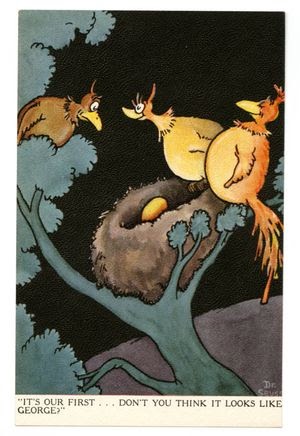
I saw this posted on Ephemera - an original 1937 Dr. Seuss lithograph. I checked and it sold for just over $100. The seller on eBay states that this was one of a year's worth of images which Dr. Seuss a.k.a. Theodor Seuss Geisel, created for the Thomas D. Murphy Calender Company and that this particular image was never distributed or publicly used. So it has come directly out of the archives of the Thomas D. Murphy Calendar Company. Part of me thinks what a shame, that these original illustrations are being sold off individually, rather than preserved as an archive, of the Calendar Company's work, or even as a smaller collection just of Geisel's work for the company. However at the same time I'd love to own an original Dr. Seuss illustration and I hope the individual who bought it will get lots of enjoyment out of it!
The reason this post on Ephemera stuck out for me is that I'm currently reading 'Dr. Seuss & Mr. Geisel - a Biography' which I'm really enjoying. The acknowledgements in the book begin with thanking Librarians and Archivists throughout American and British Institutions. The authors also acknowledge the invaluable insights gleaned from other personal archives - the letters of friends and relatives, and interviews they conducted with his friends and relatives. All this use of archival sources really shines through in the book, even at this early stage of reading. The research is meticulous and highly detailed, luckily without being dry! At the moment we're in 1930s New York, the Wall Street crash has just happened and times are changing from the optimism of the 20s, though at the moment the fortunes of Dr. Seuss are still on the up and up. I love biographies as not only do you get an insight into the life of someone you admire (well in my case it's usually someone I admire, a musician/artist/writer), but you also get an insight into a way of life, a particular society, particular time. In this case his experience growing up in an immigrant German community during WWI, and now New York in the 1920s and 1930s and who knows what's still to come!
Labels:
Archives,
Dr Seuss,
eBay,
ephemera,
Theodor Seuss Geisel
Tuesday, 15 March 2011
'Tweeter's' help in identifying building
Last week I was cataloguing a film (AV260/30) by Alan E Turner, an amateur filmmaker from Romsey. The film was called 'West Country Holiday' and having a title is always useful, especially when it identifies the area shown in the film. Inter-titles are even more useful and luckily for us Mr Turner included inter-titles in most of his films. These are titles which appear throughout the film, usually indicating a change of location. In this particular film there was an inter-title Ilfracombe, followed by some footage of the seaside resort of Ilfracombe in the 1930s. The footage is lovely, showing lots of beautiful buildings, some great footage of the Lynton to Lynmouth Cliff Railway, and including this building shown in the image below. I tried with Google Maps, walking about the streets of Ilfracombe in Google street view, looking at tourist websites for Ilfracombe but I just could not identify this building.
I decided to try Twitter as this has been successful before in identifying buildings, particularly when we have the name of the town to help. This time I didn't even need to send messages to local tourist websites, I just posted the image on Twit Pic with a message on Twitter asking if anyone knew what this building was - you can see the response in the second image. People are so helpful - I posted the request for information on the 10th of March and the replies from two individuals both came in the same day!
It turns out the building is the Victoria Pavilion. It was built in the 1920s but in 1994 the decision was made that the costs to continue repairing it were too high and the building was demolished and replaced with the Landmark Theatre. I used various online sources to verify the identification of the building and gather information on it but I would never have found any of this without the help from our followers on Twitter. Or I should correct that, I might have found it, if I had been able to track down a book of old photographs of Ilfracombe but there just isn't that kind of time to devote to identifying one building so the use of social media such as Twitter are invaluable in this respect.
![]() |
| © Wessex Film and Sound Archive, AV966/30 - the Victoria Pavilion, Ilfracombe |
It turns out the building is the Victoria Pavilion. It was built in the 1920s but in 1994 the decision was made that the costs to continue repairing it were too high and the building was demolished and replaced with the Landmark Theatre. I used various online sources to verify the identification of the building and gather information on it but I would never have found any of this without the help from our followers on Twitter. Or I should correct that, I might have found it, if I had been able to track down a book of old photographs of Ilfracombe but there just isn't that kind of time to devote to identifying one building so the use of social media such as Twitter are invaluable in this respect.
Labels:
Archives,
Ilfracombe,
North Devon,
social media,
Twitter
Friday, 11 March 2011
My thoughts on the UK Archives Discovery Network (UKAD) Forum on Wednesday 3rd March 2011
My first visit to the National Archives – after getting slightly disorientated when I came out the station I eventually got on the right road and made my way to the National Archives. I wasn’t quite sure what to expect of the day – would it all be too ‘techy’ and over my head, would it be practical or theoretical, what would I be able to take away and apply to my work? One thing I certainly had not expected was the high attendance of the conference, I was expecting maybe 30 or 40 people not the 100 or so people that attended. There was a real buzz on arrival of expectation and enthusiasm which was just great. I felt slightly overwhelmed at first as it’s the first archive meeting I’ve been to since moving down to London and although the archives world is still relatively small it is of course a lot smaller in Scotland, so not so many familiar faces for me. However this was great as it was an opportunity to meet and chat to archivists and information professionals from all over, Scotland included.
The event was the first event organised by the UK Archives Discovery Network (UKAD) who describe themselves as “a network of like-minded archivists and other professionals working towards opening up archival data in order to promote the use of archives.” I liked the sound of this, had a look at the planned agenda for the day, and decided to sign up, and, the event was free – even better!
The day began.. with tea and biscuits of course! As anyone who knows me can attest I don’t function well until I’ve had my obligatory morning caffeine kick. The day proper began with two keynote speakers in the plenary session, John Sheridan (The National Archives) and Richard Wallis (Talis). Both these speakers talked about open data and linked data. The definition given of linked data, as I remember it, was information that is known about the information you have, and how to exploit this using the web. So basically how do we create the links between the information we have and other information about our information on the web. So far so straightforward. At least two speakers references Tim Berners-Lee’s ‘Five Stars of publishing data’ which i really like as a brief guide of 'what to do'.
* putting on web
** make it available as structured data
*** standardized format
**** URL’s to identify things
***** link data to other data, context
So, what I have taken away from the day? First off, as a side product of the actual presentations and workshops, I came away with a reaffirmed belief in the friendliness and enthusiasm of my colleagues in the profession because of the energy and enthusiasm of the day. I’m always banging on about how much I love being an archivist, well this day just reinforced many of the reasons why.
I also came away with some specific tips for increasing the profile of an institution, for example using Google Analytics; using URL’s which make sense & are relevant, & not using acronyms in URL’s; checking to see if there’s a Wikipedia entry for institution, if not, why not, and can we create one?
Importantly I feel I gained a deeper awareness of the importance of thinking about what we want to achieve with the use of social media. Do we want to attract the same users as would come through the door, are we targeting specific user groups at all or do we just want to promote generally? Is it about promotion or interaction, or both? Generally thinking of the use of social media in the same way you would any other activity i.e. formulating plans and aims beforehand.
The day ended with a great session by Teresa Docherty from the Women’s Library about the relaunch of Genesis. Genesis is a project which works as a portal allowing people to search across women’s studies resources in a huge number of locations – archives, libraries and museums across the UK. Teresa finished her talk with the sentiment that ‘lets get out data out and let people play with it. It’s time to have some fun!’ (paraphrased). I love this attitude as I think it’s too easy to get stuck in the trap that our Archive, or a particular set of records in our archive, would only be of interest to one set of users. One example I can think of from my own experience so far is artists coming in and doing projects in the archive and producing outstanding new work based on the archives. This ties into a point made earlier in the day by Alexandra Eveleigh that we are maybe too accustomed to thinking only of study and research in terms of use of our archive and we need to think of archives outside of this narrow definition for example the use of apps and gaming devices by museums. There were of course mountain of other topics discussed and areas covered, and far more eloquently than I could summarise, so here is a link to Slideshare where some of the speakers have uploaded their presentations:
Alexandra Eveleigh – Crowds and Communities: User participation in the Archives
Teresa Docherty – Genesis Relaunch
Richard Wallis – Linked Data
Jane Stevenson – A Return on Investment: Making the Data Work Harder
David Flanders – What Lies between Archives and the Future…
There are also some blog posts I've come across about the day - a great post by Bethan Ruddock at the Archives Hub and another on the SALDA blog.
So, the task now is to apply what has been learned, continue to be open and receptive to new ideas, and keep up the enthusiasm!
Monday, 7 March 2011
Where private and professional meet - or should do.
Yesterday I was reading Saturday's Guardian and was very happy to find an article The Rise and Rise of Family Photographs about the issues of personal archiving, appraisal, and digital obsolescence of family photographs. However as I continued to read through the article I got this awful sinking feeling in my stomach, the knowledge that I might have done something which is bad as both a family member, and, as an archivist. [takes a deep breath]... I think when I was clearing out my mum's house I may have chucked out a whole paper bag full of family photos. Now to qualify this slightly, they aren't my immediate family photos as in my Grandparents/Great Grandparents, they are photos which my mum got when she was helping to clear out the house of a Great Aunt. None of the photos had any names, dates or places on them and my mum didn't know who most of the people were in them. She did say a few times that she hoped to get round to trying to put names to at least some of them, but sadly she passed away before she could do this. I did however keep a leather envelope which contains photos belonging to the same Great Aunt and, given that these were selected and kept in better storage, it suggests they were considered of more importance, or maybe just the best of the collection. So, in retrospect maybe what I did, or may have done (as I haven't quite got round to going through everything that I packed up from my mum's house yet so am still unsure whether I merely packed the photos away) maybe it isn't so bad after all. I've still got a selection of the photographs, which were considered important, and I wouldn't have been able to put names to any of the faces anyway.
I've got two boxes full of me and my brother's family photographs with our parents and grandparents, the majority of which are in albums but very few of which have dates or places attached. I think decisions have to be made, and to me, my immediate family photographs come first. Me and my brother will need to sit down and go through these photos, probably with our dad, in order to remember where many of them were taken. For example the photo below is me and my brother - but where? This could have been taken on a summer holiday, most likely Arisaig or Arran, though it doesn't look like Arran to me, or it could have been a day trip away, maybe Millport or Troon - in other words even these relatively recent photos are in desperate need of labelling if they are to stay relevant to our family.
When I was going through the bags of our family photographs in my mum's house there were also loads of envelopes of photographs in addition to the albums - I made the decision that I wasn't just going to carry all these on with me - I was going to make like a good archivist and sort and appraise them! I did this with my brother, which was a great experience in itself, reminiscing about childhood memories. We decided to remove all duplication, we got rid of lots of photographs of scenery with no people in them keeping only the best shots of a place. For example we went to the Isle of Skye many years in a row, each year taking similar photos of the Cuillins and the Old Man of Storr, so we picked the best ones and kept them, getting rid of the others. We also narrowed it down by getting rid of photos that were very similar, for example photos of my 8th birthday - just how many photos do you need of me and my friends standing round the table laden down with cakes and treats - answer, not as many as immediate instinct would have you keep. We then put all the loose photos in spaces in the photo albums - at this point my archival practices went a bit out the window to be honest. I just wanted to get them all in albums so the didn't get bent and torn in transit so I still haven't tried to date or label any of them. Reading the Guardian article has made me want to devote a day, with my brother, to going through and doing that - not only would it be useful, but it would be fun too!
These personal examples I've given really resonated with another point in 'Culling Family Photographs' -
"Label, label, label. If a photo is worth keeping, you should provide its back-story. Use a photo safe pen or pencil to record the name of the person, place, and/or event depicted. If there is a "story" to the image, supply as much as you can of that too." (ArchivesInfo, Culling Family Photographs, March 5 2011).
Her article is full of useful advice about the issues of archiving family photographs, including the very important issue of appraisal i.e. do you keep it or not.
From personal experience I, like Melissa, do take exception to the point made in the Guardian article by Michael Hewitt that in regards to uncertainties over whether something will be of value to future generations "The only answer, therefore, is to hang on to all of it, and let our descendents do the sifting." Having been put in this position I am determined that I am not going to repeat it!
Another thread running through the Guardian article was the issue of digital obsolescence. Michael Hewitt makes the point that -
"we all seem to need something approaching an information technology degree. It's a problem that will become increasingly common as we gradually entrust all our photos and home movies to digital media. Not just because of disk crashes. Format obsolescence won't help either... American Scientist recently dubbed this potential loss of generations' worth of photos and home movies the "digital dark age". We should, it says, all make an effort now to preserve them before it's too late."
There are so many issues encased in the worries over digital obsolescence, not least the fact that it is something which most people don't think about until they have a problem, for example their computer crashes and the files weren't backed up, or the files were only on the memory drive in the camera and the camera was stolen. Also in terms of labelling - ok you might give the photo a title but where do you put the additional information - generally this would be on Facebook, Flickr, Twitpic or whatever other platform is used to share the photographs. This means that the information about the photographs is detached from the photograph files themselves, and even if the files are backed up elsewhere is this metadata about them carried over with them? I know that personally I didn't, until now, think of what happens to all the cataloguing I add to photographs on Flickr - not just places, dates, etc but the URL's that I'll add in to photographs of exhibitions, as just one example. Then there are all the family photographs I haven't put up on Flickr that are just on my laptop and my camera - I should clearly have these backed up somewhere, but how do I add metadata to the photos? I don't know how to do that, I'm sure I could ask an archivist/IT friend but will I ever get round to it - I doubt it. My option is still to print off the most important photos and put them in envelopes. I have albums but as yet still haven't got round to putting any of the photos in them.
It really gave me a warm glow to read this article in the Guardian though - to hear the terms archiving and digital obsolescence, and the concepts of cataloguing and tagging, discussed in such a thoughtful way. Although I know I have a long way to go in terms of properly labelling and preserving my family photographs at least I feel aware of all the issues involved - now all I have to do is act on it and use my professional archiving skills for the benefit of my personal and family life!
I've got two boxes full of me and my brother's family photographs with our parents and grandparents, the majority of which are in albums but very few of which have dates or places attached. I think decisions have to be made, and to me, my immediate family photographs come first. Me and my brother will need to sit down and go through these photos, probably with our dad, in order to remember where many of them were taken. For example the photo below is me and my brother - but where? This could have been taken on a summer holiday, most likely Arisaig or Arran, though it doesn't look like Arran to me, or it could have been a day trip away, maybe Millport or Troon - in other words even these relatively recent photos are in desperate need of labelling if they are to stay relevant to our family.
![]() |
| © Kathryn Hannan (nee. Mackenzie) |
I tweeted about the Guardian article last night then today when I checked the blogs I follow I found a really interesting post by Melissa Manon at ArchivesInfo 'Culling Family Photographs'. In her article she makes the very important point
"We really do not need to keep everything. We do not need to be afraid to determine what is unnecessary. We do not need to leave the "dirty work" for our descendants. If we do, eventually someone is likely to get frustrated and just throw the whole kit-and-kaboodle into the trash. Handing down a well-managed collection of personal papers and photographs to loved ones encourages them to treasure the items, keep up their maintenance, AND to value the family history that they embody."
These personal examples I've given really resonated with another point in 'Culling Family Photographs' -
"Label, label, label. If a photo is worth keeping, you should provide its back-story. Use a photo safe pen or pencil to record the name of the person, place, and/or event depicted. If there is a "story" to the image, supply as much as you can of that too." (ArchivesInfo, Culling Family Photographs, March 5 2011).
Her article is full of useful advice about the issues of archiving family photographs, including the very important issue of appraisal i.e. do you keep it or not.
From personal experience I, like Melissa, do take exception to the point made in the Guardian article by Michael Hewitt that in regards to uncertainties over whether something will be of value to future generations "The only answer, therefore, is to hang on to all of it, and let our descendents do the sifting." Having been put in this position I am determined that I am not going to repeat it!
Another thread running through the Guardian article was the issue of digital obsolescence. Michael Hewitt makes the point that -
"we all seem to need something approaching an information technology degree. It's a problem that will become increasingly common as we gradually entrust all our photos and home movies to digital media. Not just because of disk crashes. Format obsolescence won't help either... American Scientist recently dubbed this potential loss of generations' worth of photos and home movies the "digital dark age". We should, it says, all make an effort now to preserve them before it's too late."
There are so many issues encased in the worries over digital obsolescence, not least the fact that it is something which most people don't think about until they have a problem, for example their computer crashes and the files weren't backed up, or the files were only on the memory drive in the camera and the camera was stolen. Also in terms of labelling - ok you might give the photo a title but where do you put the additional information - generally this would be on Facebook, Flickr, Twitpic or whatever other platform is used to share the photographs. This means that the information about the photographs is detached from the photograph files themselves, and even if the files are backed up elsewhere is this metadata about them carried over with them? I know that personally I didn't, until now, think of what happens to all the cataloguing I add to photographs on Flickr - not just places, dates, etc but the URL's that I'll add in to photographs of exhibitions, as just one example. Then there are all the family photographs I haven't put up on Flickr that are just on my laptop and my camera - I should clearly have these backed up somewhere, but how do I add metadata to the photos? I don't know how to do that, I'm sure I could ask an archivist/IT friend but will I ever get round to it - I doubt it. My option is still to print off the most important photos and put them in envelopes. I have albums but as yet still haven't got round to putting any of the photos in them.
It really gave me a warm glow to read this article in the Guardian though - to hear the terms archiving and digital obsolescence, and the concepts of cataloguing and tagging, discussed in such a thoughtful way. Although I know I have a long way to go in terms of properly labelling and preserving my family photographs at least I feel aware of all the issues involved - now all I have to do is act on it and use my professional archiving skills for the benefit of my personal and family life!
Wednesday, 23 February 2011
Fun with statistics
Now, if you'd asked me any time up until this if I could have fun with statistics the answer would have been a very quick and very clear No! However I've since rediscovered the StatCounter account I set up when I started Archives and Auteurs and I am amazed to find myself idly browsing my blog's statistics. The reason I remembered about the account was thinking about the work Flickr I recently set up with Zoe Viney for the Wessex Film and Sound Archive. We couldn't find any way for collecting statistical information through Flickr beyond the basic page views information. I remembered about StatCounter and surprised myself by remembering my user name and password as well. It had still been running even though I haven't been logging in but as I hadn't added my new IP addresses (work and home) to the list of addresses not to count then I think my results might be slightly skewed. So, if anyone else is setting up StatCounter or any similar statistical service then it is always best to block your own computer's IP address so your figures are more accurate, unless your memory is really bad and you want to keep count of your own views of course.
The images I've included below show the breakdown by country of visitors to my blog over the course of last week, then the second one lists in more detail every country that views have come from. you can narrow this down to city as well. Other useful things you can check are which pages are the most popular, which websites people are directed to your site from, how long they stay (this can sometimes be a bit painful), and lots of other useful, or useless, information depending on your point of view/general inclination to nosiness.
What I found most useful was information on how people had found my blog - what terms they had searched for or what website they had come from. This made me think more about the tagging I use on my posts and I have resolved to try and be a bit more thorough in my tagging - treating it more like my actual cataloguing work than I have done in the past.
I haven't started using it yet for the WFSA Flickr account for two reasons, the first being I thought I would try it first with my Flickr account to see if it worked. With StatCounter, and I assume it is similar whatever software you use, you have to input the HTML code in to your profile on Flickr then add the web pages to your statistic software account. I'm find doing this with my own account but I was a bit unsure with the work one - does this give them access to other information on your Flickr account, do they have rights over the statistical data as it is displayed on their account? These questions are things I would rather investigate more fully before using it for workplace statistics - but for now I'll keep enjoying using it for my own web pages.
Subscribe to:
Posts (Atom)