Showing posts with label Cataloguing. Show all posts

Sunday, 17 July 2011

Sunday morning reading

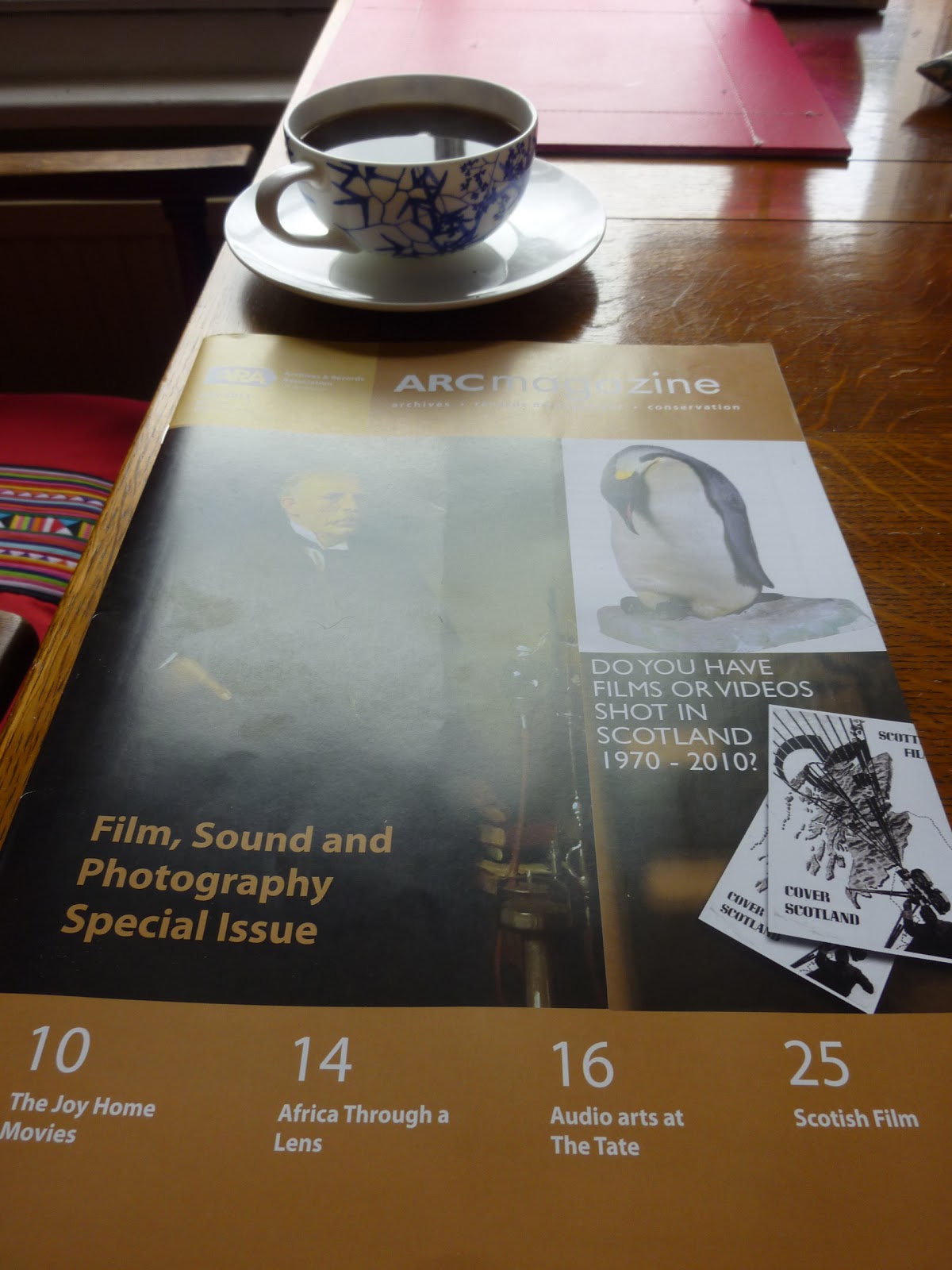
Sunday morning and I'm not reading the Sunday papers yet, no siree, I'm reading my newly arrived (yesterday) copy of ARC. ARC is the monthly magazine published by the Archives and Records Association in the UK. Although I love archives I wouldn't usually be reading this on a Sunday morning, honest!


The July issue is a Film, Sound and Photography Special, edited by my last boss, David Lee, Archivist and Manager of the Wessex Film and Sound Archive. I'd have been really interested in reading it anyway but even more so because yours truly has an article in it - woop! The article is a joint one written by me and Zoe about our experience of cataloguing the films for the Revitalising the Regions project. We concentrated on two of the film-makers, well three really - Frank and Nancy Bealing and Eda Moore. Nancy Bealing and Eda Moore just really captured both our imaginations and we were very privileged to get the chance to go and speak to Nancy Bealing about the films which her husband made, the one which we made, and the ways she helped with his filmmaking.  I wrote a bit about a visit we paid to Salisbury to do some research about Eda Moore here.

Nancy Bealing in the nursery owned by her & her husband, Frank ©Wessex Film & Sound Archive

The current issue of ARC is not available digitally on the website yet, and even when it is it's only available to members so at the moment I can only give you these images off my camera.

Right, now I'm off to read all the other interesting articles in the magazine!

I had to call up the ARA Office to request another copy be sent out, and an extra for Zoe, as mine hadn't arrived (first time I've had anything published in it and first time it's never arrived!)

Eda Moore with her bolex camera in Salisbury ©Wessex Film & Sound Archive

You can watch some clips from Frank Bealing's and Eda Moore's films on the WFSA Flickr.

Wednesday, 15 June 2011

Wednesday Wonders - Together in Electric Dreams - Emancipation from Drudgery'

"As long ago as November, 1924, a small group of clear-sighted women foresaw rapid development of the use of electricity in domestic spheres, and from their belief that it was destined to become the most valuable factor in modern home life, developed the Electrical Association for Women". 

Image from EAW pamphlet, NUWT Collection, ref no UWT/D/55/17 © Institute of Education

I don't quite know why but when I first read this on the cover of one of their pamphlets I read it as if I was reading the Star Wars credits and imagined the words rolling down the screen - a long, long time ago, etc.  It's not quite that dramatic but it was still very striking to me that something which we now take so much for granted was then such a novelty.  I have to confess to having little, i.e. no, idea how electricity works, I just accept that I walk into a room and turn the light on, that my washing machine works, that I can plug in a hoover and clean our tiny flat in under 10 minutes etc.  In 1924 though, electricity in the home was only beginning.  The aim of the EAW was 'to eliminate from housekeeping the drudgery which the dirt and grime of mechanical process has brought into it' - sounds good eh?! Their slogan was 'Emancipation from Drudgery' and their purpose was twofold - 1. ensure that all women knew about electricity, how they could get it , and how best to make use of it 2. to put forward women's views on electrical matters. 

Now I am not getting all rose-tinted glasses sentimental about the past here - the more equal sharing of household work now - cleaning and cooking - is something which I am all for of course! What this file of correspondence and pamphlets made me remember was how much harder it must have been before electricity.  It also reminded me that the assumption of these kinds of comforts is of course sadly still limited and in no way equal throughout the world. 

Something else which comes up a lot in the correspondence is the use of questionnaires and experiments with women to test the safety and ease of use of electrical appliances.  Then, and probably still now given the ratio of men to women engineers, electrical appliances for the home would be designed by men, but in the 1920s at least, used almost exclusively by women.  The tests they would carry out would measure things like what height of oven is the most convenient to use, how to make electric hobs safer around children, right through to how to change a fuse and how to wire a plug.

I've included a few more images from one of the EAW publications - the Electrical Housecraft School is where a lot of the testing and training was carried out.  The bottom illustrations I just included because the pamphlet was full of them and I thought they were lovely!
Image from EAW pamphlet, NUWT Collection, ref no UWT/D/55/17 © Institute of Education

Image from EAW pamphlet, NUWT Collection, ref no UWT/D/55/17 © Institute of Education


Image from EAW pamphlet, NUWT Collection, ref no UWT/D/55/17 © Institute of Education


N.B. The Institute of Engineering and Technology holds extensive archives on the EAW -

EAW logo, from NUWT Collection, ref no UWT/D/55/17 © Institute of Education

Tuesday, 3 May 2011

When work and hobbies collide

In my new quest to become a sewing wonder and make my own clothes, I have started off with doing repairs.  Imagine my surprise when repairing a vintage dress I bought in Los Angeles to discover that it was Union Made! Now this may not be that unusual to see on clothing labels, I don't know, but what is so unusual about this for me is how eerily it related to my new job cataloguing the Archive of the National Union of Women Teachers.  So it just seems incredibly serendipitous that the label on my dress says 'Int. Ladies Garment Workers Union - Union Made'.  Of course I couldn't leave it at that, I had to do a bit more digging and find out about the ILGWU.


On the second page of google results (or the first page if you go through wikipedia entry) is the link to the ILGWU Archive, held at the Kheel Center for Labor-Management Documentation and Archives at Cornell University Library.   I mention the ranking in google as I feel that the archive catalogue description should be right up there on the first page, as it's the primary source of information about the union.  The information I've included about the union here is taken from the organisation history included on the catalogue description.  The ILGWU was formed in 1900 in New York City by a variety of immigrant groups, Jewish, Italian, Scots-Irish and Irish, working in the garment industry.  Like the NUWT there was a lot of resistance to the Union but by 1917 they were more powerful and had brought about a great deal of improvements for their members including improved working conditions and unemployment benefit.  I was just cataloguing records today which listed the impressive achievements of the NUWT, including the part they played in gaining equal franchise for women, equal superannuation and pension rights, and of course, their objective - equal pay for women teachers.

There's no point in me just copying out the text from other articles, here and here, where you can read more about the achievements of the ILGWU and some of the horrific events which highlighted the terrible working conditions in place at the time. However the story of the Triangle Waist Company fire in New York.  This was a sweatshop employing 500 people on the ninth floor of a building at Washington Square East.  When a fire broke out on March 25 1911 there was nowhere for the employees, mostly women, many girls as young as 14, to go.  They were unable to open the fire escape or other exits and of the 500 workers, 146 perished that day, either in the fire or jumping from the ninth floor.  Afterwards workers claimed that the owners had locked all the doors to prevent theft, and this was apparently common practice at the time.  The ILGWU proposed a day of mourning and, along with other unions, formed a Joint Relief Committee to help those suffering because of the fire. The company Blanck and Harris were acquitted of any wrongdoing despite the testimonies of all those who survived that they were locked in the building.  Even just writing this now I'm getting shivers up my spine and tears in my eyes just thinking about it, and getting mad as well - how is it that those in power will always get away with their actions for the sake of profit. 

I got the information on the Triangle Factory Fire from an online exhibition at Cornell University to mark 100 years since the fire.  This is a fantastic exhibition with lots of examples of the primary archive material about the fire and all laid out in a very accessible way.

Who would have known I could learn so much from repairing a dress!

Tuesday, 12 April 2011

New Cataloguing Archivist post

I've just started a new job in the Archive at the Institute of Education, London.  It's another project job - this time for fourteen months - and I'm loving it already!  My job is to catalogue the records of the National Union of Women Teachers (NUWT).  The NUWT was founded in 1904 as the Equal Pay League and in 1906 it was re-named the National Federation of Women Teachers. In 1920 it broke away to form an independent union, the National Union of Women Teachers.  I wrote a post about my first impressions and first finds over at the Newsam News blog (the blog of the Institute of Education Library and Archive) so I won't repeat what I've said there except to say that the variety of subjects covered in the archive sounds very exciting, a perfect example is the poster shown below for the 'World Youth Conference' held in Prague in 1947.  The correspondence, pamphlets and posters for this conference were so filled with optimism and hope for the future, for a new peaceful future, that was wonderful to read.  Though at the same time quite sad that the optimism and hopes for peace are still just that, optimism and hope. 
World Youth Festival pamphlet,
UWT/D/28A/2 ©Institute of Education Archive
From what I've read so far the NUWT was filled with strong, independent females and finding out more about them is going to be a pleasure, and a privilege to get to do s part of my daily work!  I've got lots of plans for free publicity I can do and connections and links that can be made with other archives and other organisations, in fact I even had a dream about my plans, on a Friday night - a bit strange granted, but I wouldn't have it any other way, better to over-think and enjoy my work than the other way around.  I think I'll be keeping the majority of posts about the project confined to the Newsam News blog but I'm sure the occasional one will stray over here.  I'm still going to keep this blog up though as there's plenty of other archive related events I can talk about, like a recent exhibition I went to at the Barbican...

Tuesday, 22 March 2011

Today was the first day of my last week at Wessex Film and Sound Archive(WFSA) before I move on to pastures new (more of that in a later post once I start the new job!).  My post at WFSA was only a six month post and I'll be leaving it four weeks early but having completed all the work I was scheduled to do, in addition to all the extra work me and Zoe Viney have done on promoting and project and the Archive.

What have I learned?

  • Cataloguing films isn't different from cataloguing paper documents in terms of the description of the material i.e. keep it descriptive, don't use words the general public couldn't understand (unless you also provide a glossary), include as much contextual information as possible given time and availability of information constraints, include all the ISAD(G) elements
  • Knowledge of the variety of film and audio formats and knowledge of how to identify and differentiate between them
  • I've learned more of the quirks and functions of CALM as I've continued using that at WFSA
  • The wonders of Excel! - it is fantastic for keeping and managing timetables and deadlines. I can now use an Excel spreadsheet, and create one, with a lot more confidence - thanks Zoe!
  • I have been working on a Mac so have greatly increased my knowledge of using that, including simple things like learning how to take screenshots
  • I've installed and used DROID - Digital Record Object IDentification
  • I've learned how to edit film clips using Quicktime
  • Experience of using an 8mm projector
  • Plenty of experience now of using a Steenbeck - which I love!
  • Splicing film, adding leader tape
  • An awareness of the various ways and places in which archive film can be utilised, such as the Little Black Dress exhibition in Portsmouth
  • More experience of carrying out research - into film locations and film makers.
  • I now have knowledge of Hampshire, Dorset, Isle of Wight - and lots of places which I would now like to visit in person, as opposed to just seeing on film
  • Increased experience of the ways in which Twitter and Flickr can be used by Archives to promote specific projects and Archives in general.

Monday, 6 December 2010

'Revitalising the Regions' - reflections on my first month working in a film archive

I should change the title to first six weeks as I started writing this post ages ago - as visitors to my blog will know my posts have been far from regular recently!  With the move to London and the new job I seem to have got rather behind with my postings.   My new job is just what I was looking for as it is a post as a film cataloguer.  I knew when I did my Masters in Archives that I was interested in working in a film and sound archive but I think what I hadn’t was expected was just how much I have loved all my jobs since I qualified! I would consider myself a pretty positive person most of the time anyway but I can’t imagine how anyone could get bored with the variety of material you get to work with in an archive. 

The Wessex Film and Sound Archive where I now work has its home in the Hampshire Records Office in Winchester.  So, I now have a commute from London to Winchester every day – the opposite direction to most people.  I really enjoy the commute though, I started writing this on the train one day last week but I often use the journey for an extra wee half hour snooze, or to read my book, or just enjoy the beautiful scenery passing by outside the window.

So, my new job: I am working on a project again, as a film cataloguer, this time on a six month post.  I enjoy project work and for me it’s been a great way to start out in the profession, going from projects at Glasgow Caledonian University, to Stirling University and now on to Wessex Film and Sound Archive.   Although with the way the cuts in the arts and cultural heritage sector are going I'm starting to get slightly worried about finding another job come next April!  

The project I am working on ‘Revitalising the Regions’ is one strand of the larger Screen Heritage UK project, itself based on the Strategy for UK Screen Heritage which states that -
“The public are entitled to access, learn about and enjoy their rich screen heritage wherever they live and wherever the materials are held.”

I am working, along with fellow cataloguer Zoe Viney on cataloguing over 600 films which will then be put on the Screen Heritage UK Union catalogue.  Some of the films we’re cataloguing already have some cataloguing information on them, others have very little, and many have nothing except one line of description.  We have set fields we have to complete in order for the records to be exported to the Union Search catalogue, which covers information about the format and physical description of the film in addition to date, title, any information about the filmmakers, and of course description of the film itself.  In addition to the set fields we are also adding in any additional contextual information to the films which we think could be useful to users.  

My only experience of cataloguing films prior to this job was one afternoon, a very interesting afternoon, at the Huntley Film Archive (which I wrote about in an earlier post here).  I was slightly apprehensive about beginning then but have found that the cataloguing process works in much the same way as with paper records, in fact, I'm not even sure why I would have thought differently as the main purpose of any cataloguing is to make the records more accessibly, understandable, provide context etc. whatever the format.  What I have found difficult is the films which have sound as it's difficult not to write down everything in the commentary, and difficult to concentrate on the visual.  Is this just me, that the aural takes over the visual when they are both together?  It's made me think more about sound in movies, and about silent films.  In a silent film, or one with limited sound, or even with only diagetic sound, the image is central, but maybe I'm not alone that once there is a soundtrack or commentary, it becomes hard to pull back and only concentrate on the visual?  I'm really enjoying cataloguing the films as I'm learning so much about Hampshire, its history, landscape, industries, culture and people. I'm hoping to become a bit more regular with my posts again so I'll write more about specific films as I catalogue them. 


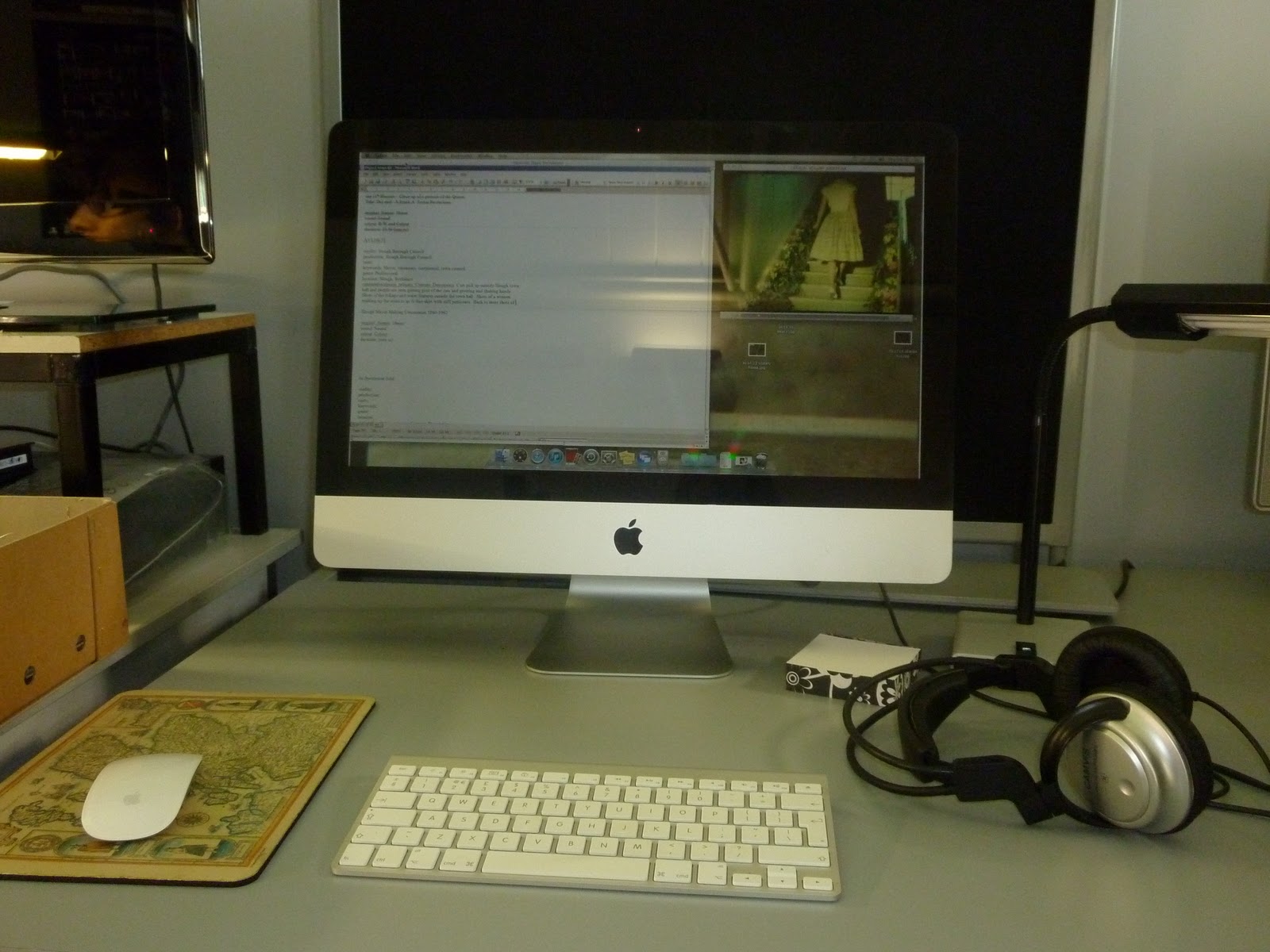
My new workspace - with TV and VHS player to the right.
I also have a mouse mat map of Scotland for when I get homesick

Before I started work Zoe had already set up a Twitter account for us to chart our progress, document our finds, and ask for help if, for example, we can’t identify a particular building in a town, so we’ve both been posting to this on a regular basis.  In addition to the Twitter account I’ll continue to write about my work on this blog. 

Monday, 19 July 2010

My posting has still been rather sporadic of late and I think it will continue that way for the next two months as it nears the end of our three-year project on 'The Cinema Authorship of Lindsay Anderson' with the deadlines looming large! I've now catalogued over 10,200 items in the archive which I find quite staggering to think about sometimes! The best things is I'm still enjoying the cataloguing as much now as I was at the beginning, indeed perhaps even more so. The reason for that being that the more you get to know about a collection and the individuals in it the more you get out of the cataloguing - well that's what I find anyway.

So, in the lack of anything more constructive to say right now whilst I continue to work my way through the named correspondence files I thought I would just share this Polish postcard I came across in a file on Friday. It's for a theatre production of Le Peche (according to Wikipedia this was written in 1908 and translates as History of Sin). The playwright, Stefan Zeromski(1864 - 1925) was a Polish writer, journalist and playwright and (once again taken from Wikipedia) he was apparently known as "the conscience of Polish literature."

LA/5/01/2/18/52, Lindsay Anderson Collection

Tuesday, 13 July 2010

The wonders of modern technology!

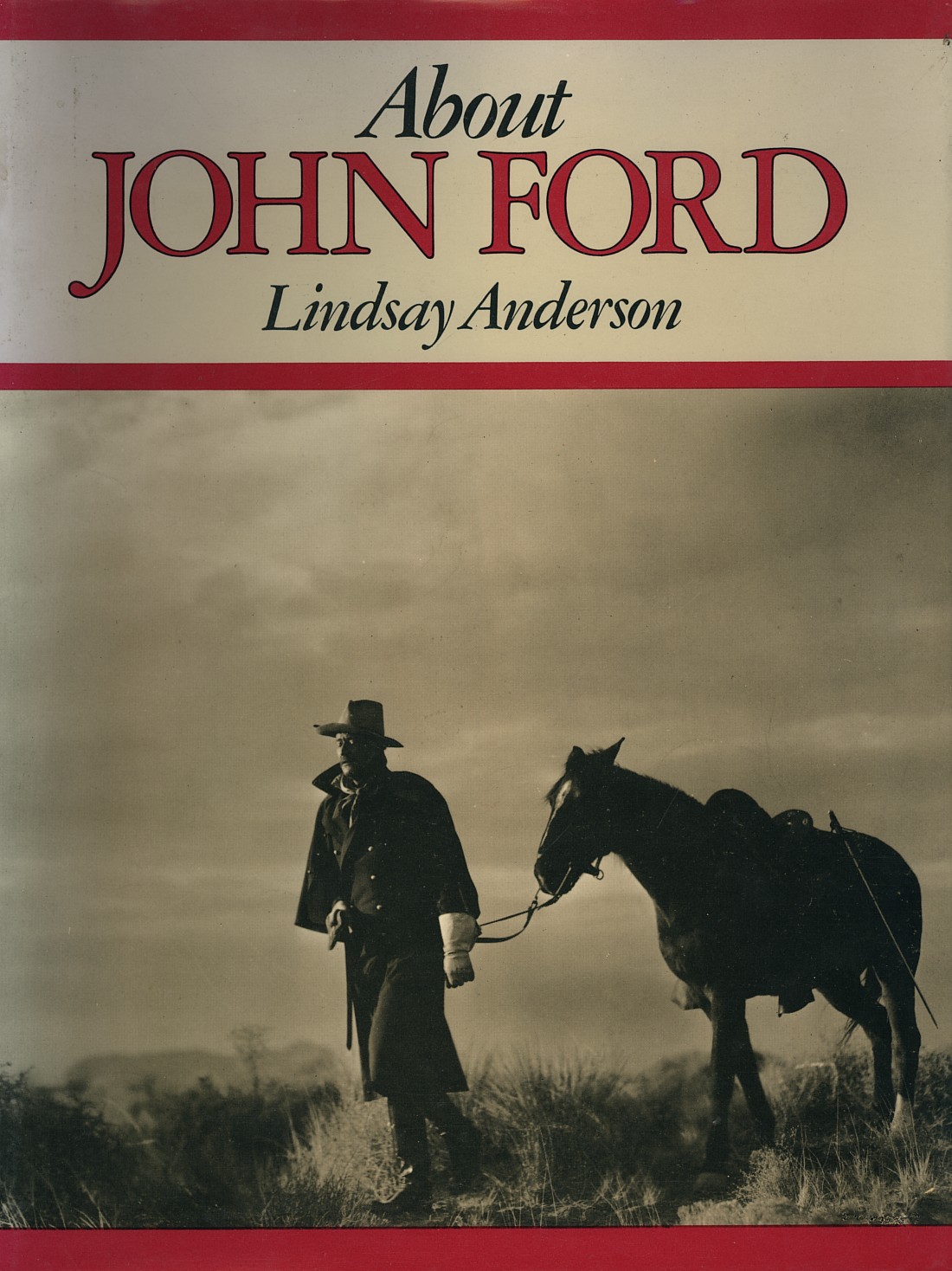
I am steadily making my way through the Lindsay Anderson named correspondence files.  I had a very pleasant day recently cataloguing the correspondence between Lindsay Anderson and Harry Carey Jr.  The son of Harry Carey, Harry Carey Jr. was, like his father, an actor in John Ford's Stock Company.  He starred in ten John Ford's films: 3 Godfathers (1948); She Wore a Yellow Ribbon (1949); Wagonmaster (1950); Rio Grande (1950); The Long Gray Line (1955); Mister Roberts (1955); The Searchers (1956); Two Rode Together (1961); Flashing Spikes (1962); Cheyenne Autumn (1964).  Harry Carey Jr. (also known as Dobe due to the colour of his hair)  wrote  a memoir of his time as an actor for John Ford Company of Heroes and this occupies a lot of the discussion in the correspondence between Anderson and Carey.  The correspondence starts in 1980 but we know they met earlier than this as there is an interview Anderson conducted with Carey in About John Ford in 1978.  

Insert sent to Anderson by Harry Carey Jr. with copy of Company of Heroes
© Lindsay Anderson Collection, University of Stirling Archives

About John Ford
© Lindsay Anderson Collection, University of Stirling Archives

The reason I said that this was a very pleasant way to spend the day is that Harry Carey Jr. just comes across as such a lovely man - the correspondence between them is warm, filled with reminiscences about John Ford and discussions of his films, but also some very vivid descriptions of Monument Valley and the surrounding areas which are great to read.

The first letter in the file from Anderson to Harry Carey Jr. is dated 6 February 1980 and in it Anderson discusses his latest purchase - a video recorder!  Anderson mentions this is correspondence with a number of people so it's apparent that he was very excited by this new ability to record films from the television and create his own film library.  Here he is filling Harry Carey Jr. in on his purchase:


"We've had YELLOW RIBBON here on TV recently , followed by LIBERTY VALANCE.  I indulged myself in a video-recorder before Christmas - so now I am building up a classic-film library.  So far, besides the aforementioned, I have MEET ME IN ST. LOUIS, THE MALTESE FALCON,  Renoir's LE GRAND ILLUSION, LITTLE CAESAR and PUBLIC ENEMY etc., etc.  Little did I think I would have copies of such pictures of my own, available at the press of a couple of switches.  Modern technology at last pays off!" LA/5/01/2/5/2

Ah, modern technology!  I was going to say it's easy to take this technology for granted but, not having a sky box or any similar thing for recording of the television, and being too lazy to try and tune my video recorder to the TV, I don't take this for granted anymore!  I have to hope that any programmes I miss are on BBC and will be repeated on the iPlayer, or that they are available for hire.  Of course, I could just get myself a sky box or similar technology but that would be too easy, I usually wait at last a few years before catching up with the latest technology.  I'll get an iPhone one of these days but only having got an iPod in the last few years, after years of a personal CD player when everyone else had a minidisc player, and before that years of a cassette player when everyone else had long moved on to CD's I guess I should just accept to being slightly behind the times with personal use of technology!
Wednesday, 23 June 2010

Cataloguing milestones

Well, that's me finally finished cataloguing all the A-Z correspondence files - it felt like a never ending task at times but at least the material I'm cataloguing has been very interesting.  The thing about being in an office on your own though is when you do reach a milestone like this there's no one to celebrate with!  It does feel like a pretty big achievement when you complete one section, especially one as big as this one was, with over 3800 items!  It was with great satisfaction that I scored all those files off my timetable!

Today I am not on my own as my room mate Isabelle is in so I'm doing a good job of distracting her from her dissertation with my interesting finds in the named correspondence files.  Yes, once again I'm back to 'A', well 'B' now to be more precise - cataloguing the correspondence between Lindsay Anderson and the artist Don Bachardy, from the named correspondence files.  Bachardy is an artist who paints the most beautiful portraits but is perhaps better known (well he was to me anyway) as the long-term partner of Christopher Isherwood.  Indeed the recent Tom Ford film A Single Man, based on the book by Isherwood, was inspired by a break-up between Bachardy and Isherwood, although in real life the break up was short lived and they were together until Christopher Isherwood died in 1986. 

I am only half way through their correspondence together and I found an interesting description by Anderson of why he felt Bachardy is such a talented artist "they manage to be both portraits and a collective self-portrait, which makes the whole collection a single work - as well as being a wonderfully perceptive and acute assembly of individual studies" [here Anderson is referring to a book of Bachardy's portraits which has just been published].  I thought this definition of Bachardy's talent could be transferred quite easily to film and seems to sum up Anderson's attitudes to his own creative work as a film director "no film can be too personal". 

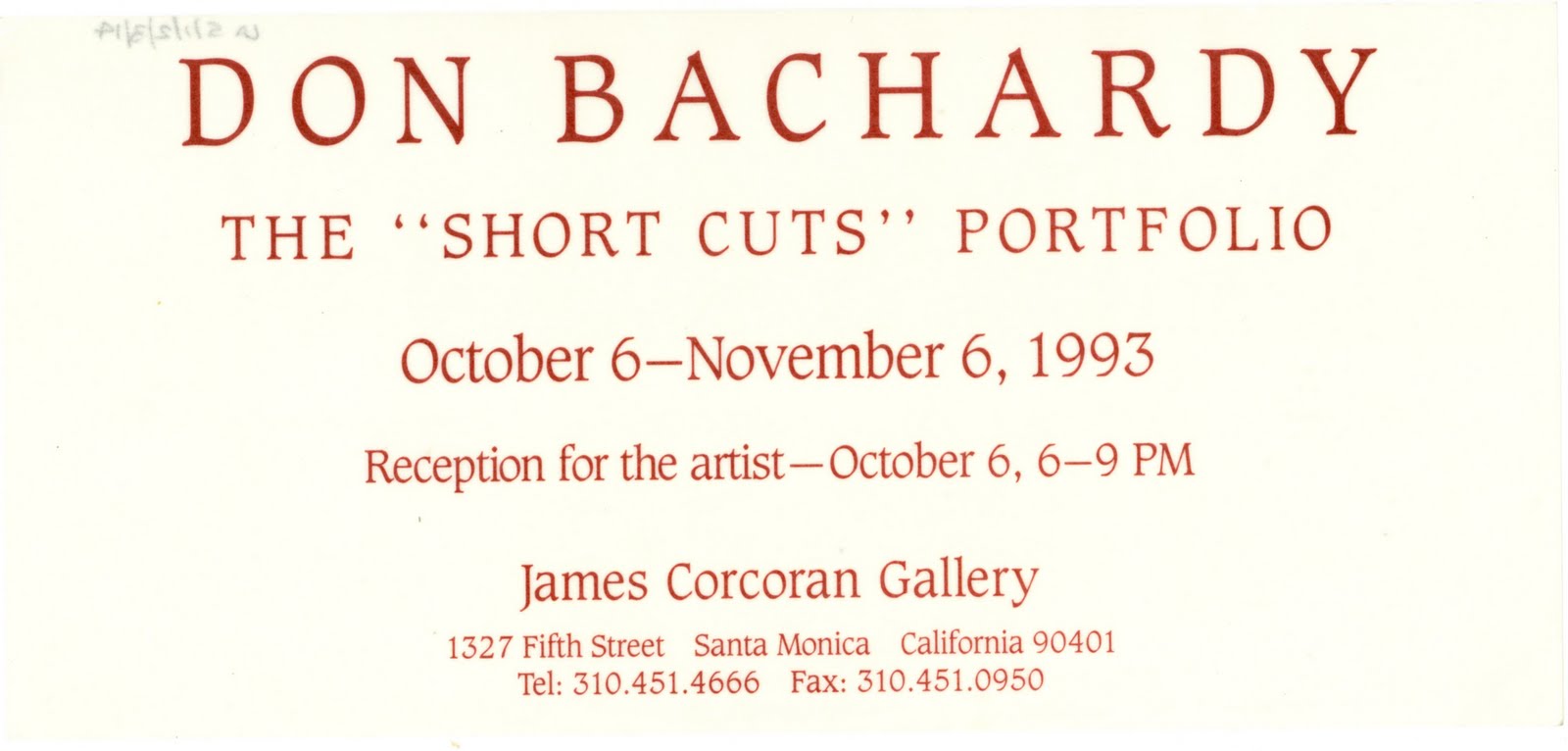
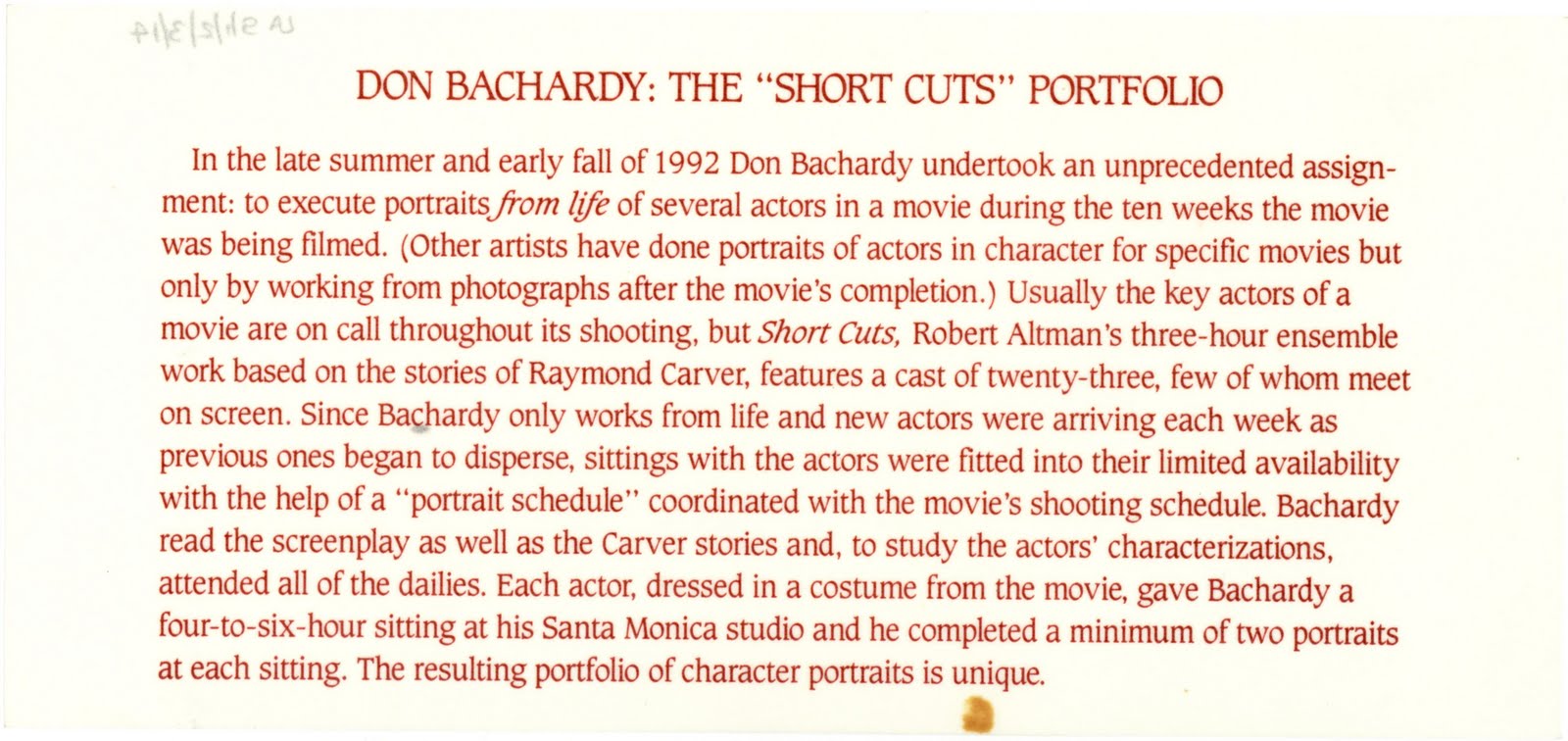
There are lots of fantastic photographs and colour images of Bachardy's paintings in the file but I would never want to use these without first seeking the permission of the artist.  Instead I thought I would show these images - an invitation to an exhibition of Bachardy's portraits of actors carried out during the shooting of Robert Altman's Short Cuts. 

Invitation to exhibition of The 'Short Cuts' portfolio by Don Bachardy, LA/5/1/2/3/14
© Lindsay Anderson Collection, University of Stirling Archives

Invitation to exhibition of The 'Short Cuts' portfolio by Don Bachardy, LA/5/1/2/3/14
© Lindsay Anderson Collection, University of Stirling Archives

I have just checked online and the Short Cuts portraits painted by Don Bachardy have been published with the script for Short Cuts.  You can see the front cover of the published script with some of Bachardy's work (though the quality of the image is poor) on Amazon.

Monday, 7 June 2010

Cataloguing - timetables and deadlines

All my plans of getting straight back into posting in May came to naught as I've become increasingly aware of my looming project deadlines. However I now have a very helpful Excel spreadsheet with a full breakdown of everything I want to achieve, set out week by week! Although there's still a huge amount to do before the project finishes at the end of August I now feel that it is all achievable and it makes it so much easier to just get on with the work and not panic. Part of my timetable includes posting on my blog so I thought I would start with a topical (for me) post about my cataloguing.

The thing that's so hard about doing a timetable for cataloguing archival records is that until you open each individual file you don't know how many letters there are, and until you catalogue each letter you don't know how much content there is in it. Letters with lots of interesting content take far longer than say, a greetings card sent simply to say 'Happy New Year'. Quite often the letters with lots of detail about film projects, theatre projects, actors, directors etc also require research into the people and subjects referred to as these will have to be added to the name and subject indexes on the cataloguing system. So I have to remind myself that if some weeks I don't quite meet my targets that's ok as other weeks I can have met them by the Thursday - as long as I get there by the end of August!


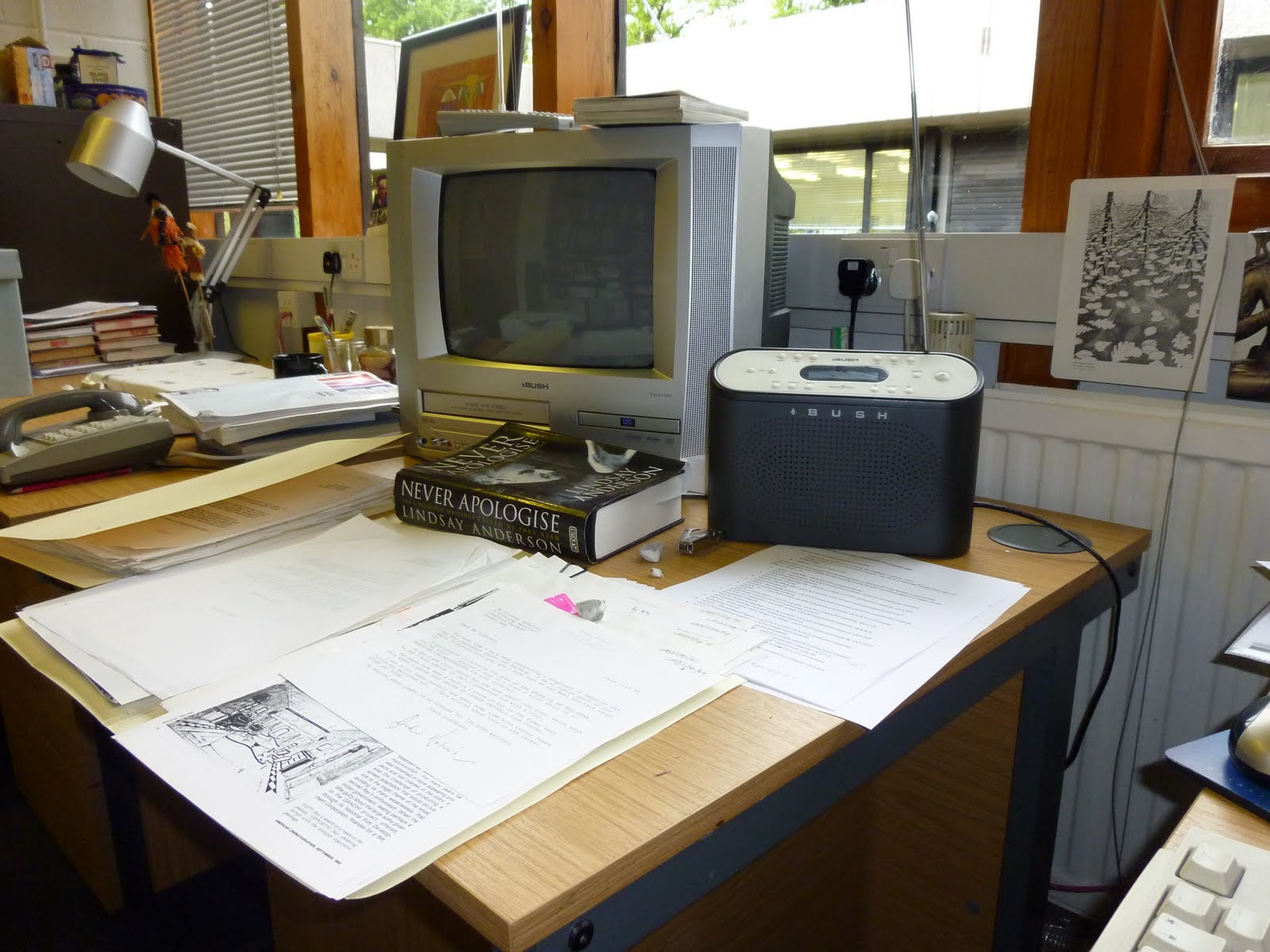
This first photo shows the files I am currently cataloguing - the A-Z correspondence files. I've talked about the fun of cataloguing these before as you never know quite what you're going to find - Friday's cataloguing included letters from Lindsay Anderson to Ridley Scott and this mornings started with a series of letters between Anderson and Dame Maggie Smith re a film version of The Cherry Orchard which was in development for a long time, but which finally fell through. Anderson had long wanted to direct a film of this play by Chekhov, having directed it in the theatre twice. Maggie Smith had agreed to star in it and the plan was to get Dustin Hoffman for the lead male role - if only it had happened!


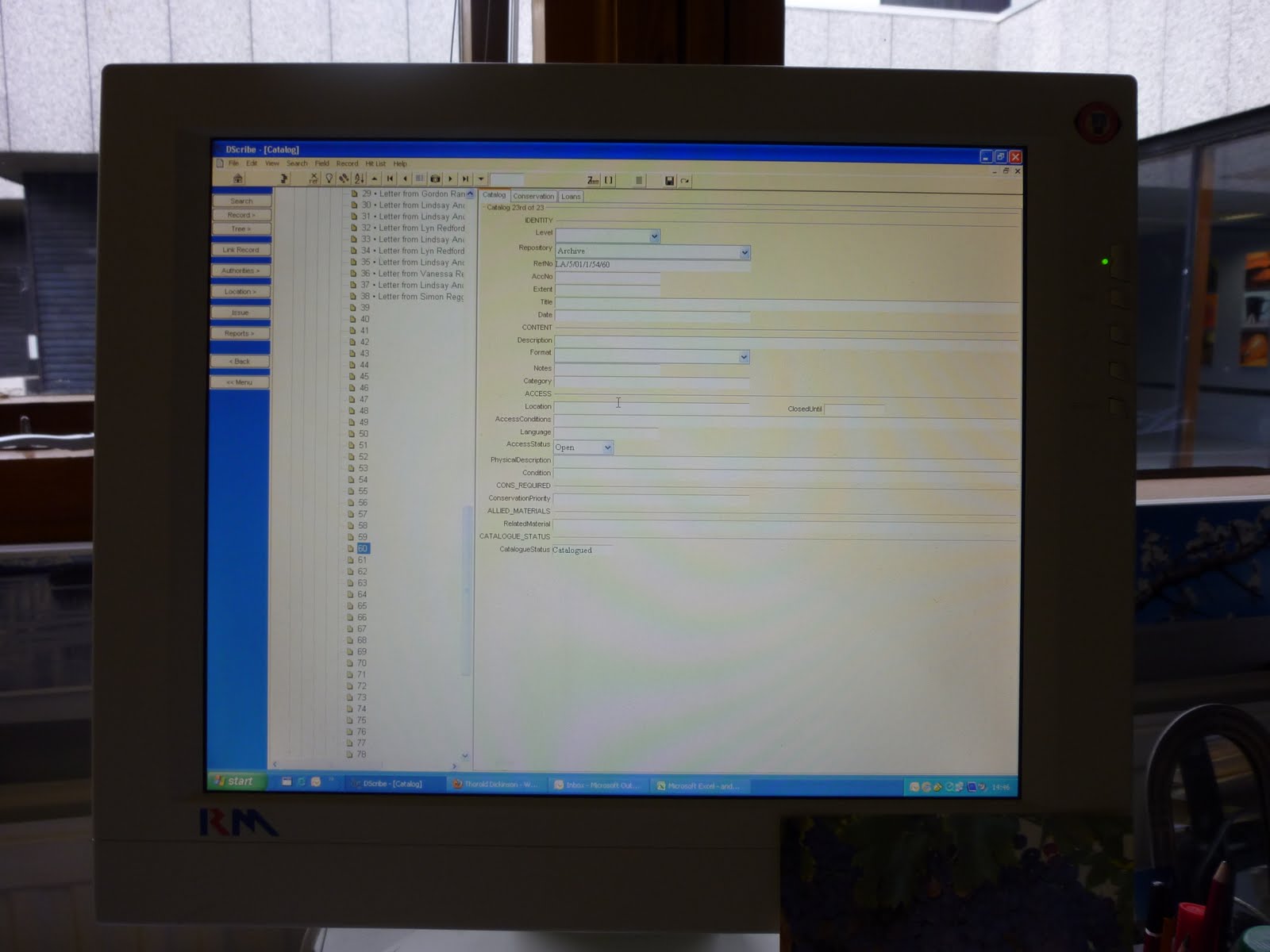
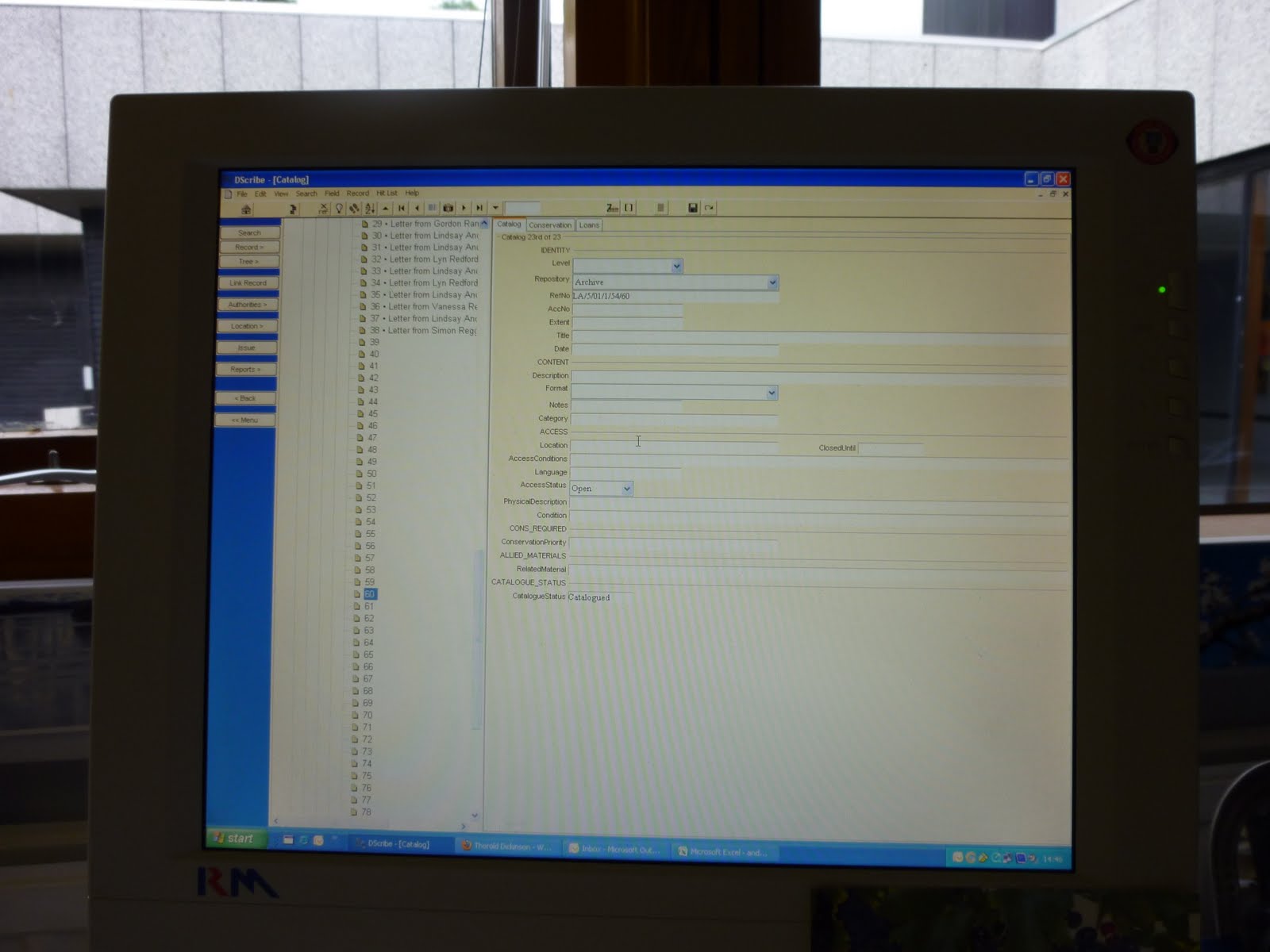
The cataloguing of each file begins by sorting the letters into order alphabetically, then chronologically from earliest to most recent, helpfully all the letters with each correspondent are usually already together. Then it's a case of numbering every letter with a unique identifying code which consists of the collection name, sub-collection, series, sub-series, file and item, for example at the moment I'm doing LA/5/1/1/57/45 with 'LA' identifying the collection, 5 identifying the sub-collection 'working papers', the first 1 is the series 'correspondence files', the second 1 is the sub-series 'correspondence files A-Z', the 57 is the file number and is 'correspondence, S' and 45 is the number of the individual letter from Maggie Smith. After the numbering is done then the folder will be catalogued onto the cataloguing software CALM for Archives - you can see a screenshot in the photo above - this is going to be ingrained on my brain by the end of the project as I've already started dreaming about cataloguing on days when I have a particularly heavy workload!

Once catalogued the folder will be divided up into two or three folders if the amount of letters is too heavy for one folder and these folders are put in new acid-free paper, archival standard boxes. It may not sound too exciting but I love it! The TV in the room is strictly for work-related use by the way! Quite a few of Anderson's films are not available on DVD so it's been really handy to have this TV with a VHS and DVD player built in. Glory! Glory! and The Whales of August are the two which come to mind immediately as being only on VHS (in the UK) so it was necessary to watch them before cataloguing the material relating to them.


Monday, 30 November 2009

Archival detective work

One of the best aspects of my job (especially for a girl like me with a penchant for trashy American crime shows and detective novels!) is the detective work which is necessary when cataloguing archival material. Recently I've spent plenty of time doing archival detective work on the two large boxes of material we have in the Lindsay Anderson Archive which relate to About John Ford.


About John Ford
is a very interesting mixture of critical analysis of the films of John Ford, mixed with Anderson's personal reminiscences of his meetings with John Ford, and interviews he conducted with various people who worked with Ford. Anderson's admiration of John Ford began in 1946 when he first saw My Darling Clementine. It continued through his reviews and articles about Ford in Sequence, his meetings with Ford over the years, and two television programmes: an Omnibus two-part programme on Ford narrated by Anderson (1992) ; and a Channel Four programme (1987) , where Anderson gave a 'masterclass' to a group of students about the art of film-making through the example of My Darling Clementine

The boxes relating to About John Ford contain: notes made by Anderson on Ford's films; press cuttings re: John Ford; early drafts of the book; correspondence with friends, colleague's and family of Ford; correspondence with publishers; correspondence with readers and critics; promotional material for the book; and reviews of the book.

The first big piece of detective work was with the early drafts of the book. There were some pages paper clipped together which obviously ran as a section (anything from 2 pages to 32 pages long), but there were no page numbers or chapter headings to work out where in the published version of the book they relate to. The first decision I had to make was, do I take the time to locate each of these draft sections in the published book? Well, I quickly decided that yes, it was worth the time to do this as it would be of value to future researchers, and it's always interesting to see what remains and what is changed from draft to published version. So then, how to work out where all these pages were located in the published book? Not that I'm claiming any great shakes as a detective, just common sense really, but I determined that the quickest way would be to use the index in About John Ford, and look for the least common, or least famous, actors names or place names. Where there were only a few occurrences of a name it was relatively quick to locate the draft pages and reference them in my cataloguing. Now, this may not be interesting to everyone, but somehow to me, this job was immensely satisfying - I guess that's why I'm an archivist!

Another problem I encountered was due to my less than all encompassing knowledge of John Ford's films. By this I must confess that prior to cataloguing this material I had only seen one Ford film, The Quiet Man. So I started attending screenings for John Izod's class
'Genre in Hollywood: The Western' (the benefits of working in a University!) . I have now seen, and enjoyed, My Darling Clementine, Stagecoach, and Iron Horse. Only a drop in the ocean as far as the number of John Ford films but it has helped with the cataloguing. It didn't help me much though when I came across a file with four black&white photographs of stills from John Ford films. With so many films to choose from, and having seen so few of them, I was having real trouble trying to identify them. So, rather than spend huge amounts of time going through images on IMDb from all his films, I decided to call in the cavalry (excuse the bad pun!). I e-mailed Charles Barr, a Professor of Film at University College Dublin and a John Ford expert (Charles Barr gave a very interesting paper About the John Ford Archive at our conference in September). Charles was able to identify the images for me, including the photograph of Charley Grapewin, from 'Tobacco Road' (1941) which I've included here.

LA/4/3/10/3, Still from Tobacco Road
© Lindsay Anderson Collection, University of Stirling Archives

I love all the research and detective work that goes into cataloguing archives, all the new directions it sends you off in. As I've been going along with this cataloguing - over two years so far! - it's been so rewarding to see all the connections starting to build up, recognising more of the names I come across, almost like old friends even though I never knew any of them. Resources that I've found particularly useful for the Lindsay Anderson Collection have been the IMDb, Lindsay Anderson Memorial Foundation, BFI Film and Television database, Screenonline and Doollee

N.B. John Ford's papers are held at the Lilly Library, Indiana University in Bloomington, Indiana.