Just a quick post to let any readers in Poland, or any readers who happen to be heading to Warsaw next week, that there is a Lindsay Anderson retrospective coming up at the cinema Iluzjon. It starts Wednesday 17th April and along with screening many films by Lindsay Anderson they are also using material from the Lindsay Anderson Archive at Stirling University, Scotland, to promote the season.
Wish I could be there!
Showing posts with label Lindsay Anderson Archive. Show all posts
Showing posts with label Lindsay Anderson Archive. Show all posts
Thursday, 11 April 2013


Thursday, 6 October 2011
Return to the Pleasure Garden
I haven't been writing so much on this blog recently as I've been doing most of my blog posts on my work blog about the project I'm working on cataloguing the records of the National Union of Women Teachers. I was recently cataloguing more boxes of 'cinema' material in my job cataloguing the records of the National Union of Women Teachers. I've been really astonished by just how many different subjects and causes the women of the NUWT were involved in, cinema being just one of many. These boxes in question included material on the use of films in education as well as discussion of the type of films suitable for children's viewing. At the back of one of the files is a collection of invitations to film screenings and to my surprise it included one to a film which I'd catalogued lots of material about before, in my job at Stirling University cataloguing the Lindsay Anderson Archive. The film was not directed by Lindsay Anderson, rather he starred in it, and it was directed by his friend, James Broughton. The Pleasure Garden is set in Crystal Palace in London and was described by Broughton as a 'midsummer afternoon's day-dream' (taken from the notes provided for the screening). It's a really joyful film, about the triumph of love and freedom over rules and restrictions.
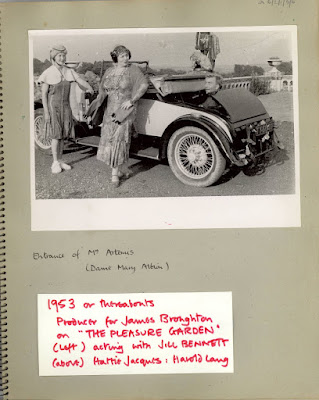
The Lindsay Anderson Collection at Stirling contains correspondence with James Broughton, information about the development and filming of The Pleasure Garden and a great photo album which Lindsay Anderson made of the filming of The Pleasure Garden. You can see one of the pages from it below (I originally blogged about this last year here). You can search the Anderson Archive for James Broughton and find more information on the film here.
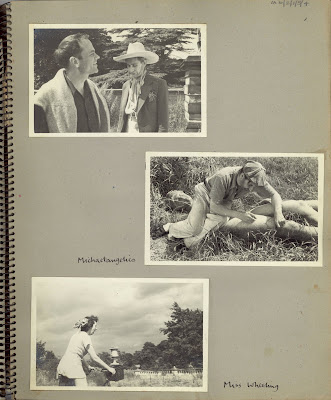
The Lindsay Anderson Collection at Stirling contains correspondence with James Broughton, information about the development and filming of The Pleasure Garden and a great photo album which Lindsay Anderson made of the filming of The Pleasure Garden. You can see one of the pages from it below (I originally blogged about this last year here). You can search the Anderson Archive for James Broughton and find more information on the film here.

Page from photograph album LA/6/2/1/5
© Lindsay Anderson Collection, University of Stirling Archives
© Lindsay Anderson Collection, University of Stirling Archives
Tuesday, 22 February 2011
on Marginalia
Thanks to a few links on Twitter I just got directed to an article in the New York Times 'Book Lovers Fear Dim Future for Notes in the Margins' (20/02/2011). The article doesn't discuss the issue of writing in the margins on digital books, except to quote G. Thomas Tanselle, a former vice president of the Kohn Simon Guggenheim Memorial Foundation and an adjunct professor of English at Columbia University “People will always find a way to annotate electronically... But there is the question of how it is going to be preserved. And that is a problem now facing collections libraries.” I don't own a Kindle or other digital book so don't know if it is possible to write in the margins so to speak - does anyone else know, has anyone tried to do it?
What it does discuss is the history of marginalia, or writing in the margins of books. It gives various examples including a book The Pen and the Book about making a profit in publishing. the book in itself is not particularly valuable for it's original content, instead it is the notes in the margins that qualify it to be held in an Archive. The notes were written by Mark Twain and they include very scathing comments about the author, Walter Besant. Twain noted in pencil that "nothing could be stupider" in regards to Besant's argument that advertising could be used to sell books.
The Lindsay Anderson Archive holds Anderson's personal book collection and how I wish now that I'd spent a few evenings going through all the books in it more thoroughly for annotations as the ones I did find were great! The one I most remember is one that has been used by me and by Karl Magee (the University Archivist at Stirling). The book in question is Hollywood England: the British Film Industry in the Sixties, Alexander Walker, 1974. In one section Walker talks about the failings of British cinema to produce Auteurs 'Where in the period under review does one look for the British equivalent of Bergman, or Forman, or Rohmer, or Antonioni, or Truffaut of even Godard? The answer is, nowhere.'. In his characteristic red pen Lindsay Anderson has boldly underlined this and written in the margins in large red letters 'Thanks!' I'm sure there must be many more examples of marginalia in the book collection that I just didn't get to - one of the pitfalls of fixed-term contract work I suppose!
What it does discuss is the history of marginalia, or writing in the margins of books. It gives various examples including a book The Pen and the Book about making a profit in publishing. the book in itself is not particularly valuable for it's original content, instead it is the notes in the margins that qualify it to be held in an Archive. The notes were written by Mark Twain and they include very scathing comments about the author, Walter Besant. Twain noted in pencil that "nothing could be stupider" in regards to Besant's argument that advertising could be used to sell books.
The Lindsay Anderson Archive holds Anderson's personal book collection and how I wish now that I'd spent a few evenings going through all the books in it more thoroughly for annotations as the ones I did find were great! The one I most remember is one that has been used by me and by Karl Magee (the University Archivist at Stirling). The book in question is Hollywood England: the British Film Industry in the Sixties, Alexander Walker, 1974. In one section Walker talks about the failings of British cinema to produce Auteurs 'Where in the period under review does one look for the British equivalent of Bergman, or Forman, or Rohmer, or Antonioni, or Truffaut of even Godard? The answer is, nowhere.'. In his characteristic red pen Lindsay Anderson has boldly underlined this and written in the margins in large red letters 'Thanks!' I'm sure there must be many more examples of marginalia in the book collection that I just didn't get to - one of the pitfalls of fixed-term contract work I suppose!
Thursday, 2 December 2010
This Sporting Life - sports book of the half century
There was an interesting article about the novel 'This Sporting Life', by David Storey, on this morning's Guardian sportblog. The point is made that the depiction of Rugby, both the on and off pitch side, is as realistic a portrait as you will get. I knew when watching the film that it was pretty brutal, both on and off the pitch, but as a non-sports person with no knowledge of rugby I had no idea how true a depiction it was until it was pointed out to me in reviews of both the book and the film.
Here's an exert from the article by Frank Keating. The original article can be read here
The novel was first published in 1960 and the film, made by Lindsay Anderson, and starring Richard Harris, was made in 1963.
Here's an exert from the article by Frank Keating. The original article can be read here
"By nice coincidence, this modest commemorative hurrah to mark the half-century since the publication of the finest British novel about professional sport to be written by an actual professional sportsman coincides with yesterday's naming of Brian Moore as 2010's winner of the William Hill prize for sports book of the year.
In the 50 years since its first appearance in 60s' pre-Christmas bookshops, David Storey's This Sporting Life remains not only the best literary novel by a sportsman, but the only one...
This Sporting Life has stood the test of "classic" category; at the time the Guardian staffer and rugby league buff Geoffrey Moorhouse hailed the novel as "unique", adding that "an interest in rugby league is by no means necessary to appreciate this story, any more than a fascination with whaling has ever been vital to an enjoyment of Moby Dick"...
Indeed, only this very year, the novelist Caryl Phillips was acclaiming Storey in our books' pages as "the only author who knew what it was like to be raked and stamped on by opponents, and then patronised by the chairman over drinks in the boardroom, so only he could have written such a fiercely authentic account of the hypocrisies of British sporting life"...
The novel's uneasy love story of insecure anti-hero tough, Machin, and his world-weary landlady, Mrs Howard, earthily provides harrowing off-field narrative, but it is in the raw sporting passages where the reader can wince at the resonance of uncomfortable truths as in, to take a single example, this touchline gallop by the malcontent, joyless Machin...
In Robert Sellers's unputdownable new book Hellraisers, on the careers of various larger-than-life actors, the author quotes Storey on the first day's shooting of the film at Huddersfield's ground where the cynical local team, hired as extras, waited in a bored, heel-kicking cluster for Harris's entrance.
"They were at the other end of the pitch going, 'Oh, Jesus, look at this flower coming out.' Harris just took one look at them and ran down the whole pitch towards them. And as he ran, he got faster and faster until they suddenly realised with horror that he was going to run right into them, which he eventually did. It was that initial gesture of total physical commitment, indifference and carelessness, that caught the players' admiration and they really took to him in a major way."
For once a film was so faithful to its origins that it even enhanced the original novel's unfading and stimulating quality. Sports book of the half-century, you might even say."
The novel was first published in 1960 and the film, made by Lindsay Anderson, and starring Richard Harris, was made in 1963.
 |
| Lindsay Anderson and Richard Harris on set of This Sporting Life © Lindsay Anderson Collection, University of Stirling Archives |
Friday, 27 August 2010
Our new Archive space in the University of Stirling Library

The newly renovated library building is getting all the finishing touches put in now - ready for the big opening on Monday 30 August. The new archive space is looking, and smelling great! Yes, I did say smelling - I had forgotten how much I love the small of an archive store! Hmmn, just brought to my mind Lieutenant Colonel Kilgore's "I love the small of napalm in the morning" when I wrote that line down - I guess to some I might sound a bit mad with my love of the small of an archive store, but hopefully not in the same league as Kilgore! The new search room is lovely and bright and spacious as you can see from the photos. I think the archival material we've chosen for the display cases (each shelf having its own theme) work really well and hopefully the staff and students will agree when we open on Monday.


Wednesday, 25 August 2010
Image from the archive
Well I forgot my camera again today so no images of the lovely new archive. So, as a quick post I thought I'd share this striking image from a 1984 aerogramme sent to Lindsay Anderson. It is promoting the 1984 US Olympics (as you can see!) and there are quite a few of these in the collection, sent by different people. I really like all the bright colours and the design and I think it would be so nice to receive a letter dressed up like that. I was talking to someone last night about the lost art of letter writing - well actually not quite so lost, I don't think, as I know that me and my friends often write letters to each other, send cards, postcards and Cd's etc. There is really something so wonderful about receiving a letter that is quite different than online communication. I know people still use the post for communicating but only as one of many forms of communication and this is what is so exciting nowadays- the myriad of ways in which people can speak to each other.

Now I'm off back to the archives store to carry on with organising all the boxes in the Lindsay Anderson Archive - it's very satisfying to see it all in its new home!

Now I'm off back to the archives store to carry on with organising all the boxes in the Lindsay Anderson Archive - it's very satisfying to see it all in its new home!
Tuesday, 24 August 2010
Reaching the end of the project
A week today will be my final day working at Stirling University on the Lindsay Anderson Archive and the 'Cinema Authorship of Lindsay Anderson' AHRC project. I'm excited about the new challenges the future will bring- including the immediate challenge of finding a new job! However after three years working with the archive I'll be incredibly sad to leave Lindsay (as I now think of him) behind. I feel like I've really come to know him over the past 3 years - though I know that this is in no way comparable to those who actually knew him during his lifetime. I also feel rather possessive of the archive - is this a common feeling amongst archivists when you work so long with one collection? I imagine so - but I know that it is in good hands at Stirling University, particularly now it will be housed in the lovely new Archive store (more pictures of the new archive to follow tomorrow as I forgot my camera today). London is calling though and I am super excited about the move to London with my husband to start a new stage in our life in a city which we both already love. For today though I better stop gabbing and get back to David Vaughan (yes, I'm on 'V' of the named correspondence files - not long to go now!). I did try and scan a rather lovely piece of sheet music which David Vaughan sent to Lindsay Anderson for the 1929 film 'The Broadway Melody' but my highly temperamental scanner seems to have finally given up the ghost.
So instead here is a photo of my co-workers from the Lindsay Anderson project on a team away day we recently enjoyed. The photo is taken near the Standing Stones on Machrie Moor on the Isle of Arran. We had a lovely day, we walked for three hours in total, saw lots of beautiful countryside, enjoyed each others company - and a well deserved pint at the end of the walk!
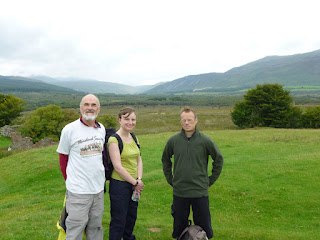
So instead here is a photo of my co-workers from the Lindsay Anderson project on a team away day we recently enjoyed. The photo is taken near the Standing Stones on Machrie Moor on the Isle of Arran. We had a lovely day, we walked for three hours in total, saw lots of beautiful countryside, enjoyed each others company - and a well deserved pint at the end of the walk!

Friday, 20 August 2010
Exhibition from the Lindsay Anderson Archive will open newly refurbished Stirling University Library and Archive
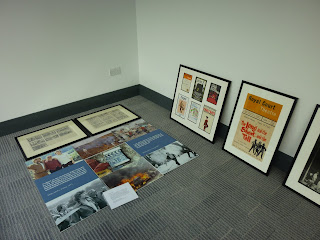
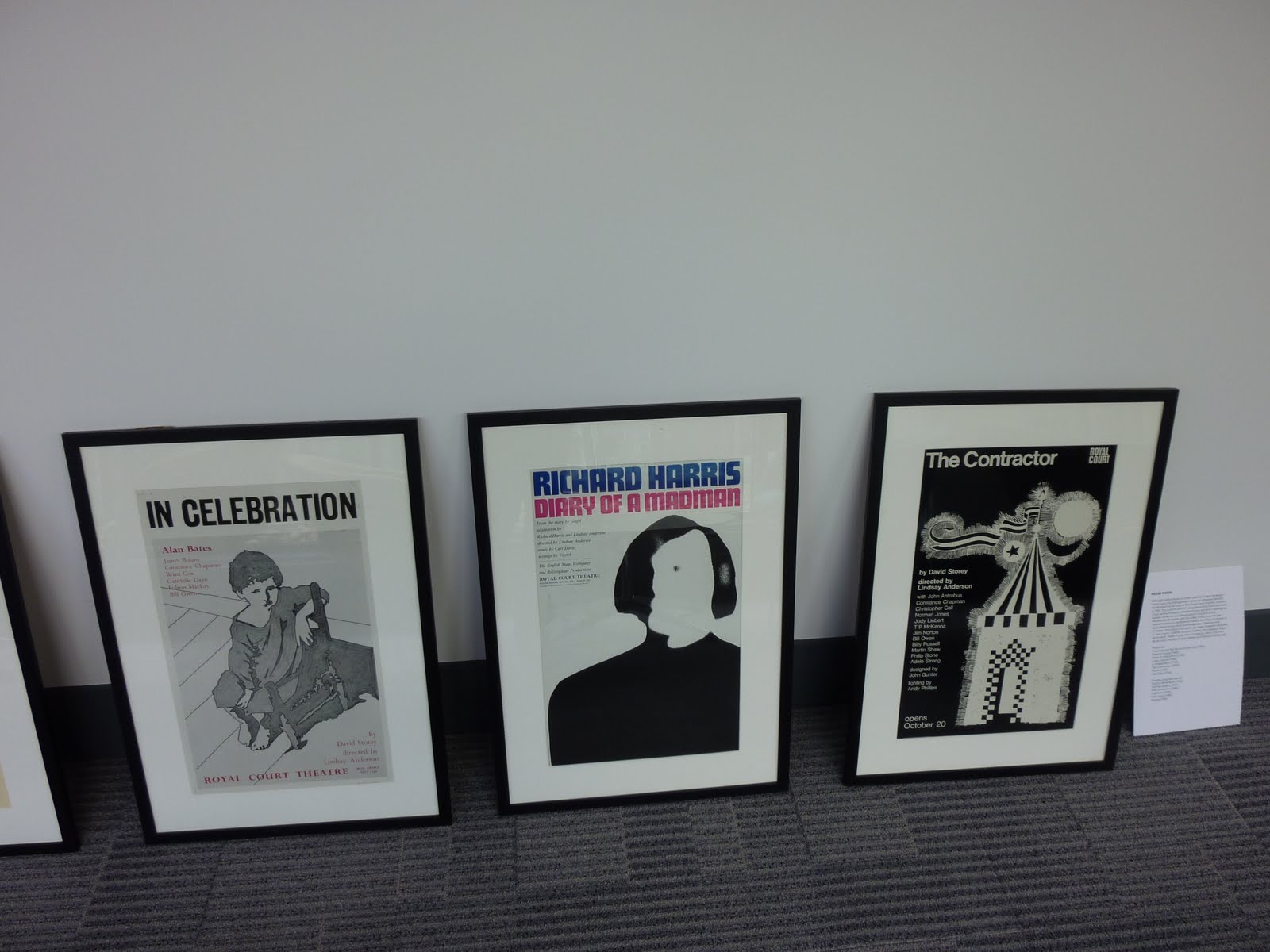
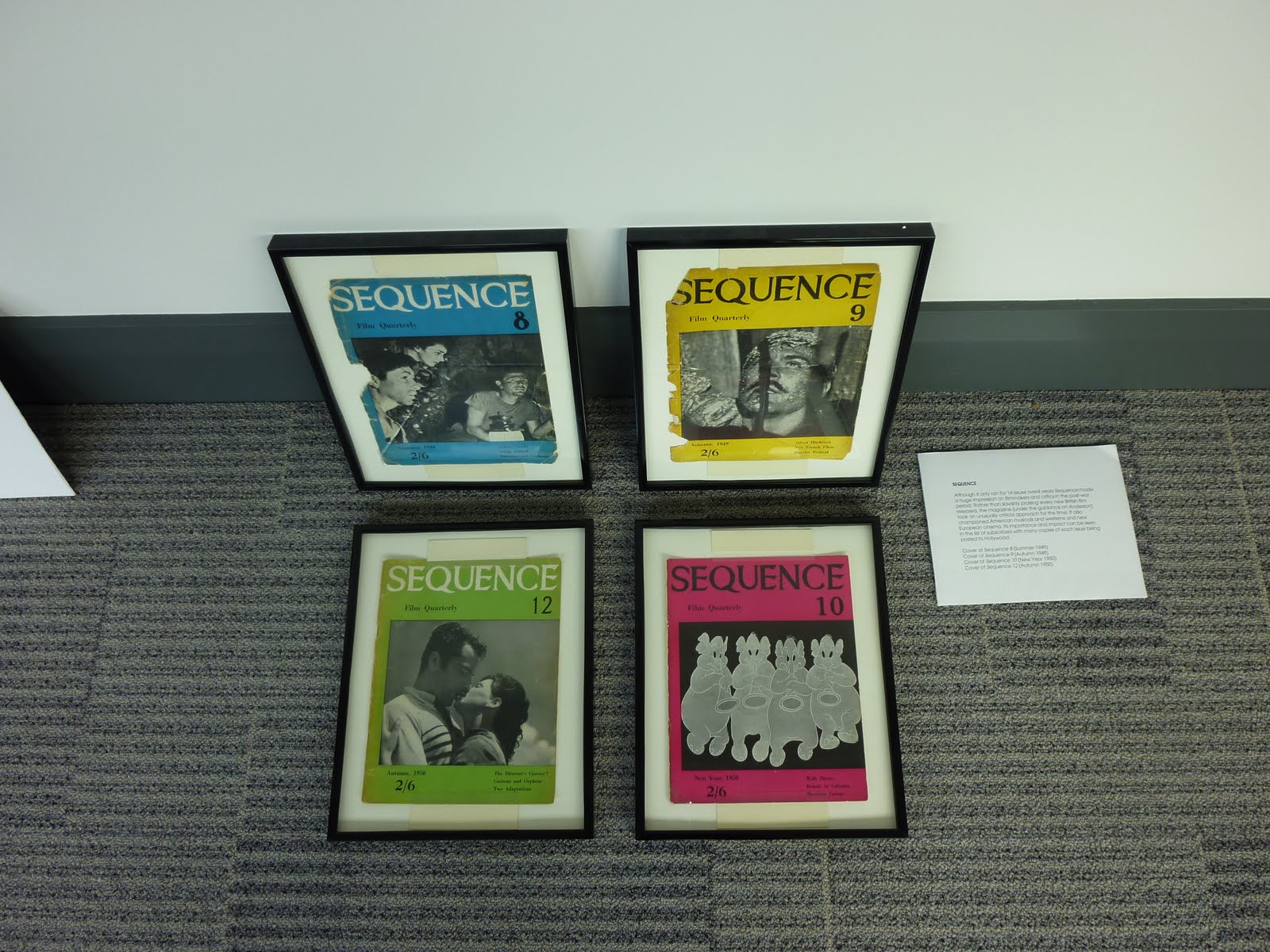
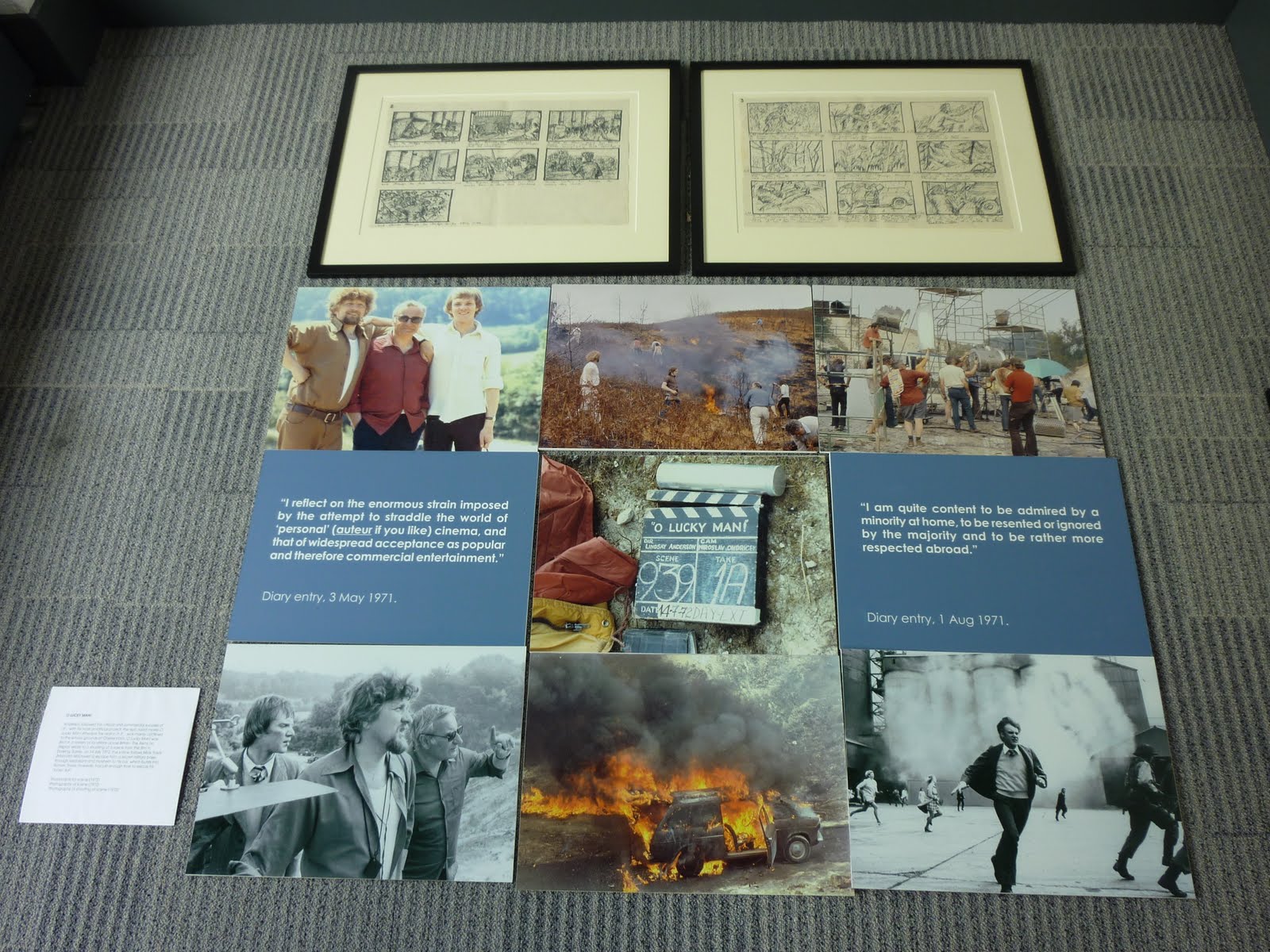
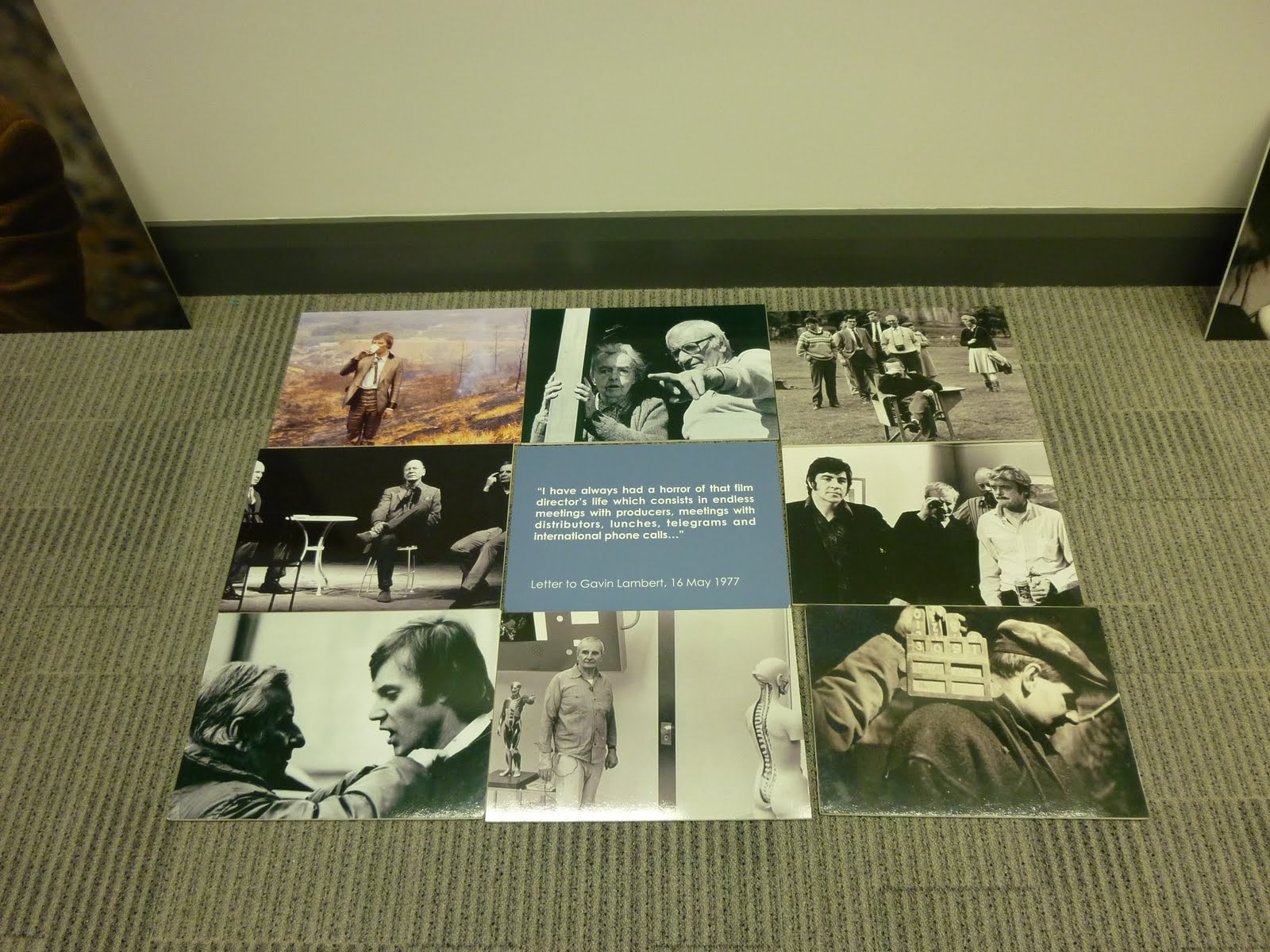
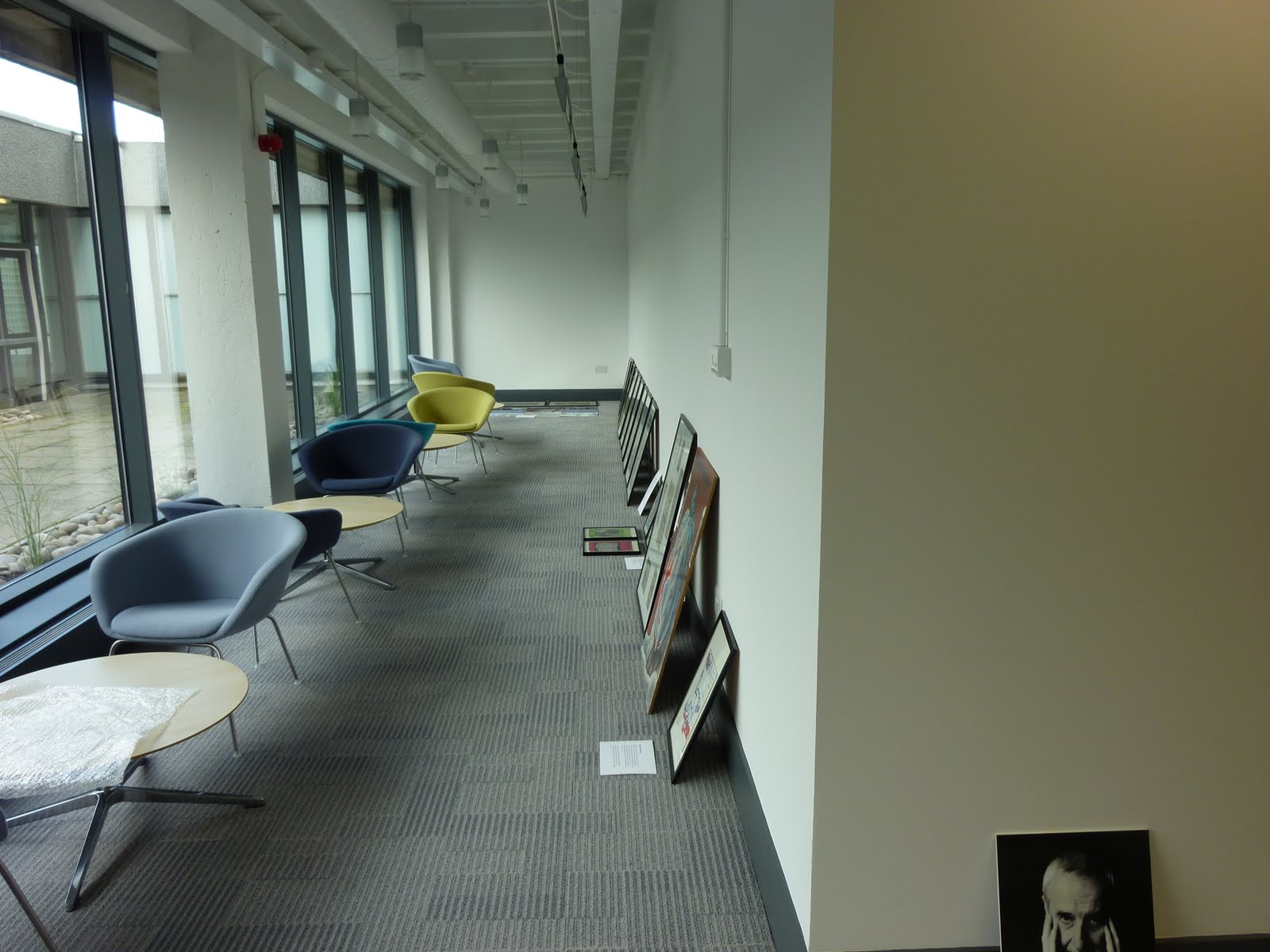
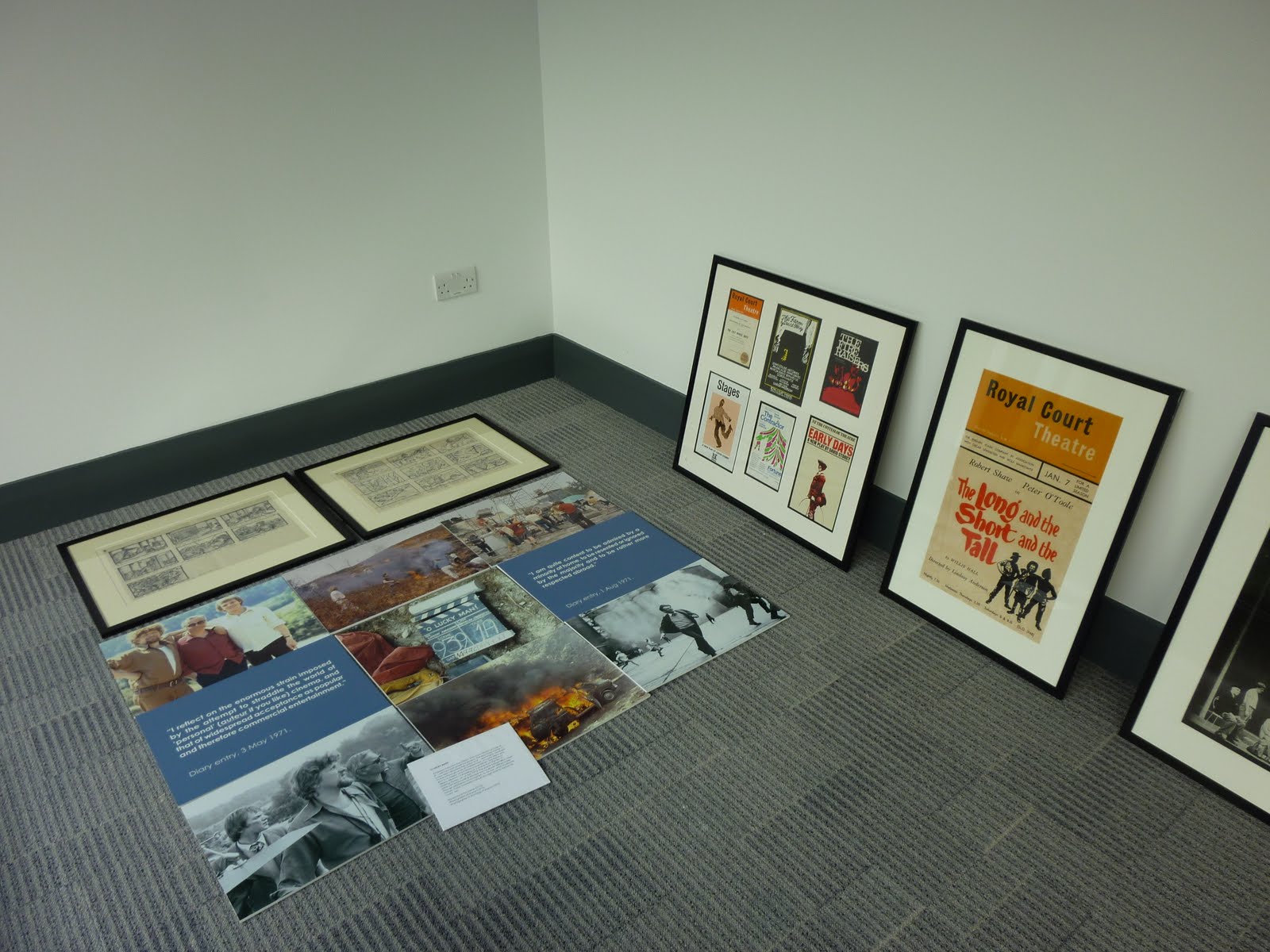
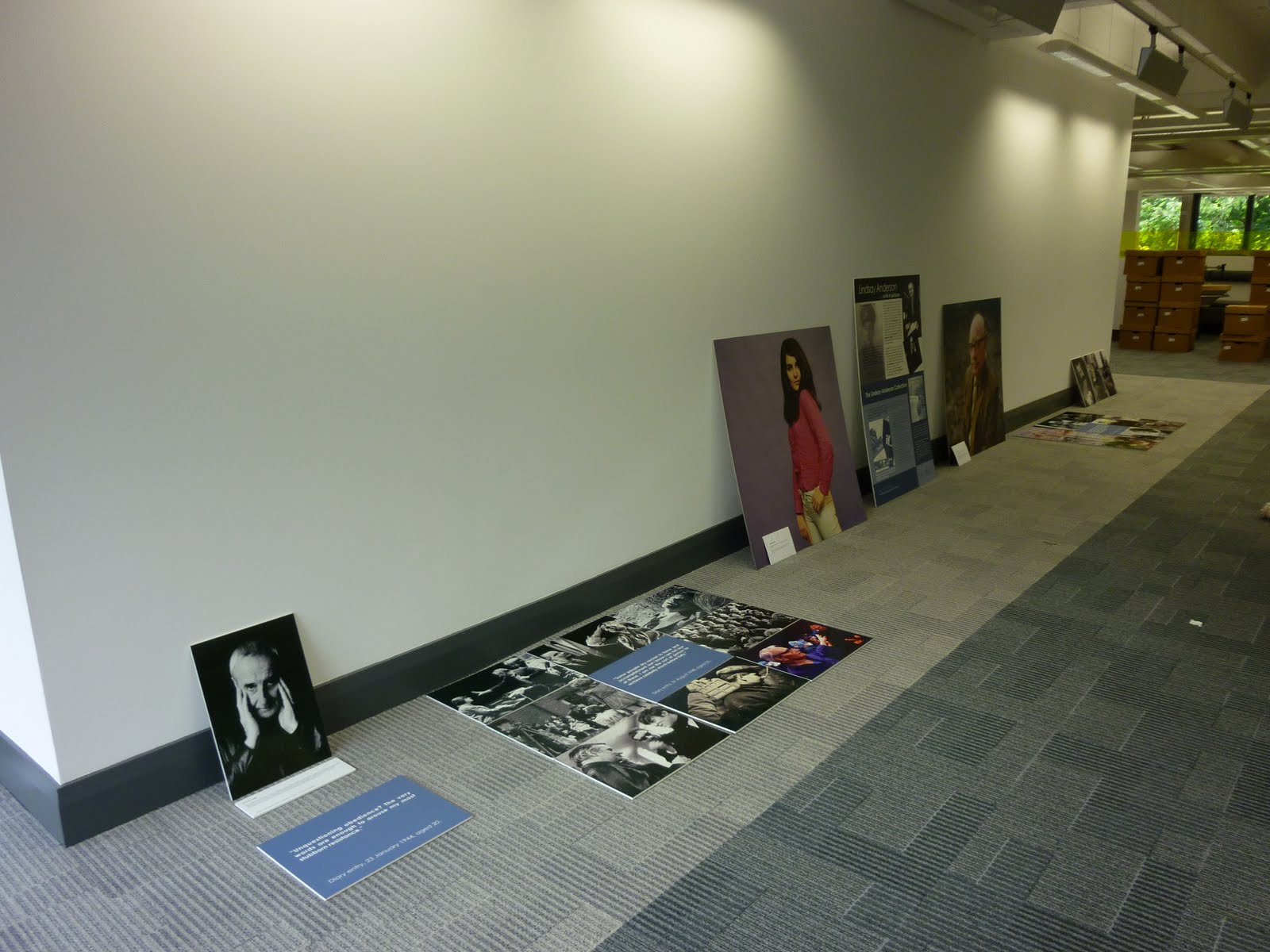
It's all go here with the last few weeks before the newly refurbished library and archive opens at Stirling University. On entering the new library one of the first things that people will see will be all the wonderful photographs from the Lindsay Anderson Archive Exhibition. We had a run through last week of marking out where everything would be hung and you can see our work in the images below. This week is the setting up of the exhibition so it will all be ready for the opening of the new Library and Archive on 30 August - which is spookily enough, also the anniversary of Lindsay Anderson's death. I'll post some more photos on Monday of the exhibition all up on the walls. It was a really good idea to lay it all out like this though as it gave us an idea of the amount of space we had, the spacing to leave between photographs and the overall impact of the images - pretty striking I think (obviously looking a whole lot better on the walls than they do laid out on the carpet!).




Monday, 2 August 2010
Archives Hub feature on the Lindsay Anderson Archive
The 'This month we celebrate' feature on the Archives Hub website is a good way of finding out about collections held in other further education institutions in Britain and I've enjoyed reading about the different collections highlighted through this section. I am very pleased to say that this month I wrote a piece about the Lindsay Anderson Archive which has been used for the 'This month we celebrate' feature for August - so... 'This month we celebrate Lindsay Anderson'.


Wednesday, 28 July 2010
New images on Stirling University Archives Flickr
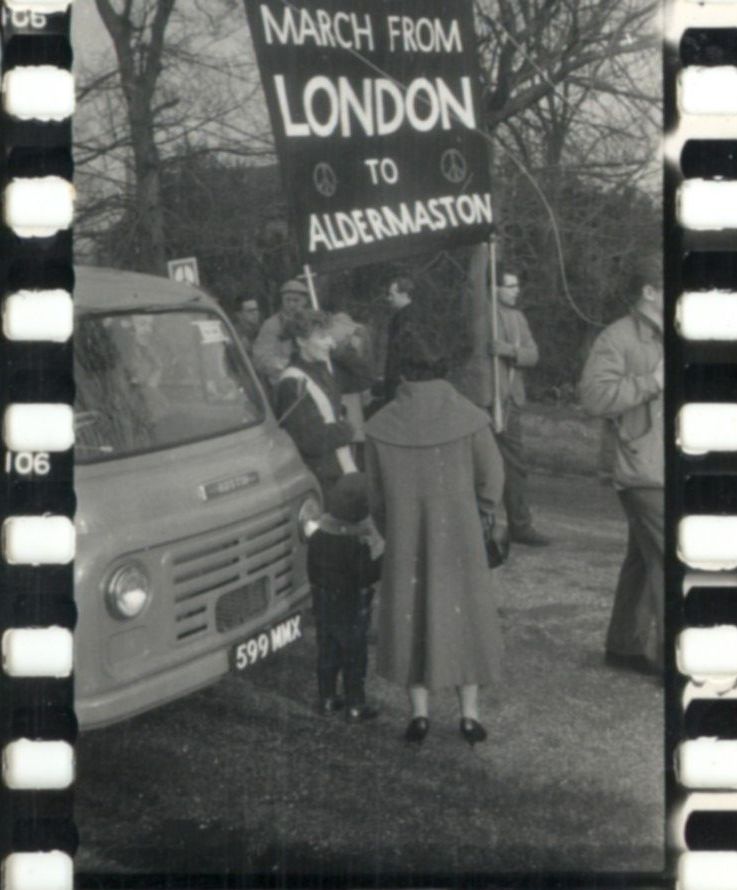
LA/6/2/2/29/4(5) Image from the march to Aldermaston, Easter 1958
© Lindsay Anderson Collection, University of Stirling Archives
© Lindsay Anderson Collection, University of Stirling Archives
I'm having a short enforced break from cataloguing whilst my database (notice the possessive use here!) is being converted to become an online catalogue. Hopefully this will be ready within the next two weeks and I can share it all here. Today I can start back on cataloguing (phew!) but I thought I'd share some of alternative work I've been doing over the past few days before I get back to my files! Seeing as how discussing the numbering and reordering I've been doing may be slightly dull I thought I'd focus on the new sets of images I've uploaded to the University Archives Flickr site. I've scanned in five sets of photographs, or contact strips to be more precise and although the quality isn't all that great in a few of them - some fading, bright spots, tears etc. the content of the images is great and I think the distress on some of them just adds to the character.
The main subject of the images is the 1958 march from London to Aldermaston. This was a march organised over the Easter weekend 1958 by the Campaign for Nuclear Disarmament (CND). CND was formed a few months earlier in February 1958 and this was their first large organised protest. Several thousand people took part in the four day march which travelled from London to the Atomic Weapons Research Establishment at Aldermaston in Berkshire. There was a contingent of friends and supporters from the Royal Court Theatre who took part in this march and they can be seen, with their theatre inspired banners ('To be or not to be'), in the images below.

LA/6/2/2/30/2(6) Image from the march to Aldermaston, Easter 1958
© Lindsay Anderson Collection, University of Stirling Archives
© Lindsay Anderson Collection, University of Stirling Archives
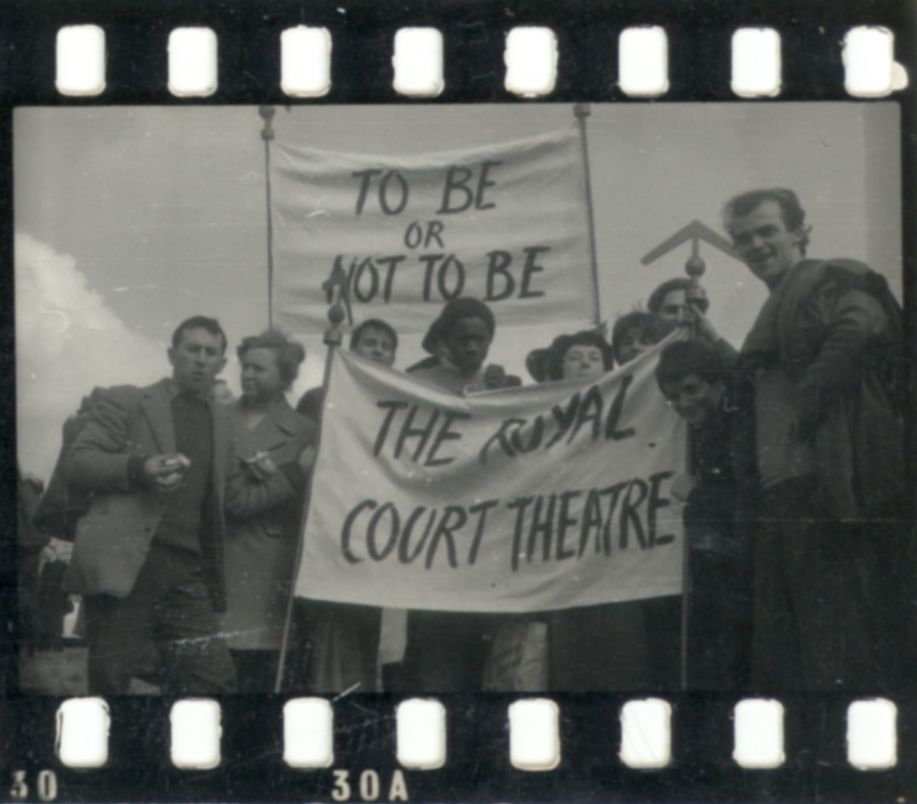
LA/6/2/2/32/1(6) Image from the march to Aldermaston, Easter 1958
© Lindsay Anderson Collection, University of Stirling Archives
© Lindsay Anderson Collection, University of Stirling Archives
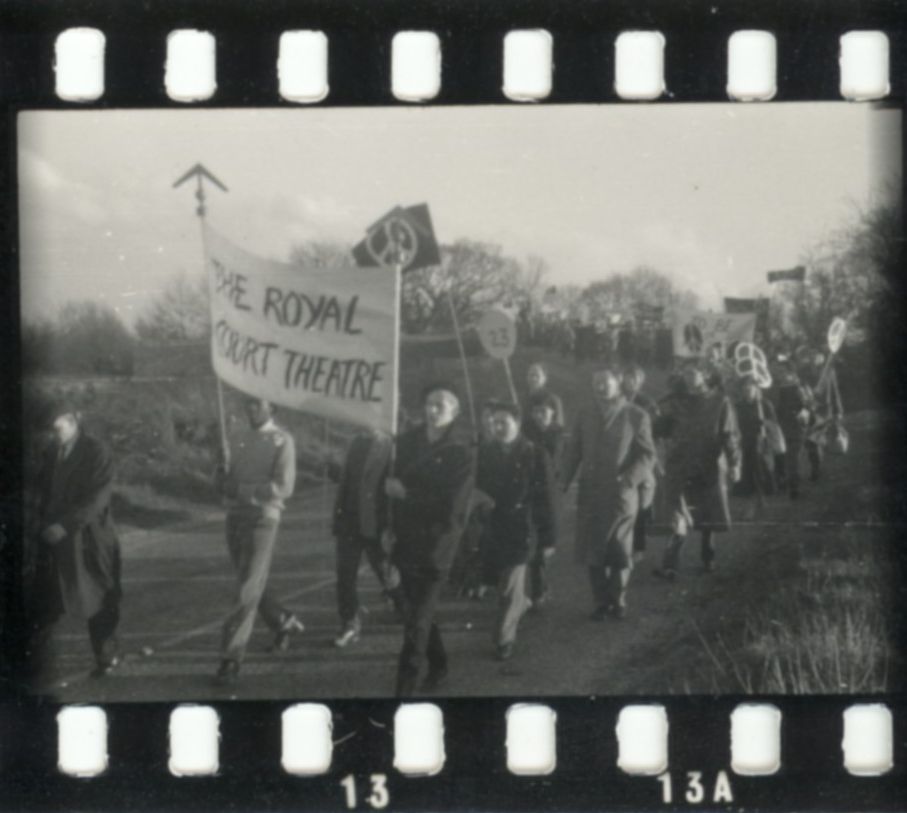
LA/6/2/2/30/3(2) Image from the march to Aldermaston, Easter 1958
© Lindsay Anderson Collection, University of Stirling Archives
© Lindsay Anderson Collection, University of Stirling Archives
Lindsay Anderson took part in this march and was also central to the creation of a film March to Aldermaston (1959). The film was made by a committee of volunteers entitled the 'Film and Television Committee for Nuclear Disarmament'. Along with Lindsay Anderson was Karel Reisz and a whole team of experienced film workers. This included lab technicians who worked for free to process the footage and Contemporary Films, who handled the distribution of the film. Although the film is credited to the entire committee it is widely acknowledged that Lindsay Anderson took over the film at the editing stage and shaped it into the film. The narration of the film is by Richard Burton, who also narrated Lindsay Anderson and Guy Brenton's Thursday's Children (1954). The commentary which Burton read was written by Christopher Logue (a poet and playwright and a friend of Anderson's). The film itself seems as relevant to me today as it was then and indeed this made the film even more powerful in my mind - the fact that nothing much has changed. Personally I find the support of nuclear weapons quite incomprehensible (of course, money and power are the main reasons but quite why these should outweigh the concern for human life is beyond me). Whatever your political views though I think this film would be very interesting to watch as a document of the 1950s. Like the films created by Anderson and others under the banner of Free Cinema this film documents the lives and concerns of ordinary working people.
The film is available as part of the boxset DVD on Free Cinema produced by the British Film Institute. There is more information about the film on BFI Screenonline. For more information about CND see their website.
I like that the images show the periods of rest and fun in between the marching, for example the photo below of a girl having a rest. There was musical accompaniment to the march, inlcuding folk music and jazz and there are a number of photos like the one second below which show the musicians taking part in the march.
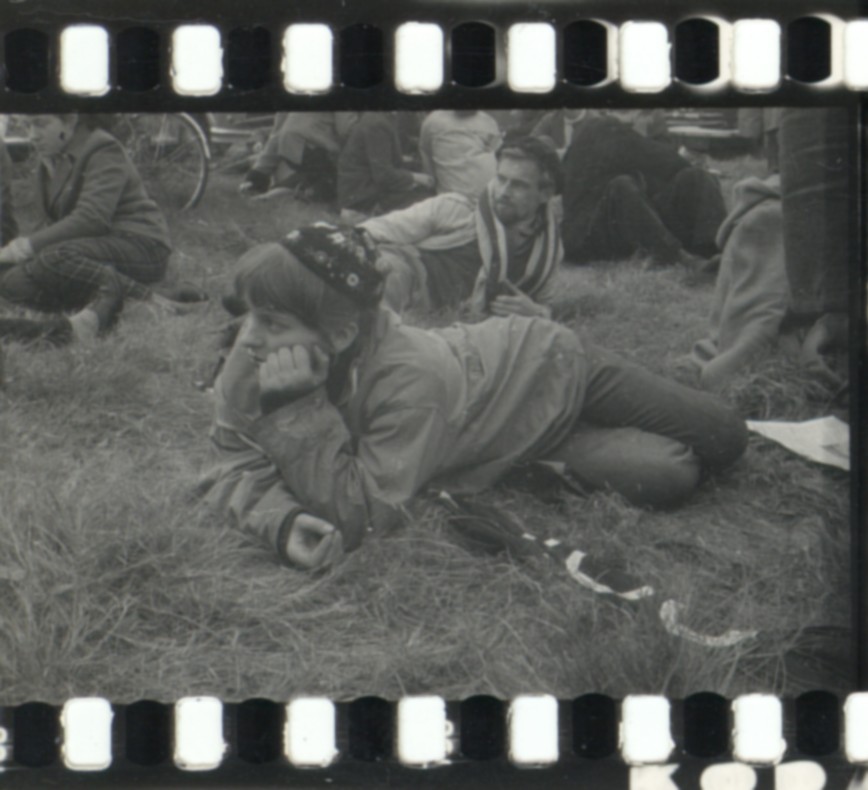
LA/6/2/2/29/4(1) Image from the march to Aldermaston, Easter 1958
© Lindsay Anderson Collection, University of Stirling Archives
© Lindsay Anderson Collection, University of Stirling Archives

LA/6/2/2/29/3(4) Image from the march to Aldermaston, Easter 1958
© Lindsay Anderson Collection, University of Stirling Archives
© Lindsay Anderson Collection, University of Stirling Archives
Monday, 19 July 2010
My posting has still been rather sporadic of late and I think it will continue that way for the next two months as it nears the end of our three-year project on 'The Cinema Authorship of Lindsay Anderson' with the deadlines looming large! I've now catalogued over 10,200 items in the archive which I find quite staggering to think about sometimes! The best things is I'm still enjoying the cataloguing as much now as I was at the beginning, indeed perhaps even more so. The reason for that being that the more you get to know about a collection and the individuals in it the more you get out of the cataloguing - well that's what I find anyway.
So, in the lack of anything more constructive to say right now whilst I continue to work my way through the named correspondence files I thought I would just share this Polish postcard I came across in a file on Friday. It's for a theatre production of Le Peche (according to Wikipedia this was written in 1908 and translates as History of Sin). The playwright, Stefan Zeromski(1864 - 1925) was a Polish writer, journalist and playwright and (once again taken from Wikipedia) he was apparently known as "the conscience of Polish literature."

So, in the lack of anything more constructive to say right now whilst I continue to work my way through the named correspondence files I thought I would just share this Polish postcard I came across in a file on Friday. It's for a theatre production of Le Peche (according to Wikipedia this was written in 1908 and translates as History of Sin). The playwright, Stefan Zeromski(1864 - 1925) was a Polish writer, journalist and playwright and (once again taken from Wikipedia) he was apparently known as "the conscience of Polish literature."

LA/5/01/2/18/52, Lindsay Anderson Collection
Tuesday, 13 July 2010
The wonders of modern technology!
I am steadily making my way through the Lindsay Anderson named correspondence files. I had a very pleasant day recently cataloguing the correspondence between Lindsay Anderson and Harry Carey Jr. The son of Harry Carey, Harry Carey Jr. was, like his father, an actor in John Ford's Stock Company. He starred in ten John Ford's films: 3 Godfathers (1948); She Wore a Yellow Ribbon (1949); Wagonmaster (1950); Rio Grande (1950); The Long Gray Line (1955); Mister Roberts (1955); The Searchers (1956); Two Rode Together (1961); Flashing Spikes (1962); Cheyenne Autumn (1964). Harry Carey Jr. (also known as Dobe due to the colour of his hair) wrote a memoir of his time as an actor for John Ford Company of Heroes and this occupies a lot of the discussion in the correspondence between Anderson and Carey. The correspondence starts in 1980 but we know they met earlier than this as there is an interview Anderson conducted with Carey in About John Ford in 1978.


The reason I said that this was a very pleasant way to spend the day is that Harry Carey Jr. just comes across as such a lovely man - the correspondence between them is warm, filled with reminiscences about John Ford and discussions of his films, but also some very vivid descriptions of Monument Valley and the surrounding areas which are great to read.
The first letter in the file from Anderson to Harry Carey Jr. is dated 6 February 1980 and in it Anderson discusses his latest purchase - a video recorder! Anderson mentions this is correspondence with a number of people so it's apparent that he was very excited by this new ability to record films from the television and create his own film library. Here he is filling Harry Carey Jr. in on his purchase:
"We've had YELLOW RIBBON here on TV recently , followed by LIBERTY VALANCE. I indulged myself in a video-recorder before Christmas - so now I am building up a classic-film library. So far, besides the aforementioned, I have MEET ME IN ST. LOUIS, THE MALTESE FALCON, Renoir's LE GRAND ILLUSION, LITTLE CAESAR and PUBLIC ENEMY etc., etc. Little did I think I would have copies of such pictures of my own, available at the press of a couple of switches. Modern technology at last pays off!" LA/5/01/2/5/2
Ah, modern technology! I was going to say it's easy to take this technology for granted but, not having a sky box or any similar thing for recording of the television, and being too lazy to try and tune my video recorder to the TV, I don't take this for granted anymore! I have to hope that any programmes I miss are on BBC and will be repeated on the iPlayer, or that they are available for hire. Of course, I could just get myself a sky box or similar technology but that would be too easy, I usually wait at last a few years before catching up with the latest technology. I'll get an iPhone one of these days but only having got an iPod in the last few years, after years of a personal CD player when everyone else had a minidisc player, and before that years of a cassette player when everyone else had long moved on to CD's I guess I should just accept to being slightly behind the times with personal use of technology!

Insert sent to Anderson by Harry Carey Jr. with copy of Company of Heroes
© Lindsay Anderson Collection, University of Stirling Archives
© Lindsay Anderson Collection, University of Stirling Archives

About John Ford
© Lindsay Anderson Collection, University of Stirling Archives
© Lindsay Anderson Collection, University of Stirling Archives
The reason I said that this was a very pleasant way to spend the day is that Harry Carey Jr. just comes across as such a lovely man - the correspondence between them is warm, filled with reminiscences about John Ford and discussions of his films, but also some very vivid descriptions of Monument Valley and the surrounding areas which are great to read.
The first letter in the file from Anderson to Harry Carey Jr. is dated 6 February 1980 and in it Anderson discusses his latest purchase - a video recorder! Anderson mentions this is correspondence with a number of people so it's apparent that he was very excited by this new ability to record films from the television and create his own film library. Here he is filling Harry Carey Jr. in on his purchase:
Ah, modern technology! I was going to say it's easy to take this technology for granted but, not having a sky box or any similar thing for recording of the television, and being too lazy to try and tune my video recorder to the TV, I don't take this for granted anymore! I have to hope that any programmes I miss are on BBC and will be repeated on the iPlayer, or that they are available for hire. Of course, I could just get myself a sky box or similar technology but that would be too easy, I usually wait at last a few years before catching up with the latest technology. I'll get an iPhone one of these days but only having got an iPod in the last few years, after years of a personal CD player when everyone else had a minidisc player, and before that years of a cassette player when everyone else had long moved on to CD's I guess I should just accept to being slightly behind the times with personal use of technology!
Wednesday, 23 June 2010
Cataloguing milestones
Well, that's me finally finished cataloguing all the A-Z correspondence files - it felt like a never ending task at times but at least the material I'm cataloguing has been very interesting. The thing about being in an office on your own though is when you do reach a milestone like this there's no one to celebrate with! It does feel like a pretty big achievement when you complete one section, especially one as big as this one was, with over 3800 items! It was with great satisfaction that I scored all those files off my timetable!
Today I am not on my own as my room mate Isabelle is in so I'm doing a good job of distracting her from her dissertation with my interesting finds in the named correspondence files. Yes, once again I'm back to 'A', well 'B' now to be more precise - cataloguing the correspondence between Lindsay Anderson and the artist Don Bachardy, from the named correspondence files. Bachardy is an artist who paints the most beautiful portraits but is perhaps better known (well he was to me anyway) as the long-term partner of Christopher Isherwood. Indeed the recent Tom Ford film A Single Man, based on the book by Isherwood, was inspired by a break-up between Bachardy and Isherwood, although in real life the break up was short lived and they were together until Christopher Isherwood died in 1986.
I am only half way through their correspondence together and I found an interesting description by Anderson of why he felt Bachardy is such a talented artist "they manage to be both portraits and a collective self-portrait, which makes the whole collection a single work - as well as being a wonderfully perceptive and acute assembly of individual studies" [here Anderson is referring to a book of Bachardy's portraits which has just been published]. I thought this definition of Bachardy's talent could be transferred quite easily to film and seems to sum up Anderson's attitudes to his own creative work as a film director "no film can be too personal".
There are lots of fantastic photographs and colour images of Bachardy's paintings in the file but I would never want to use these without first seeking the permission of the artist. Instead I thought I would show these images - an invitation to an exhibition of Bachardy's portraits of actors carried out during the shooting of Robert Altman's Short Cuts.


I have just checked online and the Short Cuts portraits painted by Don Bachardy have been published with the script for Short Cuts. You can see the front cover of the published script with some of Bachardy's work (though the quality of the image is poor) on Amazon.
Today I am not on my own as my room mate Isabelle is in so I'm doing a good job of distracting her from her dissertation with my interesting finds in the named correspondence files. Yes, once again I'm back to 'A', well 'B' now to be more precise - cataloguing the correspondence between Lindsay Anderson and the artist Don Bachardy, from the named correspondence files. Bachardy is an artist who paints the most beautiful portraits but is perhaps better known (well he was to me anyway) as the long-term partner of Christopher Isherwood. Indeed the recent Tom Ford film A Single Man, based on the book by Isherwood, was inspired by a break-up between Bachardy and Isherwood, although in real life the break up was short lived and they were together until Christopher Isherwood died in 1986.
I am only half way through their correspondence together and I found an interesting description by Anderson of why he felt Bachardy is such a talented artist "they manage to be both portraits and a collective self-portrait, which makes the whole collection a single work - as well as being a wonderfully perceptive and acute assembly of individual studies" [here Anderson is referring to a book of Bachardy's portraits which has just been published]. I thought this definition of Bachardy's talent could be transferred quite easily to film and seems to sum up Anderson's attitudes to his own creative work as a film director "no film can be too personal".
There are lots of fantastic photographs and colour images of Bachardy's paintings in the file but I would never want to use these without first seeking the permission of the artist. Instead I thought I would show these images - an invitation to an exhibition of Bachardy's portraits of actors carried out during the shooting of Robert Altman's Short Cuts.
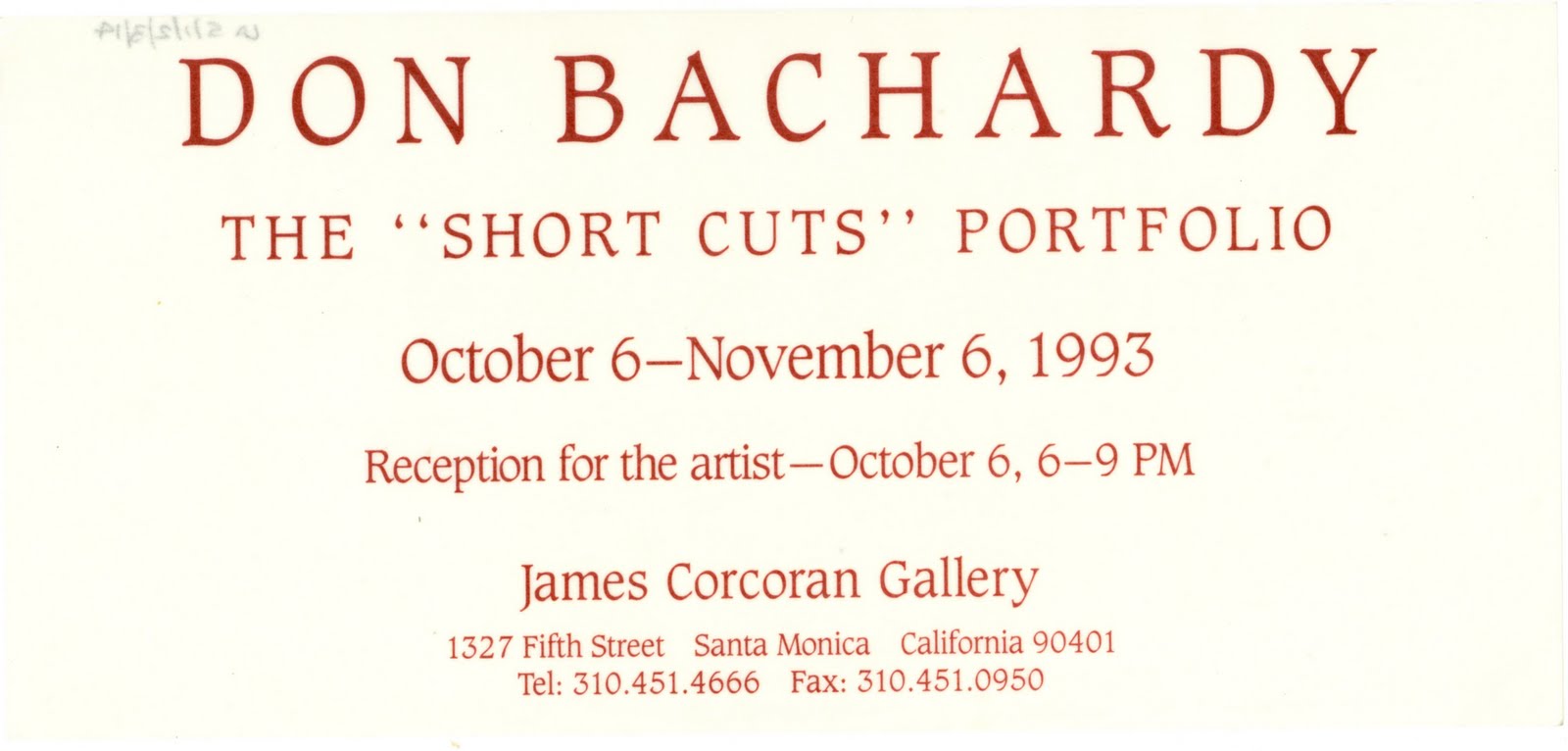
Invitation to exhibition of The 'Short Cuts' portfolio by Don Bachardy, LA/5/1/2/3/14
© Lindsay Anderson Collection, University of Stirling Archives
© Lindsay Anderson Collection, University of Stirling Archives
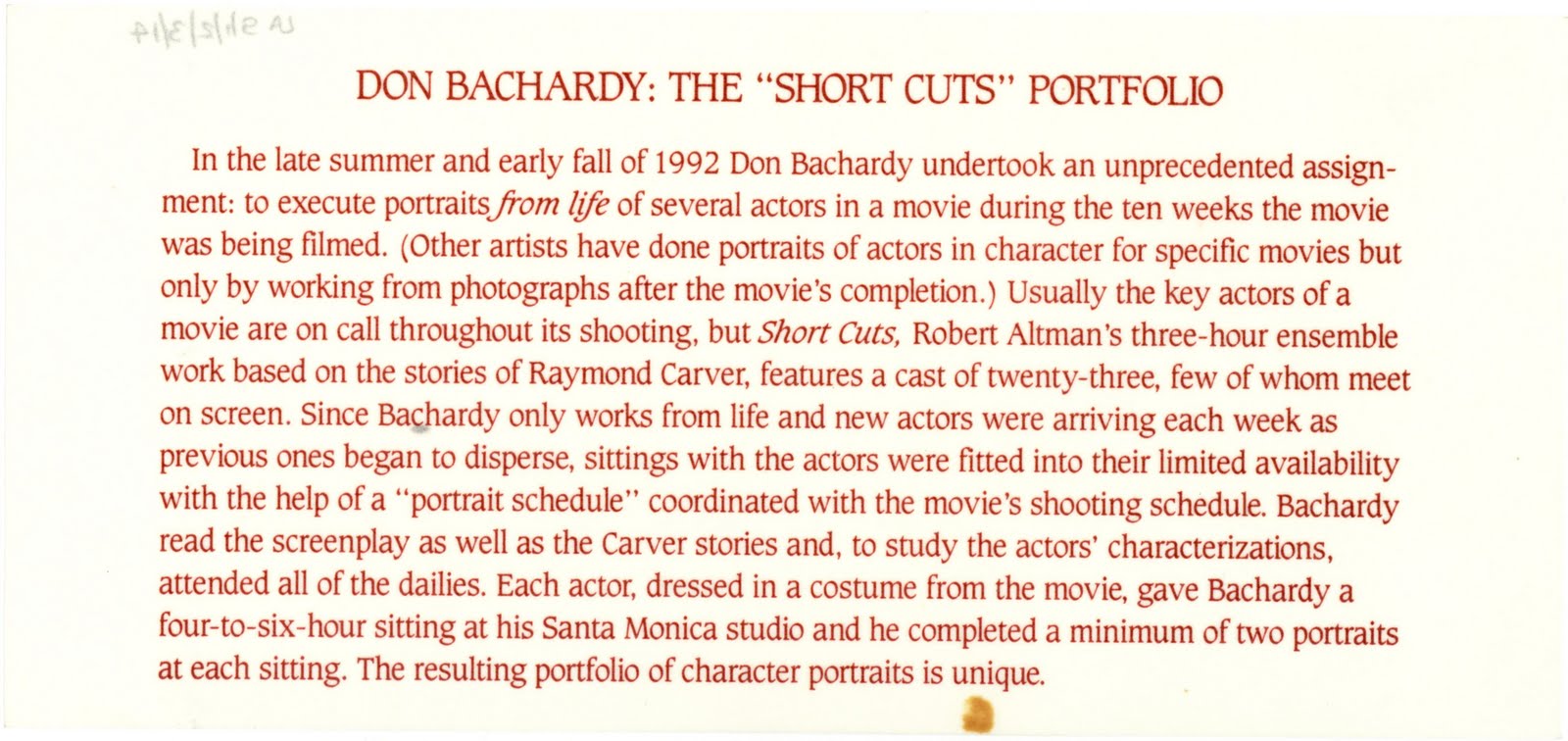
Invitation to exhibition of The 'Short Cuts' portfolio by Don Bachardy, LA/5/1/2/3/14
© Lindsay Anderson Collection, University of Stirling Archives
© Lindsay Anderson Collection, University of Stirling Archives
I have just checked online and the Short Cuts portraits painted by Don Bachardy have been published with the script for Short Cuts. You can see the front cover of the published script with some of Bachardy's work (though the quality of the image is poor) on Amazon.
Wednesday, 9 June 2010
Archive ephemera
This is in reply to a post on the Orkney Archives blog - "Do other countries actually have nicer stamps than ours or do they just seem exotic because they're foreign?".
Well, I would have to concur that other countries do seem to have far more interesting stamps than ours. This gives me the perfect opportunity to make use of an envelope I came across yesterday which I just had to scan an image of, without quite knowing how I would use it. It's not often that the envelopes have been kept with the letters in the Lindsay Anderson Archive so I assume that either Anderson himself or his secretary liked these stamps too and decided to keep the envelope with the letter. It's from Poland and has two very different but equally interesting images.
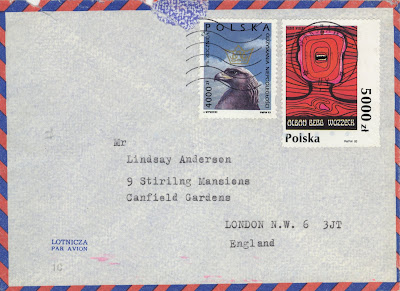
I love the abstract design - it looks similar to the style of a lot of Polish film poster designs and is far more interesting than this: -
 Also, to my mind anyway, the eagle topped with the crown is far more regal than this. So thank you Orkney Archive for helping me justify why I scanned the envelope in the first place! The example the Orkney Archive show is an envelope from Norway with two botanical drawings on the stamps. Inside the letter is a lovely little square watercolour painting of a seascape.
Well, I would have to concur that other countries do seem to have far more interesting stamps than ours. This gives me the perfect opportunity to make use of an envelope I came across yesterday which I just had to scan an image of, without quite knowing how I would use it. It's not often that the envelopes have been kept with the letters in the Lindsay Anderson Archive so I assume that either Anderson himself or his secretary liked these stamps too and decided to keep the envelope with the letter. It's from Poland and has two very different but equally interesting images.

I love the abstract design - it looks similar to the style of a lot of Polish film poster designs and is far more interesting than this: -
 Also, to my mind anyway, the eagle topped with the crown is far more regal than this. So thank you Orkney Archive for helping me justify why I scanned the envelope in the first place! The example the Orkney Archive show is an envelope from Norway with two botanical drawings on the stamps. Inside the letter is a lovely little square watercolour painting of a seascape.
Monday, 7 June 2010
Cataloguing - timetables and deadlines
All my plans of getting straight back into posting in May came to naught as I've become increasingly aware of my looming project deadlines. However I now have a very helpful Excel spreadsheet with a full breakdown of everything I want to achieve, set out week by week! Although there's still a huge amount to do before the project finishes at the end of August I now feel that it is all achievable and it makes it so much easier to just get on with the work and not panic. Part of my timetable includes posting on my blog so I thought I would start with a topical (for me) post about my cataloguing.
The thing that's so hard about doing a timetable for cataloguing archival records is that until you open each individual file you don't know how many letters there are, and until you catalogue each letter you don't know how much content there is in it. Letters with lots of interesting content take far longer than say, a greetings card sent simply to say 'Happy New Year'. Quite often the letters with lots of detail about film projects, theatre projects, actors, directors etc also require research into the people and subjects referred to as these will have to be added to the name and subject indexes on the cataloguing system. So I have to remind myself that if some weeks I don't quite meet my targets that's ok as other weeks I can have met them by the Thursday - as long as I get there by the end of August!

This first photo shows the files I am currently cataloguing - the A-Z correspondence files. I've talked about the fun of cataloguing these before as you never know quite what you're going to find - Friday's cataloguing included letters from Lindsay Anderson to Ridley Scott and this mornings started with a series of letters between Anderson and Dame Maggie Smith re a film version of The Cherry Orchard which was in development for a long time, but which finally fell through. Anderson had long wanted to direct a film of this play by Chekhov, having directed it in the theatre twice. Maggie Smith had agreed to star in it and the plan was to get Dustin Hoffman for the lead male role - if only it had happened!

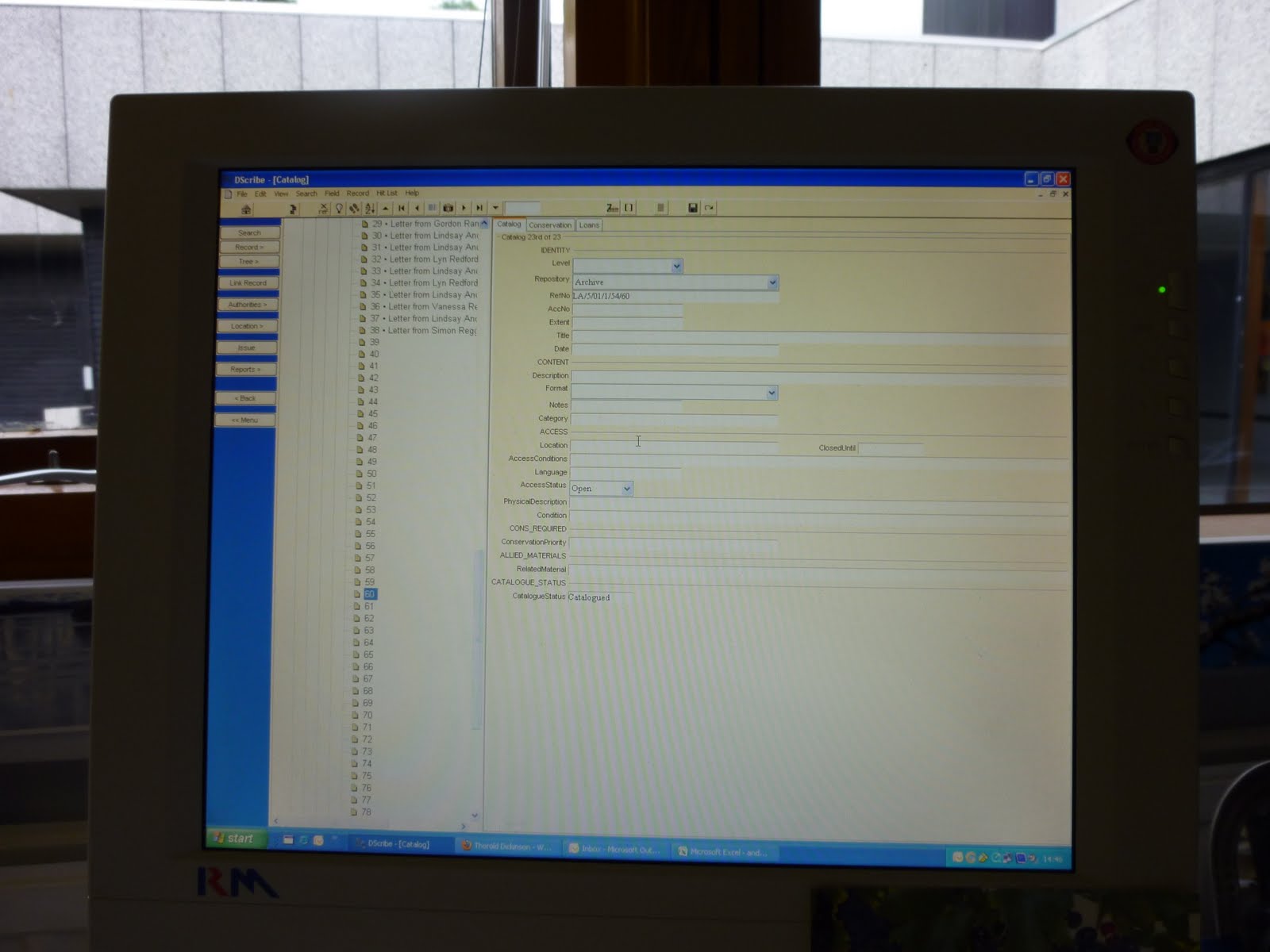
The cataloguing of each file begins by sorting the letters into order alphabetically, then chronologically from earliest to most recent, helpfully all the letters with each correspondent are usually already together. Then it's a case of numbering every letter with a unique identifying code which consists of the collection name, sub-collection, series, sub-series, file and item, for example at the moment I'm doing LA/5/1/1/57/45 with 'LA' identifying the collection, 5 identifying the sub-collection 'working papers', the first 1 is the series 'correspondence files', the second 1 is the sub-series 'correspondence files A-Z', the 57 is the file number and is 'correspondence, S' and 45 is the number of the individual letter from Maggie Smith. After the numbering is done then the folder will be catalogued onto the cataloguing software CALM for Archives - you can see a screenshot in the photo above - this is going to be ingrained on my brain by the end of the project as I've already started dreaming about cataloguing on days when I have a particularly heavy workload!
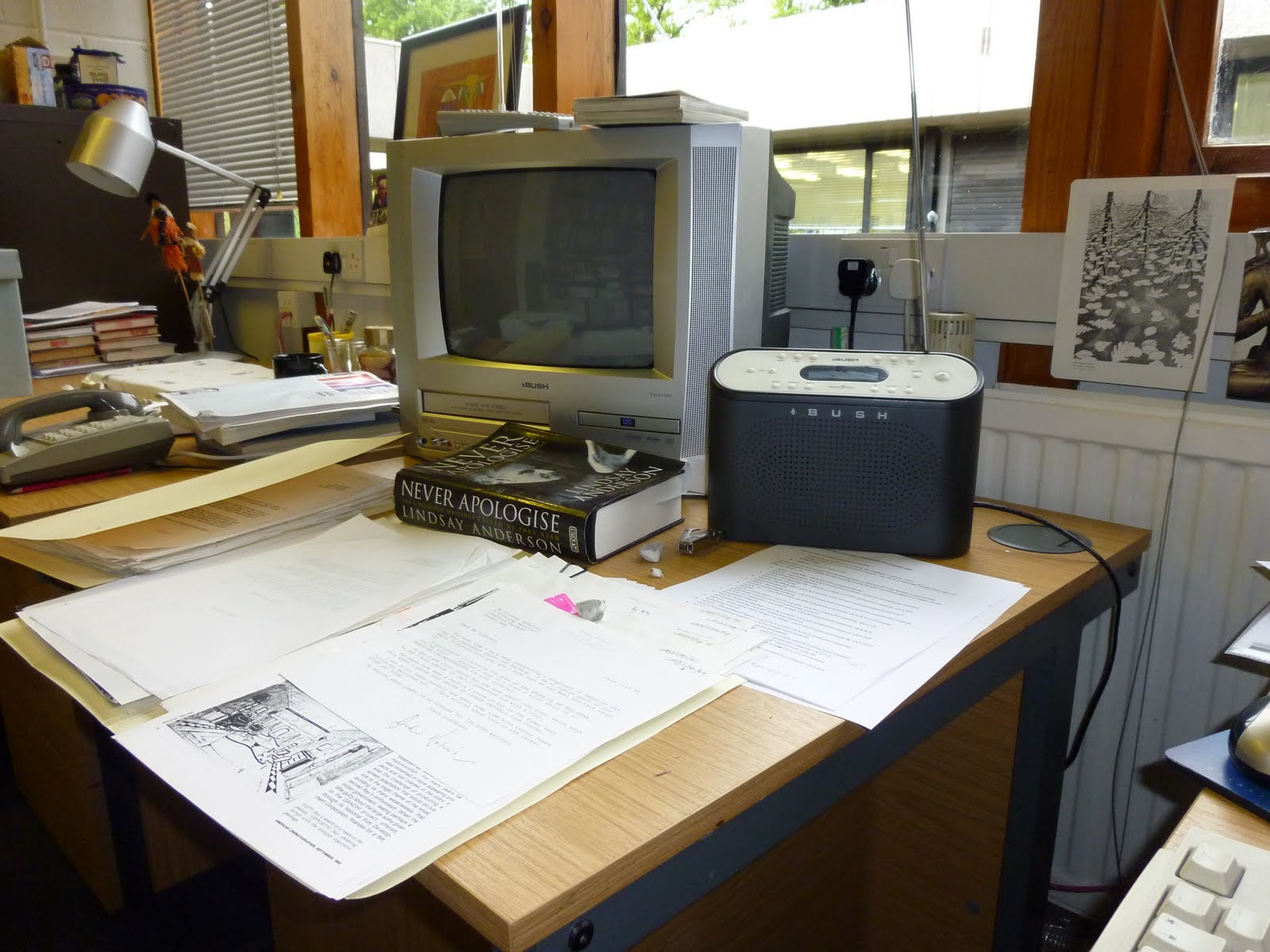
Once catalogued the folder will be divided up into two or three folders if the amount of letters is too heavy for one folder and these folders are put in new acid-free paper, archival standard boxes. It may not sound too exciting but I love it! The TV in the room is strictly for work-related use by the way! Quite a few of Anderson's films are not available on DVD so it's been really handy to have this TV with a VHS and DVD player built in. Glory! Glory! and The Whales of August are the two which come to mind immediately as being only on VHS (in the UK) so it was necessary to watch them before cataloguing the material relating to them.

The thing that's so hard about doing a timetable for cataloguing archival records is that until you open each individual file you don't know how many letters there are, and until you catalogue each letter you don't know how much content there is in it. Letters with lots of interesting content take far longer than say, a greetings card sent simply to say 'Happy New Year'. Quite often the letters with lots of detail about film projects, theatre projects, actors, directors etc also require research into the people and subjects referred to as these will have to be added to the name and subject indexes on the cataloguing system. So I have to remind myself that if some weeks I don't quite meet my targets that's ok as other weeks I can have met them by the Thursday - as long as I get there by the end of August!

This first photo shows the files I am currently cataloguing - the A-Z correspondence files. I've talked about the fun of cataloguing these before as you never know quite what you're going to find - Friday's cataloguing included letters from Lindsay Anderson to Ridley Scott and this mornings started with a series of letters between Anderson and Dame Maggie Smith re a film version of The Cherry Orchard which was in development for a long time, but which finally fell through. Anderson had long wanted to direct a film of this play by Chekhov, having directed it in the theatre twice. Maggie Smith had agreed to star in it and the plan was to get Dustin Hoffman for the lead male role - if only it had happened!
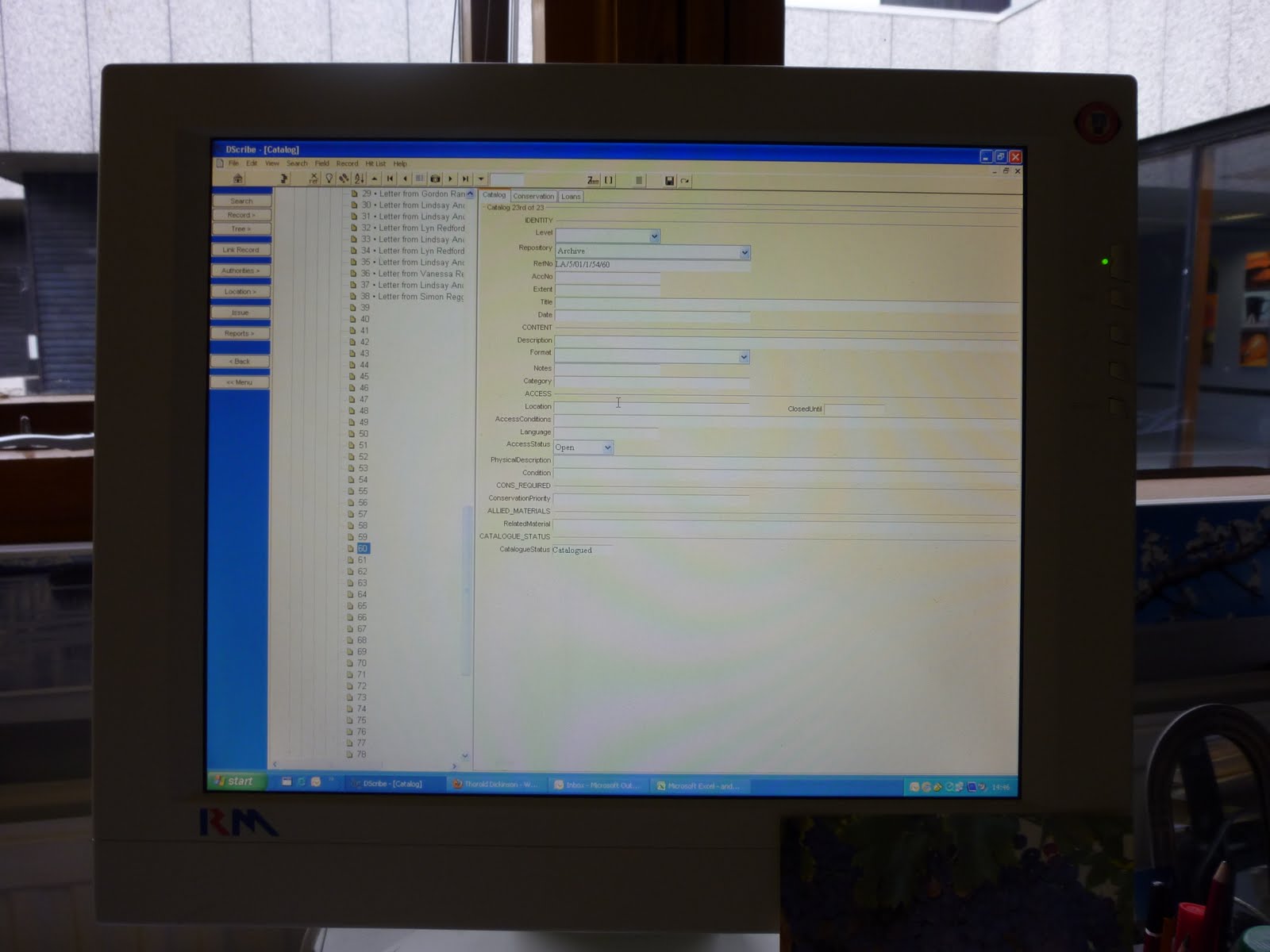
The cataloguing of each file begins by sorting the letters into order alphabetically, then chronologically from earliest to most recent, helpfully all the letters with each correspondent are usually already together. Then it's a case of numbering every letter with a unique identifying code which consists of the collection name, sub-collection, series, sub-series, file and item, for example at the moment I'm doing LA/5/1/1/57/45 with 'LA' identifying the collection, 5 identifying the sub-collection 'working papers', the first 1 is the series 'correspondence files', the second 1 is the sub-series 'correspondence files A-Z', the 57 is the file number and is 'correspondence, S' and 45 is the number of the individual letter from Maggie Smith. After the numbering is done then the folder will be catalogued onto the cataloguing software CALM for Archives - you can see a screenshot in the photo above - this is going to be ingrained on my brain by the end of the project as I've already started dreaming about cataloguing on days when I have a particularly heavy workload!
Once catalogued the folder will be divided up into two or three folders if the amount of letters is too heavy for one folder and these folders are put in new acid-free paper, archival standard boxes. It may not sound too exciting but I love it! The TV in the room is strictly for work-related use by the way! Quite a few of Anderson's films are not available on DVD so it's been really handy to have this TV with a VHS and DVD player built in. Glory! Glory! and The Whales of August are the two which come to mind immediately as being only on VHS (in the UK) so it was necessary to watch them before cataloguing the material relating to them.
Tuesday, 11 May 2010
New publication on Lindsay Anderson and O Lucky Man!
Another output from the 'Cinema Authorship of Lindsay Anderson' team here at Stirling University - a chapter in Don't Look Now, a new book published this month by Intellect Ltd. The book investigates film and television culture in the 1970s. Besides being very interesting anyway, and a beautiful looking book, I can highly recommend this book as it contains a chapter by our team here at Stirling ‘What is there to smile at?’ Lindsay Anderson’s O Lucky Man!, by John Izod, Karl Magee, Kathryn Mackenzie and Isabelle Gourdin-Sangouard. As with all of our work it is based in research conducted in the material held in the Lindsay Anderson Archive at the University of Stirling.
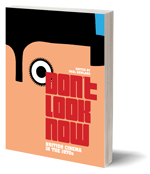
I've enclosed the synopsis for the book below:
"While postwar British cinema and the British new wave have received much scholarly attention, the misunderstood period of the 1970s has been comparatively ignored. Don’t Look Now uncovers forgotten but richly rewarding films, including Nicolas Roeg’s Don’t Look Now and the films of Lindsay Anderson and Barney Platts-Mills. This volume offers insight into the careers of important film-makers and sheds light on the genres of experimental film, horror, and rock and punk films, as well as representations of the black community, shifts in gender politics, and adaptations of television comedies. The contributors ask searching questions about the nature of British film culture and its relationship to popular culture, television, and the cultural underground."
Here are some reviews of the book:
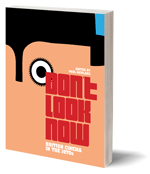
I've enclosed the synopsis for the book below:
"While postwar British cinema and the British new wave have received much scholarly attention, the misunderstood period of the 1970s has been comparatively ignored. Don’t Look Now uncovers forgotten but richly rewarding films, including Nicolas Roeg’s Don’t Look Now and the films of Lindsay Anderson and Barney Platts-Mills. This volume offers insight into the careers of important film-makers and sheds light on the genres of experimental film, horror, and rock and punk films, as well as representations of the black community, shifts in gender politics, and adaptations of television comedies. The contributors ask searching questions about the nature of British film culture and its relationship to popular culture, television, and the cultural underground."
Here are some reviews of the book:
'The essays in this highly stimulating collection reveal, clearly and persuasively, just how diverse, energetic and imaginative British cinematic creativity was during this rather maligned decade... In shining a bright light into one of the remaining dark corners in British cinema history Don’t Look Now is a welcome and extremely valuable contribution to the field.' – Professor Duncan Petrie, University of York
'Long overdue for a closer look, this volume provides a comprehensive, wide-ranging and stimulating range of new scholarship on British cinema and television in the 1970s. ' – Professor Sarah Street, University of Bristol
Friday, 5 March 2010
Lillian Gish photographs from the Lindsay Anderson Archive
I missed the anniversary of the death of Lillian Gish on the 27th February - she was born in October 1893 and died on 27 February 1993. In honour of Lillian Gish I thought I would post some photographs from the Lindsay Anderson Archive. Anderson worked with Gish on 'The Whales of August', indeed Lillian Gish was the catalyst for the movie being made as Mike Kaplan, the film's producer, was determined to find a film he could make with Gish. I love 'The Whales of August', not because I'm being loyal to my work, but because it is a beautiful, graceful and all too rare portrait of growing old and of paying respect to the older characters in the film. I wasn't surprised when I was cataloguing the material for this film to find that it did very well in Japan, a culture well known for its respect for the elderly.


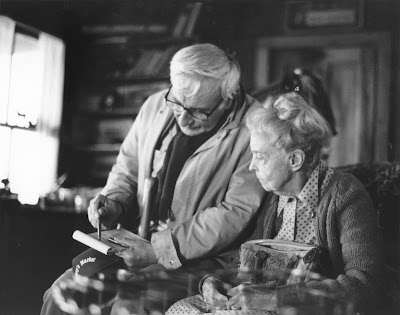
I think these first two photos maker a good pair - one where Lillian Gish looks to be directing Anderson and the other in which he is directed her.

Lindsay Anderson and Lillian Gish on set of The Whales of August, LA/1/11/4/2
© Lindsay Anderson Collection, University of Stirling Archives

Lindsay Anderson and Lillian Gish on set of The Whales of August, LA/1/11/4/2
© Lindsay Anderson Collection, University of Stirling Archives

Lindsay Anderson and Lillian Gish on set of The Whales of August, LA/1/11/4/2
© Lindsay Anderson Collection, University of Stirling Archives
I think these first two photos maker a good pair - one where Lillian Gish looks to be directing Anderson and the other in which he is directed her.
I was alerted to this important date through the blog of Dan North - the editor of 'Sights Unseen: unfinished British Films' containing a chapter, Hooray for Hollywood? The Unmade Films of Lindsay Anderson, by by Karl Magee (University Archivist here at Stirling University). An extract of this chapter is available to read here.
Monday, 1 March 2010
British Film Institute release 'The Pleasure Garden'
Another gem has just been released from the BFI Archive. 'The Pleasure Garden', made in 1953 by the American poet James Broughton (1913 - 1999) is a lovely, surreal and poetic film set in the Crystal Palace Terraces in South London. The film won the Prix de Fantasie Poetique at Cannes in 1954.
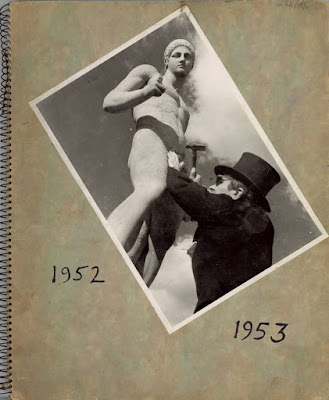
The film opens with people living an idyllic carefree life in the park, which abruptly comes to an end with the arrival of Col. Pall K Gargoyle (John le Mesurier) who is determined to stop all the fun and freedom by erecting notices banning everything and arresting people he doesn't approve of. Then along comes their saviour, Mrs Albion (a wonderful Hettie Jacques) who waves her magic scarf to liberate everyone and open them up to their emotions, thereby returning the park to it's idyllic, happy state. Lindsay Anderson's had a small role in this film (described on IMDb as'Toff in top hat'), acting alongside Jill Bennett, and he is also credited as the 'production manager' for the film. Unfortunately as Anderson didn't keep copies of his letters until he employed a secretary in the 1970s we don't have correspondence about 'The Pleasure Garden', however I know there is some in the Collection of James Broughton's Papers at Kent State University Special Collections and Archives.

On a final note - when I was doing some google searching on James Broughton I came across a short film he made of one of the poems from the 'All About It' section I mention above. Called 'This Is it' (1971) the film of the poem of the same name is a touching short film following a young boy following a red balloon while the words of the poem are read (does anyone know who the woman reading the poem is?). You can see the film on the Art Forum website where they also had this short review by Robert Greenspun from the New York Times: "James Broughton's creation myth, This Is It, places a two-year-old Adam and a bright apple-red balloon in a backyard garden of Eden, and works a small miracle of the ordinary. And since that miracle is what his film is about, he achieves a kind of casual perfection in matching means and ends."
This was supposed to be just a quick post about the DVD release of 'The Pleasure Garden' but it's ended up a bit of an ode to James Broughton! That's the way it goes with Archives though - they lead you off in unexpected directions. I love that I'm learning new things every day - though I imagine that can be said of any job - it just depends how you look at it!
I'd just like to say thanks to Frank's and his blog for alerting me to the DVD release of 'The Pleasure Garden' and 'The Exiles' (more of 'The Exiles' in a later post!)

Front cover of photograph album LA/6/2/1/5
© Lindsay Anderson Collection, University of Stirling Archives
The film opens with people living an idyllic carefree life in the park, which abruptly comes to an end with the arrival of Col. Pall K Gargoyle (John le Mesurier) who is determined to stop all the fun and freedom by erecting notices banning everything and arresting people he doesn't approve of. Then along comes their saviour, Mrs Albion (a wonderful Hettie Jacques) who waves her magic scarf to liberate everyone and open them up to their emotions, thereby returning the park to it's idyllic, happy state. Lindsay Anderson's had a small role in this film (described on IMDb as'Toff in top hat'), acting alongside Jill Bennett, and he is also credited as the 'production manager' for the film. Unfortunately as Anderson didn't keep copies of his letters until he employed a secretary in the 1970s we don't have correspondence about 'The Pleasure Garden', however I know there is some in the Collection of James Broughton's Papers at Kent State University Special Collections and Archives.
Page from photograph album LA/6/2/1/5
© Lindsay Anderson Collection, University of Stirling Archives

Page from photograph album LA/6/2/1/5
© Lindsay Anderson Collection, University of Stirling Archives

Song of Song © James Broughton
On a final note - when I was doing some google searching on James Broughton I came across a short film he made of one of the poems from the 'All About It' section I mention above. Called 'This Is it' (1971) the film of the poem of the same name is a touching short film following a young boy following a red balloon while the words of the poem are read (does anyone know who the woman reading the poem is?). You can see the film on the Art Forum website where they also had this short review by Robert Greenspun from the New York Times: "James Broughton's creation myth, This Is It, places a two-year-old Adam and a bright apple-red balloon in a backyard garden of Eden, and works a small miracle of the ordinary. And since that miracle is what his film is about, he achieves a kind of casual perfection in matching means and ends."
This was supposed to be just a quick post about the DVD release of 'The Pleasure Garden' but it's ended up a bit of an ode to James Broughton! That's the way it goes with Archives though - they lead you off in unexpected directions. I love that I'm learning new things every day - though I imagine that can be said of any job - it just depends how you look at it!
I'd just like to say thanks to Frank's and his blog for alerting me to the DVD release of 'The Pleasure Garden' and 'The Exiles' (more of 'The Exiles' in a later post!)
Friday, 5 February 2010
Letters from the Lindsay Anderson Archive
The file of letters I'm cataloguing today is in the A-Z correspondence series, on the letter 'M'. The last three letters have been from Arthur Miller, Helen Mirren and Jessica Mitford - what an amazing run of interesting letters!
Unfortunately the Arthur Miller letter is very short - just a few lines about a play he is working on, but the play isn't specified and I haven't yet come across any other references to any proposed collaborations between Anderson and Miller in the 1970s (the date of the letter is 1976). So, if anyone has heard anything about possible film or stage projects they might have discussed then please, let me know.
Helen Mirren discusses the differences working with the Royal Shakespeare Company as opposed to working with Anderson, and talks about the play she is starring in with Graham Crowden, both of whom worked with Lindsay Anderson.
Jessica Mitford discusses a possible film project she is involved in - once again, if anyone has any idea what this film project could have been I'd love to hear from you! There's also an entertaining discussion of the travel arrangements for her next visit to England - she's travelling first class on a cruise ship where her passage is paid for by lectures she will give to holidaymakers on the cruise.
Of course, not all the letters are from famous people, not all the letters from famous people are interesting, and there's plenty of interesting letters from non-famous people, but I just thought this was an exceptional run of letters and wanted to share my excitement - sometimes working in an office on your own can be a bit lonely!
Unfortunately the Arthur Miller letter is very short - just a few lines about a play he is working on, but the play isn't specified and I haven't yet come across any other references to any proposed collaborations between Anderson and Miller in the 1970s (the date of the letter is 1976). So, if anyone has heard anything about possible film or stage projects they might have discussed then please, let me know.
Helen Mirren discusses the differences working with the Royal Shakespeare Company as opposed to working with Anderson, and talks about the play she is starring in with Graham Crowden, both of whom worked with Lindsay Anderson.
Jessica Mitford discusses a possible film project she is involved in - once again, if anyone has any idea what this film project could have been I'd love to hear from you! There's also an entertaining discussion of the travel arrangements for her next visit to England - she's travelling first class on a cruise ship where her passage is paid for by lectures she will give to holidaymakers on the cruise.
Of course, not all the letters are from famous people, not all the letters from famous people are interesting, and there's plenty of interesting letters from non-famous people, but I just thought this was an exceptional run of letters and wanted to share my excitement - sometimes working in an office on your own can be a bit lonely!
Monday, 30 November 2009
Archival detective work
One of the best aspects of my job (especially for a girl like me with a penchant for trashy American crime shows and detective novels!) is the detective work which is necessary when cataloguing archival material. Recently I've spent plenty of time doing archival detective work on the two large boxes of material we have in the Lindsay Anderson Archive which relate to About John Ford.

About John Ford is a very interesting mixture of critical analysis of the films of John Ford, mixed with Anderson's personal reminiscences of his meetings with John Ford, and interviews he conducted with various people who worked with Ford. Anderson's admiration of John Ford began in 1946 when he first saw My Darling Clementine. It continued through his reviews and articles about Ford in Sequence, his meetings with Ford over the years, and two television programmes: an Omnibus two-part programme on Ford narrated by Anderson (1992) ; and a Channel Four programme (1987) , where Anderson gave a 'masterclass' to a group of students about the art of film-making through the example of My Darling Clementine
The boxes relating to About John Ford contain: notes made by Anderson on Ford's films; press cuttings re: John Ford; early drafts of the book; correspondence with friends, colleague's and family of Ford; correspondence with publishers; correspondence with readers and critics; promotional material for the book; and reviews of the book.
The first big piece of detective work was with the early drafts of the book. There were some pages paper clipped together which obviously ran as a section (anything from 2 pages to 32 pages long), but there were no page numbers or chapter headings to work out where in the published version of the book they relate to. The first decision I had to make was, do I take the time to locate each of these draft sections in the published book? Well, I quickly decided that yes, it was worth the time to do this as it would be of value to future researchers, and it's always interesting to see what remains and what is changed from draft to published version. So then, how to work out where all these pages were located in the published book? Not that I'm claiming any great shakes as a detective, just common sense really, but I determined that the quickest way would be to use the index in About John Ford, and look for the least common, or least famous, actors names or place names. Where there were only a few occurrences of a name it was relatively quick to locate the draft pages and reference them in my cataloguing. Now, this may not be interesting to everyone, but somehow to me, this job was immensely satisfying - I guess that's why I'm an archivist!
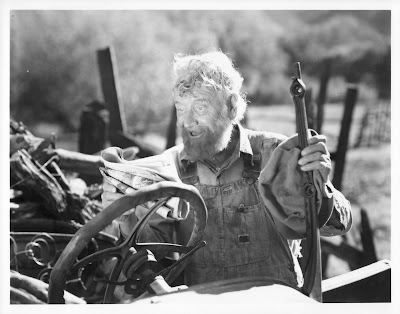
Another problem I encountered was due to my less than all encompassing knowledge of John Ford's films. By this I must confess that prior to cataloguing this material I had only seen one Ford film, The Quiet Man. So I started attending screenings for John Izod's class 'Genre in Hollywood: The Western' (the benefits of working in a University!) . I have now seen, and enjoyed, My Darling Clementine, Stagecoach, and Iron Horse. Only a drop in the ocean as far as the number of John Ford films but it has helped with the cataloguing. It didn't help me much though when I came across a file with four black&white photographs of stills from John Ford films. With so many films to choose from, and having seen so few of them, I was having real trouble trying to identify them. So, rather than spend huge amounts of time going through images on IMDb from all his films, I decided to call in the cavalry (excuse the bad pun!). I e-mailed Charles Barr, a Professor of Film at University College Dublin and a John Ford expert (Charles Barr gave a very interesting paper About the John Ford Archive at our conference in September). Charles was able to identify the images for me, including the photograph of Charley Grapewin, from 'Tobacco Road' (1941) which I've included here.
N.B. John Ford's papers are held at the Lilly Library, Indiana University in Bloomington, Indiana.
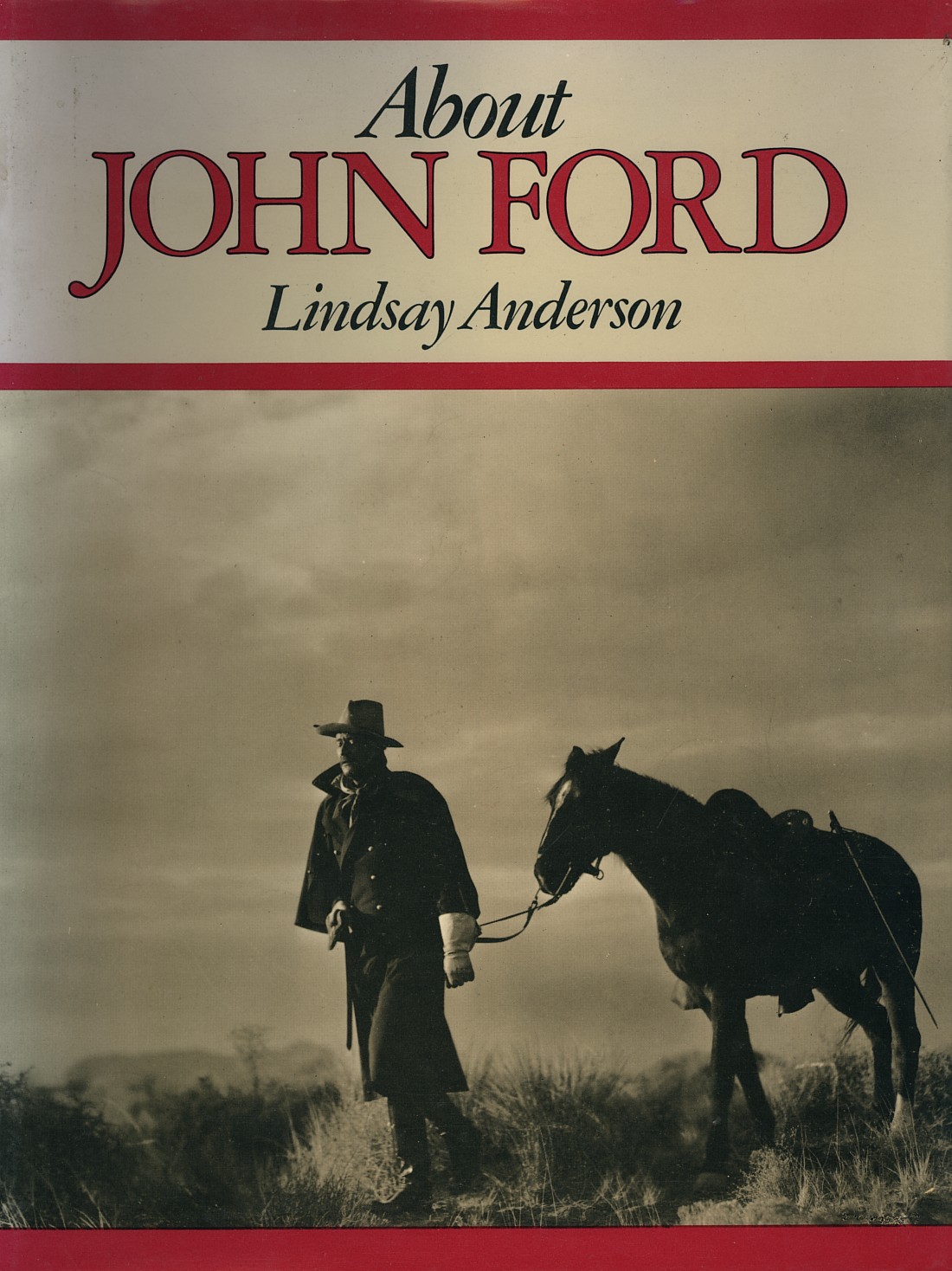
About John Ford is a very interesting mixture of critical analysis of the films of John Ford, mixed with Anderson's personal reminiscences of his meetings with John Ford, and interviews he conducted with various people who worked with Ford. Anderson's admiration of John Ford began in 1946 when he first saw My Darling Clementine. It continued through his reviews and articles about Ford in Sequence, his meetings with Ford over the years, and two television programmes: an Omnibus two-part programme on Ford narrated by Anderson (1992) ; and a Channel Four programme (1987) , where Anderson gave a 'masterclass' to a group of students about the art of film-making through the example of My Darling Clementine
The boxes relating to About John Ford contain: notes made by Anderson on Ford's films; press cuttings re: John Ford; early drafts of the book; correspondence with friends, colleague's and family of Ford; correspondence with publishers; correspondence with readers and critics; promotional material for the book; and reviews of the book.
The first big piece of detective work was with the early drafts of the book. There were some pages paper clipped together which obviously ran as a section (anything from 2 pages to 32 pages long), but there were no page numbers or chapter headings to work out where in the published version of the book they relate to. The first decision I had to make was, do I take the time to locate each of these draft sections in the published book? Well, I quickly decided that yes, it was worth the time to do this as it would be of value to future researchers, and it's always interesting to see what remains and what is changed from draft to published version. So then, how to work out where all these pages were located in the published book? Not that I'm claiming any great shakes as a detective, just common sense really, but I determined that the quickest way would be to use the index in About John Ford, and look for the least common, or least famous, actors names or place names. Where there were only a few occurrences of a name it was relatively quick to locate the draft pages and reference them in my cataloguing. Now, this may not be interesting to everyone, but somehow to me, this job was immensely satisfying - I guess that's why I'm an archivist!
Another problem I encountered was due to my less than all encompassing knowledge of John Ford's films. By this I must confess that prior to cataloguing this material I had only seen one Ford film, The Quiet Man. So I started attending screenings for John Izod's class 'Genre in Hollywood: The Western' (the benefits of working in a University!) . I have now seen, and enjoyed, My Darling Clementine, Stagecoach, and Iron Horse. Only a drop in the ocean as far as the number of John Ford films but it has helped with the cataloguing. It didn't help me much though when I came across a file with four black&white photographs of stills from John Ford films. With so many films to choose from, and having seen so few of them, I was having real trouble trying to identify them. So, rather than spend huge amounts of time going through images on IMDb from all his films, I decided to call in the cavalry (excuse the bad pun!). I e-mailed Charles Barr, a Professor of Film at University College Dublin and a John Ford expert (Charles Barr gave a very interesting paper About the John Ford Archive at our conference in September). Charles was able to identify the images for me, including the photograph of Charley Grapewin, from 'Tobacco Road' (1941) which I've included here.

LA/4/3/10/3, Still from Tobacco Road
© Lindsay Anderson Collection, University of Stirling Archives
N.B. John Ford's papers are held at the Lilly Library, Indiana University in Bloomington, Indiana.
Subscribe to:
Posts (Atom)