Showing posts with label Film archives. Show all posts

Tuesday, 13 March 2012

Archives and the filmmaker - Pedro Almodóvar

Sticking to the same format as their previous '..Archives' books on the Ingmar Bergman and Stanley Kubrick Archives, Taschen have released 'The Pedro Almodovar Archives'.  This book came out in October 2011 according to Amazon but somehow it managed to pass me by.  All three of these books look very beautiful, are well laid out with high quality reproductions and very well researched.  However I'm only going on having seen them online as at roughly £100 a pop I can't afford to buy one!


It's an interesting concept, particularly in the case of Almodóvar, as the film director himself is authorising and controlling the use of his archive to project an image of himself which, we assume, is the image which he wants people to believe in and buy into.  Here's a quote I found from the Taschen web page for the book:
For this unprecedented monograph, Pedro Almodóvar has given TASCHEN complete access to his archives, including never-before-published images, such as personal photos he took during filming. In addition to writing captions for the photos, Almodóvar invited prominent Spanish authors to write introductions to each of his films, and selected many of his own texts to accompany this visual odyssey through his complete works.
It's not that I think the use of personal archives in the construction of self-image is a new idea, or a bad idea.  It's just interesting to see it in this form.  As well as constructing self-image these books really seem to glorify the archives (would fetishises be too strong a word?) in a way that equates their uniqueness with something exclusive that can be yours if you can afford the asking price.  With the added incentive to get in there quick to ensure you get an' actual piece of the archive' in the form of a piece of film strip, in the Almodovar book from 'Volver' (2006).  I'm all for glorifying archives, it's just a shame when there's such a price tag attached.  However I'm happy it's available online for a browse through, and, you know, if anyone wanted to buy me a copy I certainly wouldn't say no!

Sunday, 19 February 2012

Canyon Cinema - the impact of the digital on film access and preservation


Home from a weekend back in Scotland today I was saddened that the first e-mail I read was from the AMIA (Association of Moving Image Archivists) list saying that Canyon Cinema is under threat.  Canyon Cinema is a film collective based in California who provide over 3,500 film titles for rental, sale and distribution on film and DVD, though mostly on film - Super 8, 16 and 35mm.  I first heard of Canyon Cinema at the Society for Cinema and Media Studies conference in LA in March 2010 where I attended a panel - 'Celebrating Chick Strand through screenings and discussions'. The co-operative started in the 1950s and their website gives an account of their history which just makes you wish you'd been there in the beginning!  Chick Strand is one of a huge number of the film makers who are represented by Canyon - other famous names include Len Lye, Stan Brakhage and Kenneth Anger.

The story of the threat to Canyon Cinema of course ties in with the ever increasing news coverage being given to the impact of digital on the film world, in terms of preservation and availability of 35mm prints for viewing. The New York Times article which was highlighted on the AMIA list refers to the growth of digital film as the main reason for the large drop in profits from renting, selling and distributing films.  The article quotes Dominic Angerame, Executive Director of Canyon Cinema, as saying that about 70% of their film titles are not digitised and that its annual film rental income has dropped from $133,000 in 2004 to about $90,000 now.    The suggestion is that they would need to digitise the majority of their film titles in order to survive, and the cost of this is so prohibitive as to make it impossible. 

Now I know that nothing stays the same forever and that technologies have to change but I am just so saddened by the implications of the take-over of digital film.  The thought of never seeing a film on 35mm in a cinema again, of the ever-increasing difficulty which film archives, film schools, and individual film lovers are going to have in getting hold of and maintaining the equipment needed to project and repair films.  All this makes me so sad and I really don't think that change is always a good thing.Of course digitising all the film titles in their collection would increase their accessibility but I just don't see that digitisation is the solution to everything - many of these films were made by the artists to be experience in the particular medium they were made in.  Not to mention that there are still many viewers who want to experience the films in their original format.  However I'm not a Luddite either and I get that there are lots of benefits to digital over film - I just don't want to have the new over the old - can't they co-exist?

Interestingly the article also says that the money problems of Canyon Cinema have been around for a while and that in 2009 they got $100,00 from Stanford University for selling them their paper archive.  I did wonder why the paper records weren't actually held at Canyon - I thought maybe the didn't have the space, the staff, or the time to make them accessible.  It hadn't occurred to me that this would be a way of trying to ensure survival of the film collection.  Again, although I understand it is rarely practical to house entire paper collections with the film collections they relate to - different preservation needs, storage conditions, different archive specialisms to name but a few issues that spring to mind - in an ideal world I'd love it if more archives did contain the films themselves alongside the paper records relating to their creation, even better if it was all catalogued on the one database - ah well, it's nice to have archive dreams!

I was glad to read in the article that they do have some options and ideas for how to ensure the survival of the film co-operative.  The proposition is that by turning themselves into a non-profit they would have a much higher chance of survival - well, I hope this turns out to be true.

Wednesday, 15 February 2012

A Useful Life - a love letter to film and film preservation

Well, I've been slightly lax with blog posting since the start of the New Year, partly because I've been doing more posts on my work blog. However I thought I should post this while there's still a possibility for readers to catch this film in the cinema.  The reason being the film is a love letter to cinema, 35mm, and as a result of that, the work of film archivists.
My first cinema trip of 2012 was on January 2nd to the BFI to see Manhattan but this is not the subject of this post. One of the trailers I saw was for A Useful Life - a Uruguayan film set in a cinematheque with shots of the cinematheque's film archive in the trailer - how could I resist!

The film is the story of Jorge, the projectionist of the Cinemateca, an art house cinema in Montevido. It’s a sad story in many ways, the seemingly inevitable decline of a cinema which can’t or won’t adapt to new ways of working, the drop in the number of visitors coming to see the films, the increase in the costs faced by independent cinemas – all these issues are played out in the film. However it’s also an incredibly heart-warming story as it’s the story of Jorge, the projectionist, as he moves from being a part of the decaying cinema to creating a life for himself outside of, but definitely not apart from, his cineaste identity.

There are so many wonderful moments in the film – the discussion about money between the members of the cinematheque team, Jorge fixing the seats in the cinema, the radio interview he does for his radio show, and of course the shots of the projection room and the film store! It’s a film that’s full of love – love for the cinema, for film itself, and I thought for the work of film preservationists. Well it turns out I wasn’t just projecting my own views on that last point as the director Federico Veiroj not only worked at cinematheques but also at the Spanish Film Archives. I can’t recommend this film highly enough – it still makes me smile when I think about it. There’s an interesting interview with Federico Veiroj reprinted on Mubi here where he talks about his love of film and film archives/archivists.


Wednesday, 11 January 2012

Cinema in a suitcase

I'm not sure if I can count this as my January fulfilment of Resolution No.4 'Try and visit a new-to-me Cinema/film screening venue once a month' as I've been to the ICA bar before and their cinema, however it was the first time I've seen a film screened in their bar. Also the first time ever I've seen film I've 'made' screened!

So, I better back up and start at the beginning.  When my friend Sarah said she was coming down for the weekend and did I want to meet up I said of course! I happily cancelled my plans for, well, having no plans and staying in, and went out to meet up with Sarah and Bob instead.  We headed down to the ICA for the launch night of the London Short Film Festival as Sarah had spotted that Suitcase Cinema were going to be doing an event/workshop in the ICA bar.

Now I had never heard of Suitcase Cinema before but one look at their website and I knew I wanted to go.  Suitcase Cinema are all about the celluloid and for this particular event this meant salvaged 16mm films they had found in skips and at flea markets.  Here was the event information from the LSFF website:
write and draw directly onto transparent film, or deface a strip of their flea market found film by bleaching, scratching, rewriting and re-imagining. When your work is done, they’ll thread it up and feed it straight into their projector, so you can see your images instantly transformed into moving, living beings.

choosing my tools, Suitcase Cinema event, 06/01/2012

What an amazing opportunity to try making a piece of film (however short it was - as it turned out very short due to my previous lack of understanding of how quickly the piece of film I'd drawn, scraped & bleached on would move through the projector!).  Also looking at it very simplistically it's the very antithesis of my professional work - defacing and altering something rather than preserving it as it is.  My only previous experience of working with film was running it through a Steenbeck and using a splicer to repair film. 


Me and Sarah, at work/play!


As the films were salvaged and bought second-hand this was film strip with content and a story already on it. We were given pens, scrapers, paint and bleach to alter/deface this film and create our own images and ideas on top of it. The effect of the bleach on the film was pretty dramatic and I liked using the scraper as well to create lines and patterns. Sarah pointed out to me that any patterns would have to be continued over a number of frames in order to show up when projected - I hadn't realised how much so until I saw the tiny bit of film I'd worked on projected - it was pretty much a case of 'blink and you'd miss it'. It really made me appreciate just how much work must go into any experimental film - Norman Mclaren's work immediately sprang to mind - not, I hasten to add, out of any parallels I drew between his work and my own meagre attempt - just in terms of drawing straight onto film.

I had so much fun at this event and I really think that the experience of making films - even just playing about with it a wee bit like we did - would do so much to enrich the experience of film preservation.  I'm sure that most archivists working in film preservation also have experience of film making, definitely of film projection but for me it was a first-time of film-making (however short-lived and fleeting it was).  All in all, I'm so glad we went (thanks Sarah, for bringing the event to my attention - and for coming down as I probably wouldn't have gone alone!).  And of course a big thanks to Suitcase Cinema, and to the LSFF and the ICA for hosting the event - what a fun and creative way to spend a Friday night.
Long live Celluloid!!

Sunday, 17 July 2011

Sunday morning reading

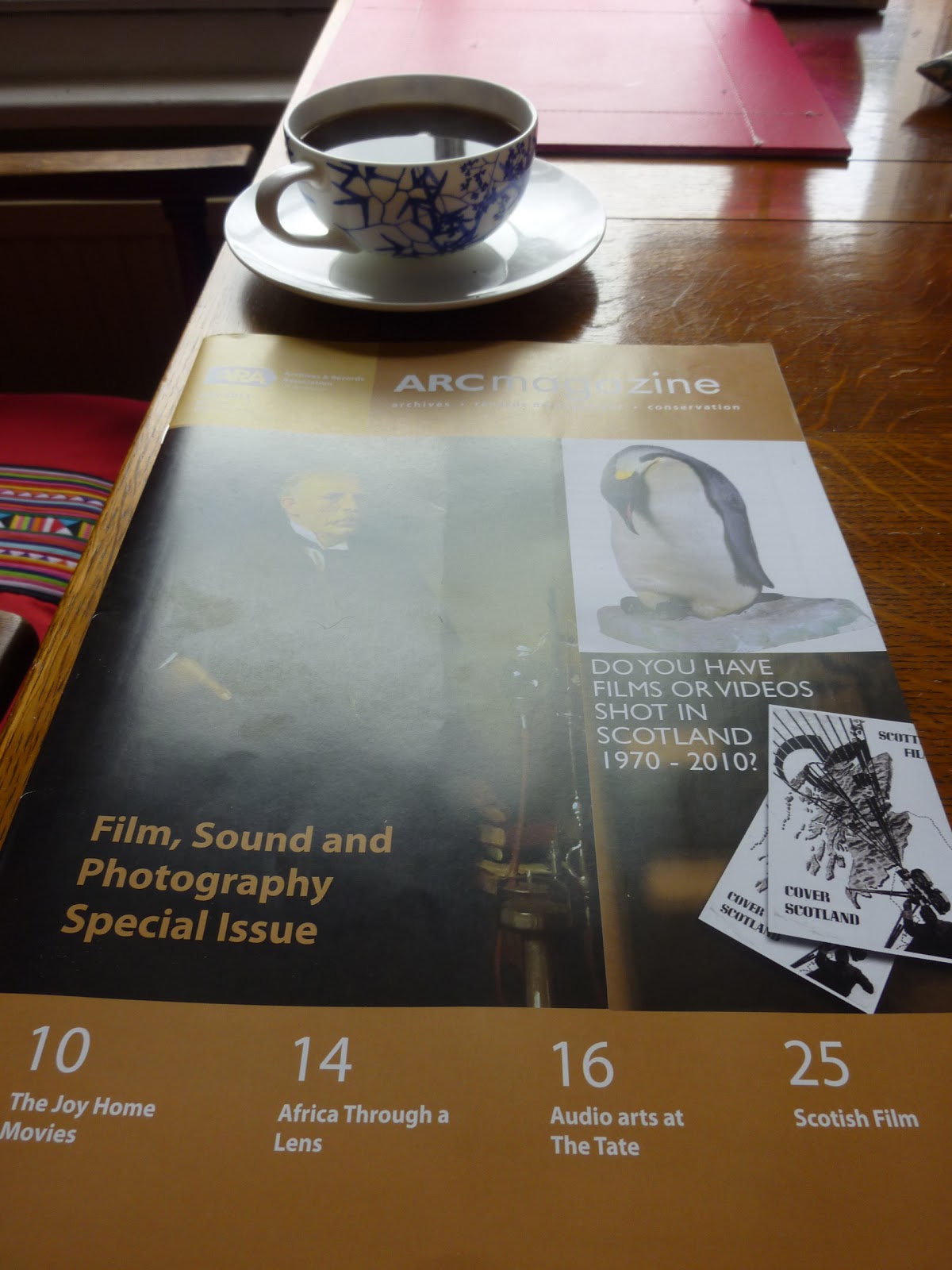
Sunday morning and I'm not reading the Sunday papers yet, no siree, I'm reading my newly arrived (yesterday) copy of ARC. ARC is the monthly magazine published by the Archives and Records Association in the UK. Although I love archives I wouldn't usually be reading this on a Sunday morning, honest!


The July issue is a Film, Sound and Photography Special, edited by my last boss, David Lee, Archivist and Manager of the Wessex Film and Sound Archive. I'd have been really interested in reading it anyway but even more so because yours truly has an article in it - woop! The article is a joint one written by me and Zoe about our experience of cataloguing the films for the Revitalising the Regions project. We concentrated on two of the film-makers, well three really - Frank and Nancy Bealing and Eda Moore. Nancy Bealing and Eda Moore just really captured both our imaginations and we were very privileged to get the chance to go and speak to Nancy Bealing about the films which her husband made, the one which we made, and the ways she helped with his filmmaking.  I wrote a bit about a visit we paid to Salisbury to do some research about Eda Moore here.

Nancy Bealing in the nursery owned by her & her husband, Frank ©Wessex Film & Sound Archive

The current issue of ARC is not available digitally on the website yet, and even when it is it's only available to members so at the moment I can only give you these images off my camera.

Right, now I'm off to read all the other interesting articles in the magazine!

I had to call up the ARA Office to request another copy be sent out, and an extra for Zoe, as mine hadn't arrived (first time I've had anything published in it and first time it's never arrived!)

Eda Moore with her bolex camera in Salisbury ©Wessex Film & Sound Archive

You can watch some clips from Frank Bealing's and Eda Moore's films on the WFSA Flickr.

Wednesday, 22 June 2011

Wednesday wonders - BFI Southbank

I have always loved visiting the Southbank when I was visiting London and that hasn't changed any since I moved here.  I remember the first time I got the bus back over Waterloo Bridge at night time after work, I saw all the lights along the river and got such a thrill, and I still feel that, sometimes I still have to pinch myself that I'm living in London!  So I thought as my Wednesday wonder this week I would pay tribute to one of my favourite places on the Southbank, the British Film Institute! Now technically of course one of my favourites parts of the BFI, the Library and Archive, isn't on Southbank at all but on Stephen Street.  However the last time I went down to the Southbank there was a great display on the upstairs corridor of 'Recent acquisitions at the BFI National Archive'


The exhibition showed archive material (they call it Special Collections to differentiate it from the Film Archive) from a number of people including Karel Reisz (film director) and Ralph Cooper (a publicist).
The first photo includes a scrapbook on Merle Oberon compiled by Deborah Kerr and telegrams from Sophia Loren!  In the second photo are letters from Rachel Roberts and an annotated script for Saturday Night and Sunday Morning.  I was very excited by the Karel Reisz material as I'd heard they got his archive whilst I was working in the Lindsay Anderson Archive.  Anderson and Reisz were friends and were both part of the Free Cinema movement so there was a good deal of material by and about Reisz and I always find it exciting to see material from other archives about individuals or organisations I've worked on!

Both the bars in the BFI are great, though I have noticed the Benugo Bar staff can be pretty rude - this is balanced out though by the friendly waiting staff, the good drinks and bar snacks, and the lovely surroundings!

And then, there's the exhibition room.. I've been to so many great exhibitions in the exhibition room - most memorable perhaps was the Jane and Louise Wilson 'Unfolding the Aryan Papers' which I blogged about here. There's been rumours that this is where the Library and Archive will be moving too but I really hope that's not true, for a number of reasons.  Firstly it's great having an exhibition space at the Southbank site and I'd miss it if it went but FAR more importantly, it's a tiny site compared to the current library which would mean staffing cuts (though from the sounds of it these are unfortunately inevitable) and I just can't imagine there's enough space there for all the wonderful resources in Stephen Street.

The BFI Southbank is also home to the fabulous Mediatheque - where you can go to watch a huge selection of films and television shows, for free! I still have to go in to watch Blue Black Permanent - Margaret Tait's only feature film, hmm maybe something to do this weekend if the rain keeps up!

So if anyone is in London this weekend and wondering what to do? You couldn't go wrong with a visit to the BFI.

Tuesday, 29 March 2011

more reflections on working in a film archive

I've been thinking more about what I've learned whilst working at Wessex Film and Sound Archive, and the things I listed in my last post on the subject.  One thing I didn't really touch upon but which is really the biggest revelation for me was that maybe my idea that a film archive is where I want to work in the long-term isn't necessarily as set in stone as I thought.

For years my ultimate goal in terms of where I would like to work long-term is in a film archive.  However after my, admittedly very limited, experience of working for five months in a film archive I realised that without all the paper records and research I'd be lost!  I understand that when films come into a general archive (such as John Grierson films at the Stirling University Archive) then it makes sense to pass them to a specialist film archive where they will have the skills and equipment to look after the films and make them available.  However this often means separating the films from the paper records that tell us about the creation/inspiration behind the films.  Again I understand this, specialist film archives don't have the space to look after all the paper records relating to the filmmaker.  Obviously they'll keep accession records relating to the films, and in WFSA there are also paper records created by the filmmakers or their families, such as cataloguing notes, photographs, biographical information.  However these paper records are considered secondary to the films, which in a way they are, although in my view they're also essential in understanding the context of the creation of the films.  A qualification I'll make here is that as a project worker, I know I have had the luxury of full-time devotion to cataloguing which of course means much more time to research each film, including looking at the related paper records.  If I was a permanent member of staff at WFSA, or in any Film archive, there would be so many things competing for time, such as enquiries, researchers, administration tasks, reports, funding applications etc.  Also, from the other direction, if the filmmaker is well known and their films are available on DVD then it isn't necessary for those working with the paper records of the filmmaker to have access to the original films themselves... Unless, of course, the films have been cut/altered.   Or also, as with the Lindsay Anderson Archive at Stirling University, there are so many unmade films discussed in the paper archives that of course you would never know about if you were only looking at the films themselves.  It seems like every line I write here has at least one qualification so I guess it indicates that my mind is still a bit muddled.

Ultimately working in a film archive has just convinced me even more of my love of archives, film and paper, and my ambition to continue working with both - yes, I want to have my cake and eat it!

I am enjoying my four days off now before I start my new job (which I will post about once I start) and have more nice plans for my time off.  Spending some time with a friend before she moves home (it's great to have time to spend with her, and am excited for her plans for the future, but of course it'll be bittersweet too as having only just lived in the same city again for 6 months I'm going to miss her!) One of my other plans is to continue the sewing/crafting I have started with the draft excluder I made.  Now, given that it took me months to make then it isn't a very auspicious start but I hope that my sewing skills, and my concentration/dedication will improve as time goes on.  In order to give myself a kick-start I thought I'd start another blog for my crafty goings-ons and inspirations - however I've yet to come up with a name for said blog, yet again not a very good start - and... I haven't done anything crafty! 

I've got back into cooking the past two days instead.  Yesterday was Refried Beans and Smoked Mackerel Tostadas, courtesy of Thomasina Mier's excellent book, Mexican Food Made Simple', which turned out great, as all the recipes from her book have.  Today I've just finished making Chana Daal and Saag Paneer - of course, it's important to taste as you go along so I can already confirm that dinner tonight is going to be a good one.  Maybe I'll get started on a crafty/sewing project on Thursday!

Sunday, 27 March 2011

The perks of being a cataloguer/researcher.

In my last week at Wessex Film and Sound Archive (WFSA) me and Zoe Viney had a research trip to Salisbury. We timed it perfectly, picking the sunniest day of the week to go! I hadn't been to Salisbury before and Zoe hadn't been in years so we did a bit of exploring whilst we were there.

The reason for your visit was to try and gather more information on Eda Moore, an amateur filmmaker from Salisbury whose films are held in WFSA. I love her films as they cover a wide date range, from the 1930s through to the 1970s/1980s and cover a wide range of subjects. The films which we catalogued though were all about Salisbury. This was because the project 'Revitalising the Regions' is all about films from Hampshire and the surroundings regions, including Dorset. Her films about Salisbury show local events, carnivals, parades, processions etc such as the clip shown below.


She also filmed her travels, including many visits back to South Africa.  Unfortunately due to the nature of the project I was employed on, I couldn't really justify spending time sitting watching all of these but I did have a peak at a few of them and wish I'd had time to watch them all! 

Eda Moore herself, though, was proving a good deal more elusive than her films.  We couldn't find out much biographical information about her at all.  So, a trip to Salisbury was called for - oh the hardships of being a film cataloguer/researcher!  The first stop was at Salisbury Local Reference Library where we found lots of useful information, mostly through an obituary for her we found on the microfilm for the Salisbury Journal.  We found the obituary because Zoe had found out her date of death through Ancestry - I'm ashamed to admit that it hadn't occurred to me to use something like Ancestry, some archivist eh!?

Our next port of call was Salisbury & South Wiltshire Museum, whom I had been in touch with via e-mail.  They had informed us they had a box of archive material about Eda Moore's father, Francis John Moore, who had been Mayor of Salisbury 1953/1954.  They suggested we might want to look through the material as it included a large book compiled of press cuttings.  Another confession - I totally forgot to get in touch and set up an appointment so we just popped in when we were there.  Terrible I know, just dropping in like that, but thankfully the staff there were super friendly and helpful!  We had a walk round the museum (which I'd highly recommend) sat outside Salisbury Cathedral for lunch and then got to look through the material.  It proved very illuminating and gave us lots of useful information - my favourite nugget was a page written by Eda Moore herself where she talks about carrying her Bolex around in her handbag with her.  I love it!  I have this image now of this very genteel lady, going to official events at the invite of her father the Mayor, all the while having her camera in her bag so she could film!

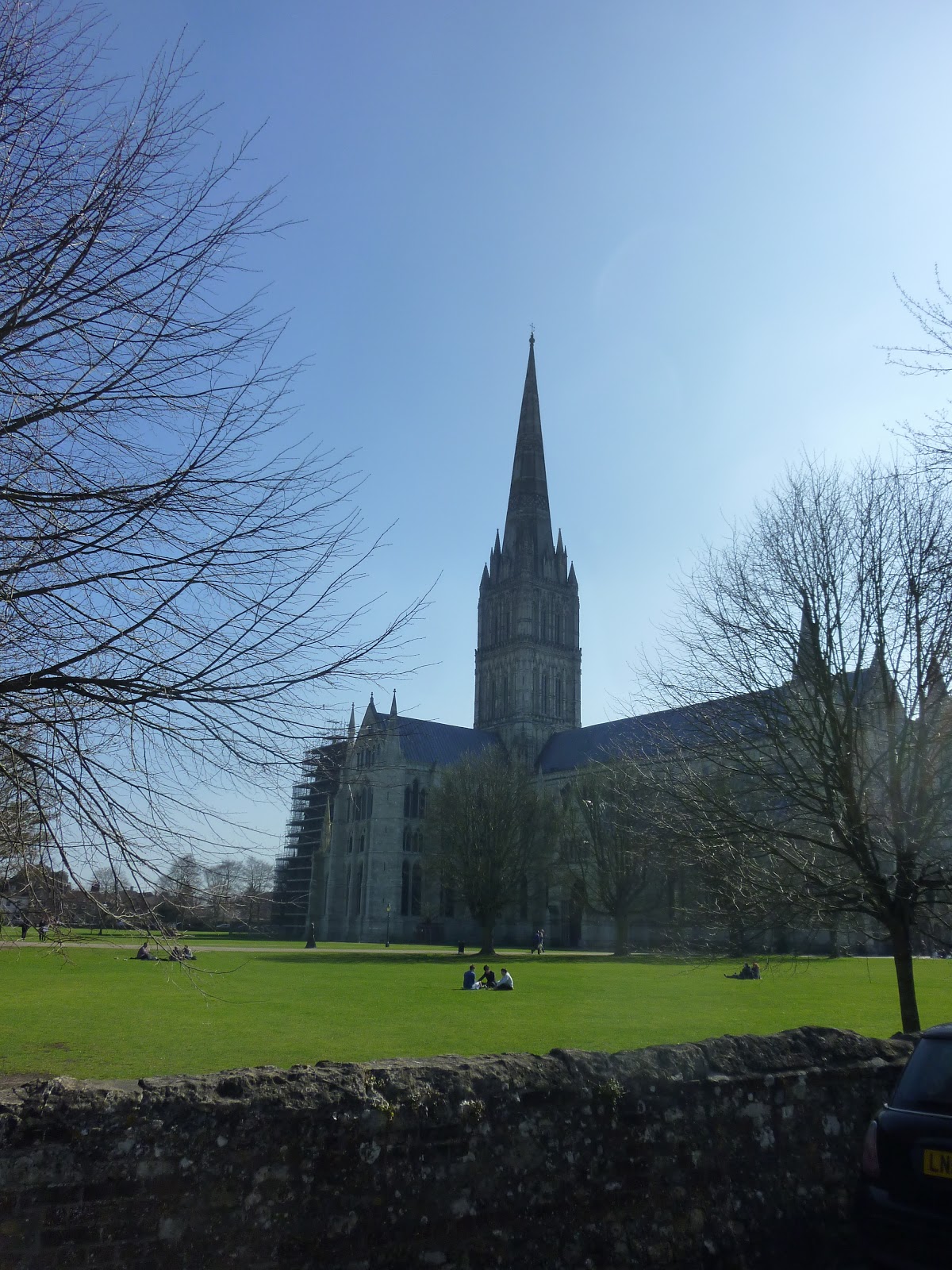
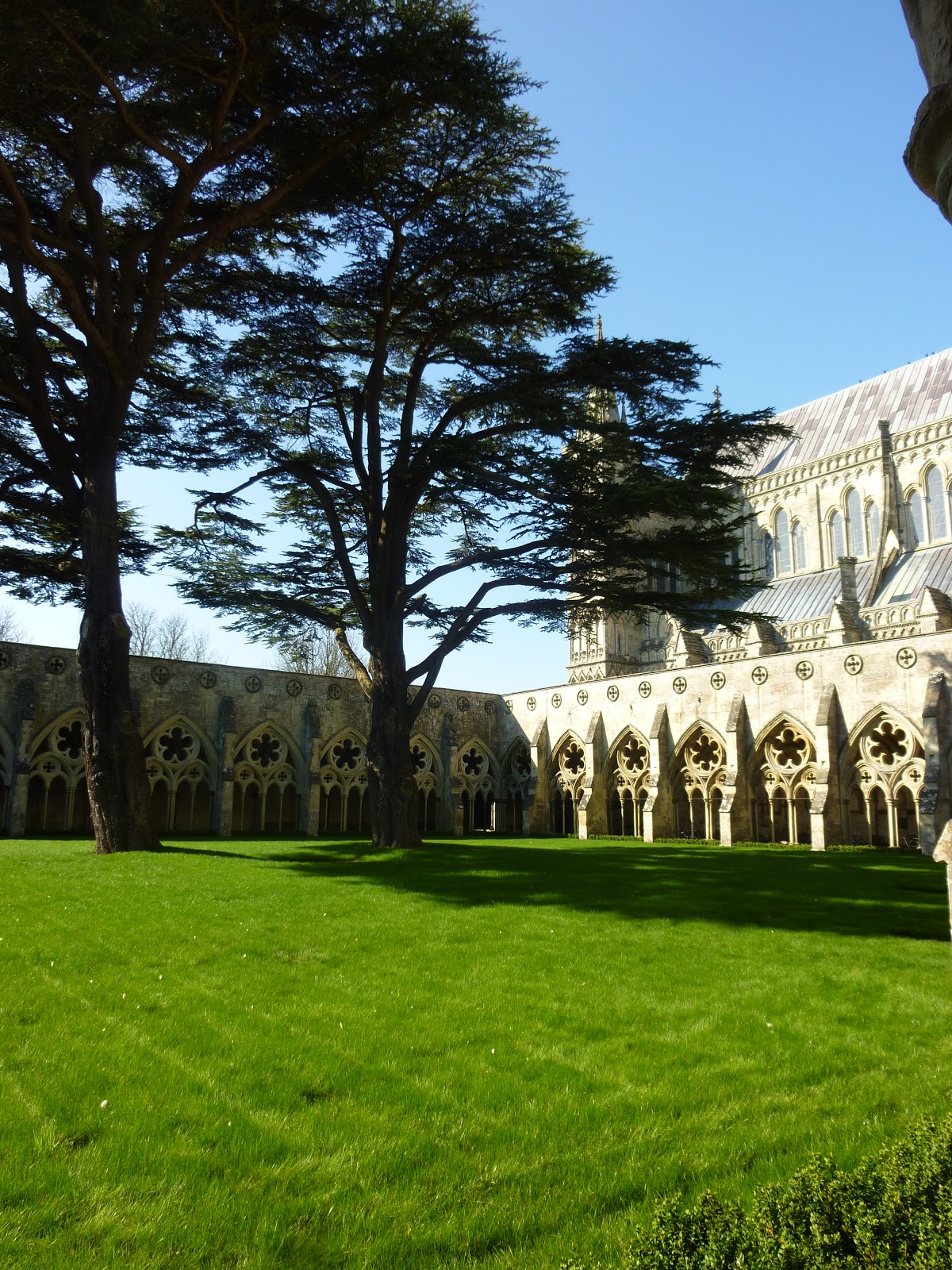
Whilst in Salisbury we also fitted in a visit to the Cathedral which was absolutely beautiful, both inside and out.  My photos, as usual, don't do it justice.  It was so satisfying to be able to fill in some gaps in the story of Eda Moore before finishing up at WFSA.  I'm going to miss my colleagues, and the films of course!, but I know I can keep checking out the WFSA Flickr to see what's new.


Tuesday, 22 March 2011

Today was the first day of my last week at Wessex Film and Sound Archive(WFSA) before I move on to pastures new (more of that in a later post once I start the new job!).  My post at WFSA was only a six month post and I'll be leaving it four weeks early but having completed all the work I was scheduled to do, in addition to all the extra work me and Zoe Viney have done on promoting and project and the Archive.

What have I learned?

  • Cataloguing films isn't different from cataloguing paper documents in terms of the description of the material i.e. keep it descriptive, don't use words the general public couldn't understand (unless you also provide a glossary), include as much contextual information as possible given time and availability of information constraints, include all the ISAD(G) elements
  • Knowledge of the variety of film and audio formats and knowledge of how to identify and differentiate between them
  • I've learned more of the quirks and functions of CALM as I've continued using that at WFSA
  • The wonders of Excel! - it is fantastic for keeping and managing timetables and deadlines. I can now use an Excel spreadsheet, and create one, with a lot more confidence - thanks Zoe!
  • I have been working on a Mac so have greatly increased my knowledge of using that, including simple things like learning how to take screenshots
  • I've installed and used DROID - Digital Record Object IDentification
  • I've learned how to edit film clips using Quicktime
  • Experience of using an 8mm projector
  • Plenty of experience now of using a Steenbeck - which I love!
  • Splicing film, adding leader tape
  • An awareness of the various ways and places in which archive film can be utilised, such as the Little Black Dress exhibition in Portsmouth
  • More experience of carrying out research - into film locations and film makers.
  • I now have knowledge of Hampshire, Dorset, Isle of Wight - and lots of places which I would now like to visit in person, as opposed to just seeing on film
  • Increased experience of the ways in which Twitter and Flickr can be used by Archives to promote specific projects and Archives in general.

Friday, 14 January 2011

Using Wordle for Archives

Yes, I know I'm coming slightly late to the party but I've just discovered the fun of using Wordle for Archive Collections - it's great!  At lunchtime today I've been experimenting with entering the text from a number of small film collections (such as the example below).  This means that you get an overview of the main subjects, places and names which appear in these films.  I haven't worked out yet if there's a way to stop a word from appearing more than once so if anyone knows if there is a way to do this then please let me know.  As well as being eye-catching and nice to look at I think Wordle could be very useful, for highlighting the places or subjects which are discussed, or in the case of film archives shown, in a particular collection.  It could also give a general overview of the content of an entire archive, a filmmaker, a particular project - anything you want to highlight from your collections really... it's also quite an enjoyable way to while away a hour or so!

The examples below are from the text of my cataloguing for four films by Antony Clover, an amateur filmmaker from Portsmouth.


Monday, 6 December 2010

'Revitalising the Regions' - reflections on my first month working in a film archive

I should change the title to first six weeks as I started writing this post ages ago - as visitors to my blog will know my posts have been far from regular recently!  With the move to London and the new job I seem to have got rather behind with my postings.   My new job is just what I was looking for as it is a post as a film cataloguer.  I knew when I did my Masters in Archives that I was interested in working in a film and sound archive but I think what I hadn’t was expected was just how much I have loved all my jobs since I qualified! I would consider myself a pretty positive person most of the time anyway but I can’t imagine how anyone could get bored with the variety of material you get to work with in an archive. 

The Wessex Film and Sound Archive where I now work has its home in the Hampshire Records Office in Winchester.  So, I now have a commute from London to Winchester every day – the opposite direction to most people.  I really enjoy the commute though, I started writing this on the train one day last week but I often use the journey for an extra wee half hour snooze, or to read my book, or just enjoy the beautiful scenery passing by outside the window.

So, my new job: I am working on a project again, as a film cataloguer, this time on a six month post.  I enjoy project work and for me it’s been a great way to start out in the profession, going from projects at Glasgow Caledonian University, to Stirling University and now on to Wessex Film and Sound Archive.   Although with the way the cuts in the arts and cultural heritage sector are going I'm starting to get slightly worried about finding another job come next April!  

The project I am working on ‘Revitalising the Regions’ is one strand of the larger Screen Heritage UK project, itself based on the Strategy for UK Screen Heritage which states that -
“The public are entitled to access, learn about and enjoy their rich screen heritage wherever they live and wherever the materials are held.”

I am working, along with fellow cataloguer Zoe Viney on cataloguing over 600 films which will then be put on the Screen Heritage UK Union catalogue.  Some of the films we’re cataloguing already have some cataloguing information on them, others have very little, and many have nothing except one line of description.  We have set fields we have to complete in order for the records to be exported to the Union Search catalogue, which covers information about the format and physical description of the film in addition to date, title, any information about the filmmakers, and of course description of the film itself.  In addition to the set fields we are also adding in any additional contextual information to the films which we think could be useful to users.  

My only experience of cataloguing films prior to this job was one afternoon, a very interesting afternoon, at the Huntley Film Archive (which I wrote about in an earlier post here).  I was slightly apprehensive about beginning then but have found that the cataloguing process works in much the same way as with paper records, in fact, I'm not even sure why I would have thought differently as the main purpose of any cataloguing is to make the records more accessibly, understandable, provide context etc. whatever the format.  What I have found difficult is the films which have sound as it's difficult not to write down everything in the commentary, and difficult to concentrate on the visual.  Is this just me, that the aural takes over the visual when they are both together?  It's made me think more about sound in movies, and about silent films.  In a silent film, or one with limited sound, or even with only diagetic sound, the image is central, but maybe I'm not alone that once there is a soundtrack or commentary, it becomes hard to pull back and only concentrate on the visual?  I'm really enjoying cataloguing the films as I'm learning so much about Hampshire, its history, landscape, industries, culture and people. I'm hoping to become a bit more regular with my posts again so I'll write more about specific films as I catalogue them. 


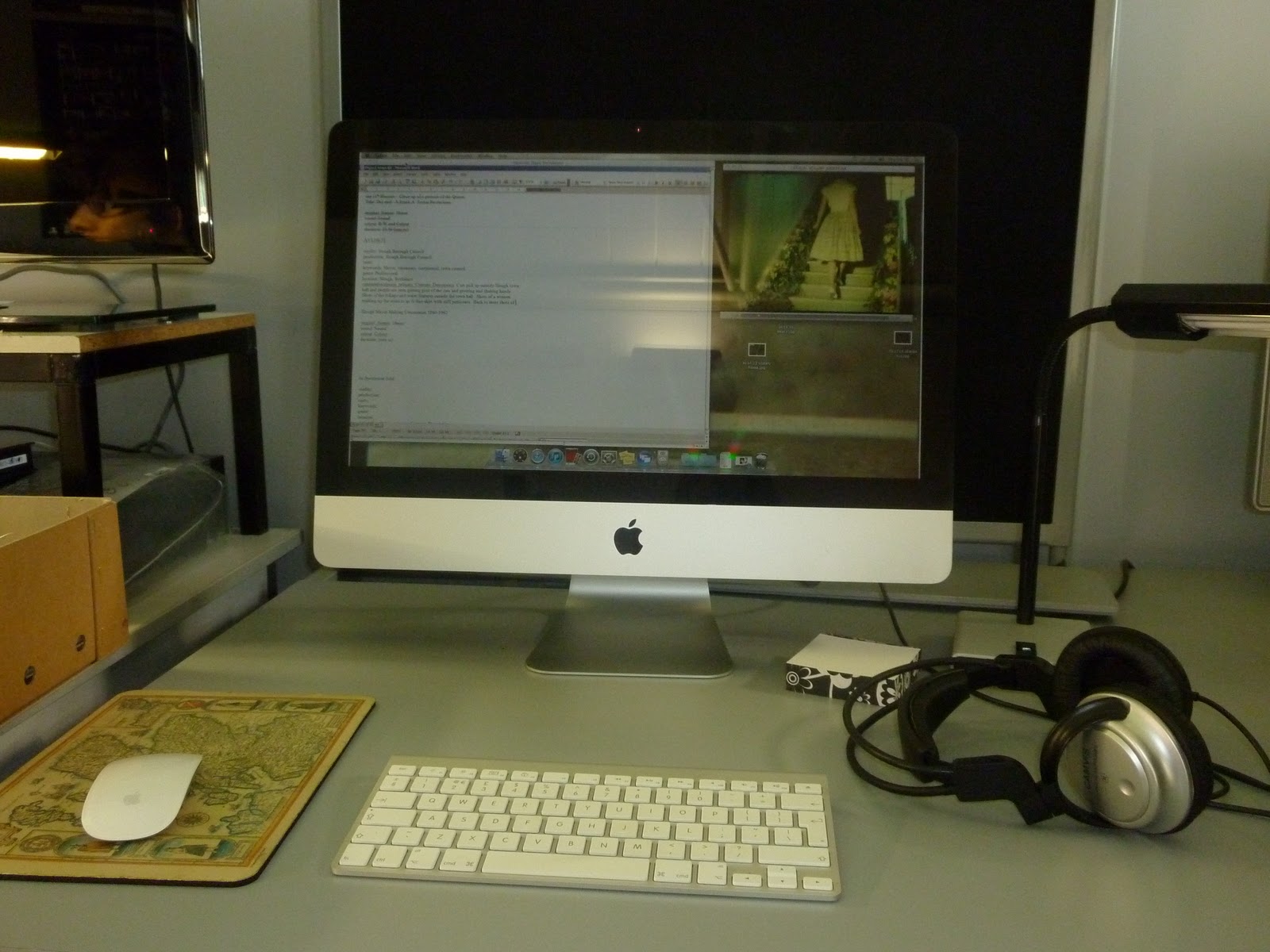
My new workspace - with TV and VHS player to the right.
I also have a mouse mat map of Scotland for when I get homesick

Before I started work Zoe had already set up a Twitter account for us to chart our progress, document our finds, and ask for help if, for example, we can’t identify a particular building in a town, so we’ve both been posting to this on a regular basis.  In addition to the Twitter account I’ll continue to write about my work on this blog. 

Monday, 7 June 2010

Early John Ford film amongst those found at the New Zealand Film Archive

I was directed to an interesting article in the New York Times via the Association of Moving Image Archivists (AMIA) mailing list. For anyone interested in the preservation of films and film-related material I would highly recommend joining this. I know there's a huge amount of mailing lists out there but this one is really worth it. There are always interesting and lively discussions about developments in film preservation, enquiries from film researchers looking for help finding particular films or information about the films, and news of interesting developments, like the link to this article in the New York Times.

A large number of early American films held in the New Zealand Film Archive are now to be returned to America when it emerged that in some cases they were the only surviving print of the film. 75 of these films, chosen for their historical and cultural importance, are now in the process of being returned to the US. The reason so many foreign films remained in New Zealand after their use in cinemas is due to the high cost of shipping them back.

Of particular interest is the discovery of the only print of Upstream a John Ford film from 1927. This film is being copied to modern safety stock before being transferred back to the US as it is the only copy and they do not want to rick any loss or damage to the print. In About John Ford Lindsay Anderson mentions this film, listing it in Ford's filmography, but there is no mention of it in the book or the index - presumably because there was no possible way of viewing a print of the film. It's amazing to think that all these years later we're going to be able to see it again.


The New York Times article discusses the practicalities of moving, and preserving the films, so I'll include an extract from that article here -

Getting the films, which were printed on the unstable, highly inflammable nitrate stock used until the early 1950s, to the United States hasn’t been easy. “There’s no Federal Express for nitrate out of New Zealand,” said Annette Melville, the director of the foundation. “We’re having to ship in UN-approved steel barrels, a little bit at a time. So far we’ve got about one third of the films, and preservation work has already begun on four titles.”

As the films arrive, they are placed in cold storage to slow further degeneration. “We’re triaging the films,” Ms. Melville said, “so we can get to the worst case ones first. About a quarter of the films are in advanced nitrate decay, and the rest have good image quality, though they are badly shrunken.”

As funds permit, the repatriated films will be distributed among the five major nitrate preservation facilities in the United States — the Library of Congress, the Academy of Motion Picture Arts and Sciences, George Eastman House, the U.C.L.A Film & Television Archive and the Museum of Modern Art — where the painstaking work of reclaiming images from material slowly turning to muck will be performed.


I like that the reason the films came to light was because Brian Meacham, who works at the Film Archive of the Academy of Motion Picture Arts and Sciences, went to visit the New Zealand Film Archive when he was on holiday! Is that something a lot of archivists do, visit archives in their holidays? I know I do and it's good to know I'm not alone in this!

Wednesday, 13 January 2010

Huntley Film Archives and Skillset course on 'Film Archive Collections: a practical management guide'

Given that the Huntley Film Archive have begun advertising their Spring course on 'Film Archive Collections - a Practical management Guide' I thought it was high time I got round to posting notes on my experience of this course in November 2009. I would highly recommend this course to anyone involved in, or interested in a career in, film archives.

View of the Huntley Film Archive


Huntley Film Archives and Skillset will be holding a five day residential course in the UK on “Film Archive Collections : a practical management guide”


This intensive and very hands on course will help you evaluate, manage and utilise moving image collections to be held on Sunday 18th April to Friday 23rd April 2010

Whether you are looking to develop a career in film archiving, or you’ve got a collection and want to exploit it, this is the course for you.

By the end of the course, you will be able to :

- assess and evaluate archive film and other moving image collections

- learn how to handle all formats and gauges

- develop a preservation plan, address cataloguing issues and copying

- utilise and exploit those collections for the broadcast, education and other creative media

For more information, a full timetable and booking form caroline@huntleyarchives.com

+ 44 (0) 1981 241 580


Working with the Lindsay Anderson Collection has really fuelled and intensified my passion for film (unsurprisingly) and has made me determined to continue my career in the realm of film archives. So in November of last year I jumped at the opportunity to attend a residential training course at the Huntley Film Archives, near Hereford. Entitled 'Film Archives: a practical management guide' the course was absolutely full of useful, practical and interesting education and training. I really couldn't overemphasise how friendly and welcoming Amanda and John Huntley, Caroline Jenkins and the guest tutors were.


I've been meaning to write about the week for ages now but had a wee bit of a hiatus from the blog in December - partly due to lots of work, but also enjoying being away from a computer over the Christmas holidays! So, I thought this was the perfect time to write about the week at Huntley Film Archives as they are now advertising for their Spring course - which I would recommend to anyone interested in working in the field of audiovisual archives, or indeed to anyone interested in film who would like to gain more of an understanding of the issues of preservation and access.


After an epic train journey from Glasgow to Leamington Spa, then Leamington Spa to Hereford on the Sunday I arrived in Hereford in the dark. I was met at the station by Robert Dewar and, along with two other participants on the course, Rachael and David P, we set off for the Archives. Driving deep into the countryside we pulled up outside a beautiful big house, I couldn't believe that as well as learning about something that I'm passionate about, I was also going to get to spend a week in such lovely surroundings! There were eight of us on the course and the week started with a dinner in the local pub on the Sunday evening - the perfect opportunity for us to get to know each other. There were a variety of reasons people were doing the course, and a range of levels of experience of working with moving image archives.


Monday morning started with a very interesting talk by Amanda Huntley on the history of film and television from it's beginnings right up to the present day. This was followed by a tour of the vault and a discussion of the various gauges and formats used in the film industry. We then got some practical experience in how to identify types of film gauges and tape formats, how to identify nitrate film and how to date films. The afternoon session was taken by Richard Shenton from MACE (Media Archive for Central England) where we looked at the history of sounds and colour in films, as well as having a workshop in how to identify different sounds formats and colour processes. When I first read the timetable and noticed that the archive will be open 7-10 every night I remember thinking - that's a bit much! Indeed we discussed it on the first evening there and the general consensus was we'd be too full of information by the end of the day to go back in the evening. However, guess what, every single night after dinner, we would find ourselves back in the archive, asking more questions and getting more valuable experience of using the Steenbecks. The second day started with a hands-on session of using the Steenbecks - very intimidating but, knowing that we had expert guidance, we all really enjoyed it!


Rachael using a Steenbeck


David S. using a Steenbeck


Me (Kathryn Mackenzie) using a Steenbeck

Tuesday continued with a very useful afternoon class on preservation and restoration. We learned about the dangers of incorrect storage, we saw how films should be stored, and we had a go at removing mould from films. In the evening there was a film show which was great fun, and really interesting. A number of people had brought along films from their archives and Amanda and Robert had some from the Huntley Archive and we had a lovely evening of watching films, chatting and drinking wine!


On Wednesday we looked at film archives from the perspective of the television producer and television researcher. For someone with no experience in a commercial film archives this was all new to me, but all expertly explained by Amanda Huntley and the guest speaker, Steve Humphries. Then Wednesday afternoon was devoted to cataloguing - my favourite job! That isn't sarcasm at all, I really do love cataloguing, it's what I spend most of my time doing. However in cataloguing films, as opposed to film-related records, found that the style of description used and the types of information that are recorded varied significantly from the work that I do. For this reason alone it was a very valuable afternoon, but it was also just a lot of fun to get 'let loose' with real films and get a chance to catalogue.


Thursday morning Amanda Huntley led a very informative session on exploiting your film archive. Although at present i don't work in an archive dealing with films I still found this a useful session and feel that I learnt a lot about the different types of uses of film archives, and the way to get the most out of your archive. Thursday afternoon we got some expert advice from Belinda Harris, a Director of All Rights Clearance. This was pretty eye-opening stuff on the costs of copyright clearance, although the minefield that is copyright law is a familiar issue for archivists in any realm.


Friday was an overview of the week and some very helpful expert advice for each of us on our next step in furthering our careers. All the experts and teachers on the course were so helpful and friendly. The welcome from Amanda Huntley, Robert Dewar and Caroline Jenkins made us all feel instantly comfortable and able to ask questions and the informal evening sessions were of great benefit. Oh, and I couldn't write about the Huntley Film Archive without including a photograph of the Llama's - just one more aspect of the course that made it so enjoyable!


Thursday, 8 October 2009

Archives and auteurs: Filmmakers and their archives


As part of our AHRC funded research project on The Cinema Authorship of Lindsay Anderson we hosted a conference, 'Archives and Auteurs: filmmakers and their archives' here at the University of Stirling from 2nd - 4th September 2009. The conference went really well, I know I may be slightly biased, but from speaking to people that attended I know that was the general opinion as well. Attending the conference were archivists, academics, curators and researchers all coming together to discuss the ways in which the study of the archives of filmmakers and the film industry can provide new perspectives and insights into the history of cinema.

There was so much packed into the opening evening and two full days of the conference that I've delayed writing about it as I didn't know where to start. I'm not going to give a full run down as the full conference programme and abstracts are available here. We are also collating the papers here and these are continually being added to.

Isabelle Gourdin-Sangouard and me (Kathryn Mackenzie) at the welcome desk on the first night of the conference

The conference started on the Wednesday evening with presentations from me , Isabelle Gourdin-Sangouard, John Izod and Karl Magee, about 'The Cinema Authorship of Lindsay Anderson' AHRC project which we are all working on. The final paper in this panel was by Charles Barr, an Emeritus Professor of Film and Television who is currently teaching at University College Dublin. He gave a very interesting paper about the John Ford Archive, which discussed the variety of material in the archive, including some letters from Lindsay Anderson. It is always wonderful to hear about the material in other archives, and as usual, it always makes me want to visit them!

My first panel on the Thursday morning was 'Collaboration and authorship'. This comprised of three papers; The Schlesinger papers and Sunday Bloody Sunday: compromise, collaboration and authorship - Sian Barber, University of Portsmouth; Ken Russell, Dante's Inferno and the BBC Archives - Brian Hoyle, University of Dundee; Lolita: a journey with Nabakov and Kubrick from the page to the screen - Karyn Stuckey, University of the Arts, London. Some of the many issues raised and discussed included; ideas on ways in which archival material can help us to rethink ideas of cinematic authorship; how archival research can deepen and enrich our understanding of a film; and how archival materials can be used to follow the evolution of a script and examine the changes made to adaptations from script to screenplay.The discussion that followed the presentations was to be typical of all the discussions - lively, engaged and interesting. There was discussion about the moral and ethical issues, and possible legal implications, of making available material that is critical of individuals. I know I tend to overuse the word interesting, but as an Archivist cataloguing an archive, and someone involved in research of that archive, it is interesting to hear of the experiences of others in similar areas of work and research with different filmmakers archives. It is also a very healthy way of not becoming too insular or obsessed with the Lindsay Anderson Archive.

Conference delegates entering the MacRobert filmhouse on the first evening, and enjoying extracts from Is That All There Is

After a tea break the panel I chose to attend was 'Beyond the Director - the production system'. It was always a hard choice to make as to which panel to attend, for instance in this occasion the panel I didn't go to was 'Archives- current projects' which included papers about the Basil Dearden and Michael Relph Archive, Joseph Losey, Sally Potter and the Adelphi Archives - oh to be able to be in two places at once! The panel I chose to attend was really useful to me as it really deepened my understanding of the production system. Papers by: Brian Neve, University of Bath, 'Inside and Outside: Elia Kazan, Newtown Productions and notions of 'independence' in 1950s American filmmaking; Philip Drake, University of Stirling, 'Talent and reputation in Hollywood: the case of Hal Ashby'; Aaron Hunter, Queen's University Belfast, 'Down to the Last Detail: Archival reconstruction of Hal Ashby's Place in Hollywood Cinema'; and Andrew Spicer, University of the West of England, 'The Creative Producer: the Michael Klinger Papers'.

In the afternoon I chaired a panel 'Archive - creating and collecting' which contained: 'Private History, Public Persona and Preserving the Cinematic Past: Martin Scorsese and the Discourse of Film Preservation', by Nicholas Nguyen (NATO Archives); Scottish and Irish Experimental film, classification and archiving in national contexts, Sarah Neely, University of Stirling; 'Private Collections and Collective Authorship, case studies of amateur film practice, Ryan Shand, University of Liverpool; 'Watching Thought', revisiting Grierson and McLaren, Kirsteen Macdonald, Stirling Council.
Nicholas's Nguyen's paper contained discussion of the cultural prestige which Scorsese has got from his work as a film archivist/preserver, and explained how Scorsese's authority comes from his role as a champion of film preservation as much as from his role as a film director. This correlates to another theme which was discussed over the course of the conference and is something which I was discussing in a research seminar the other day - how 'the Archive' can be a source of power/authority, if a filmmaker creates their own archive what are the implications of this on their status as an 'auteur'. I think the example of Scorsese shows that the act of preserving can imbue an individual with a certain authority, which is not in anyway to undermine the work of Scorsese or The World Cinema Foundation (WCF), which Nguyen discussed in some depth. I've talked about the WCF before on this blog, in relation to their restoration of 'The Housemaid' and it was great to hear more about their work and about the history of Scorsese and his collecting/preserving of films.
Sarah Neely's paper discussed the distinction between amateur and experimental films and really broadened my understanding of the two, and the history of the distinctions between them. She explained how there is very little work done on Margaret Tait in this country, her home country, in contrast she is more well known and respected internationally. Once reason for this being that Avant-garde filmmakers are often marginalised because they don't say anything about nationality. An examination of the processes of classification of experimental film was also raised as something needing more research and something which she was looking into. This raised questions in my mind over the role of the archivist in this, and re-iterated for me the many areas of research which archivists are required to get involved in to give the materials we catalogue and describe the full respect they deserve - and reminded me, as if I needed it, of what an exciting and varied profession it is!
Ryan Shand's case studies of Amateur film practice discussed how debates on authorship can be useful in the study of amateur film practice. He focused on a case study of a film club in Bebington which has been running for over 50 years. Through interviews with them he examined ideas of individual and collective authorship that i think would be useful on debates in authorship in non-amateur films as well.
Kirsteen Macdonald looked at the questions which arise around the use of archival material in exhibitions. She discussed the development of an exhibition about Lindsay Anderson in 2007 which used material from the Lindsay Anderson Archive chosen as a result of conversations
between archivist Karl Magee, curator Kirsteen Macdonald and artist Stephen Sutcliffe. Then went on to discuss more recent collaborations between Stirling University Archives and the Changing Room with the work of Katy Dove and Luke Fowler with, respectively, the Norman McLaren and John Grierson Archives. The artist Luke Fowler was also in attendance and there was lots of lively and thought-provoking discussion after these presentations. The idea of artists taking the work out of context was discussed and Kirsten pointed out that in some instances the artists felt uncomfortable with the personal letters and photographs and found that removing them from their context, and only using selected elements from them, made this easier, and I would imagine, gives the artist a sense of control or ownership over the material in a creative sense.

Then followed an interesting presentation by Ruth Washbrook (Education and Outreach Officer, Scottish Screen Archive) which demonstrated the range of resources held at Scottish Screen Archive.

To top it all off, the day finished with a very rare screening of Red, White and Zero, the ill-fated trilogy of films by Lindsay Anderson, Tony Richardson and Peter Brook. I think these films have only ever been screened together once before so this was a pretty special event. I've talked about The White Bus before in an interview with the Big Picture magazine so I won't go over it again. It was intended to be a trilogy of films based on short stories by Shelagh Delaney but it was only Anderson who stuck to the original concept and producer a wonderful film in The White Bus. This screening was the first time for me, and for anyone else at the conference, to see the other two films - pretty exciting, and a bit nerve wracking for us, what if they were really awful and n one wanted to see them! However this wasn't the case, well, the Tony Richardson film still received mixed reviews but I liked it. Tony Richardson's film was called Red and Blue and featured his wife Vanessa Redgrave playing a singer, following hr through various love interests and cities, singing as she goes along. I would say the reception to this film was generally negative although some people, like myself, did enjoy it. It was bright and garish, a bit cheesy, very OTT, but lots of fun. Isabelle pointed out to me that maybe the reason I liked it was the influence of the work of Jacques Demy, a filmmaker whose work I love. The other film in the trilogy was Peter Brook's Ride of the Valkeries, also known as Zero, in tribute to the star of the film Zero Mostel. Anderson described this film as 'amateurish and confused' in his diaries of the time but it seemed to go down well at the conference. It was funny in a Buster Keaton type way and although the plot was a bit confused I think overall it came out as a funny, yet gently film that it would be nice to see released again.

The Friday started, for me, with 'British Cinema (and television), a panel containing papers by: Nathalie Morris, BFI, on 'The problem of the non-film, archives and unrealised projects'; Philip Wickham, Bill Douglas Centre, university of Exeter, 'You don't need talent to get work these days, you need a miracle - the British film industry in the 1970s and 1980s through filmmakers archives'; and Dave Rolinson, University of Stirling 'Archival research into the television work of Alan Plater'. Nathalie Morris made some very important points abut the study of unrealised films, explaining that until recently these weren't often discussed in terms of a director's work, it was only with a return to the archive for film researchers that attention is beginning to be paid to the important of unfinished film projects in a director's career. She highlighted a book 'Sights Unseen', by Dan North (which contains a chapter by Karl Magee, Stirling University Archives, 'Hooray for Hollywood? the unmade films of Lindsay Anderson') which I will really need to read as it sounds fascinating. Philip Wickham discussed the problems filmmakers faced in 1970s and 1980s and he also highlighted some of the differences in holding the archives of living filmmakers. Dave Rolinson looked at the methodological implications of the way researchers used television archives and discussed differences between research into television and research into films and the implications of this on which archival resources get used for research i.e. TV research tends to focus on the writer therefore research carried out in archives with this agenda already in place, as opposed to films where it is focussed on the director, and therefore archival research is carried out with this agenda already in place. The important of archives as living and breathing resources which need to be used, re-examined, re-used in different ways was emphasised in this session.

After another tea break there followed a preview of the documentary film The American Who Electrified Russia. Produced and directed by the independent filmmaker and academic Michael Chanan, it featured material from public archives and private records that enabled him to portray an extraordinary character, Solomon Trone, who had left powerful memories with his relatives - Chanan's own family.

The plenary speakers who closed the conference illustrated the ways in which academic researchers and professional archivists benefit from co-operation between the two sides of archives use. Sarah Street presented a paper that highlighted a crucial function of close study of archival material. As opposed to using archives on an illustrative basis, she uses them as a platform to challenge or enrich existing theoretical writing on film authorship. Marc Vernet from Université Paris Diderot, shared the core of a report he had written for the French Government focussing on the implications for archival work of that nation's employment regime for archivists which affords them careers spent at the crossroads of film theory and film preservation - but without continuing professional development.

Finally, Barbara Hall from the Margaret Herrick Library - Academy of Motion Picture Arts and Sciences, gave an insight into the wealth of material it makes available to researchers. By focusing on the Library's holdings of Hitchcock's material, Barbara summarised the challenges of preserving and making available to the general public the Hitchcock archives. While attempting this, she and her colleagues have to keep in mind the materials' value for knowledge arbiters. The Herrick Library's endeavours to hold this balance speak eloquently of every archives ongoing difficulty in evaluating, and adapting to the shifting impact of any given filmmaker's work and legacy. (these final three paragraphs are taken from the review of the conference which was written by my colleagues and posted on the conference webpages

I realised at the top of this post that I said I wouldn't give a full overview, oops - once I started talking about it I couldn't stop. Suffice to say the conference was a resounding success and I'm very glad to have played a part in it, and for anyone who took part in it who is reading this - thank you all for your contributions!!

Thursday, 13 August 2009

Jane and Louise Wilson at the Talbot Rice Gallery, Edinburgh


Jane and Louise Wilson, Unfolding the Aryan Papers 2009, Installation view courtesy of the BFI London / © Dave Morgan

A few months ago I wrote about an exhibition that would be opening at the Talbot Rice Gallery in Edinburgh. The exhibition, Unfolding the Aryan Papers is by Jane and Louise Wilson. I first saw it in London in March at the British Film Institute. I've already written about the main part of the exhibition, the video installation, in an earlier post so I won't repeat myself. Except to mention the space the film is being shown in - it's a box, constructed of a gauze-like material, darkened, and with mirrors which project the film infinitely on either side. The effect of the mirrors is very powerful though the temporary structure meant that noises from outside the box, people walking past, chatting, high heels on the floor etc. made it difficult to hear the film properly. Though this could also be to do with the fact I saw it on the opening night when the noise level might have been increased slightly by the wine on offer!

There was a large room upstairs in the Talbot Rice Gallery which contained archive material and new work by Jane and Louise Wilson which had not been part of the BFI exhibition. Old black and white photographs from the Ealing Studio Archive which Kubrick had collected are displayed alongside original photos of Johanna ter Steege, and new ones taken by Jane and Louise Wilson, and bronze sculptures of the yardsticks that are used in the original Ealing Studio photographs.

Once again what really struck me was how the re-use and re-interpretation of this material has finally brought it to life. It's very moving to hear Johanna ter Steege talk in the film, about the amount of time and feeling which she, and Kubrick, had invested in the project. She says something along the lines of 'this has brought some kind of closure to the film' which she was denied when the project was halted. I heard, though I can't find the reviews anywhere, that there have been criticisms of this exhibition as being too superficial, as somehow trivialising the very serious and horrific events it discusses. However that is so at odds with the impression I get from the film. The film is invested with the emotion and energy which Johanna ter Steege put into the original research and photographs for the film, the huge amount of research which Kubrick and his team carried out for it, and the amount of research and inspiration which the Wilson sisters have created with their film, and the photographs and sculptures, ensure that the installation creates a lasting impression.

On a final note about this exhibition - it's interesting how the revived interest in this film, through the re-use and promotion of the archive material, has reportedly led to interest in finally making this film. An article in The Times states that "Warner Bros still owns the rights to the film… and Harlan said the studio should employ a leading director such as Ang Lee, who made the Oscar-winning Brokeback Mountain, to bring Kubrick’s vision to the screen. He said he would happily become involved in the project again." Although Warner Bros. haven't confirmed yet if they are going to resurrect this film.

Wednesday, 12 August 2009

Conference at Stirling University


Just under a month to go until our conference 'Archives and auteurs - Filmmakers and their archives' here at the University of Stirling'. I'm already pretty excited about it: the interesting line-up of participants and papers; the screenings; exhibitions; and the chance to meet lots of interesting people. I thought I would include a brief outline of the panels, plenary speakers, screenings and exhibitions just to whet the appetite of attendees/participants and to encourage others to come and join the fun! I'll post a full report of the conference and accompanying exhibitions and screenings after the conference.

The conference programme is now complete and will begin on the evening of Wednesday 2 September with a presentation from the AHRC Lindsay Anderson project team (that's Kathryn Mackenzie (that is I!), Isabelle Gourdin, John Izod and Karl Magee). Delegates papers will be presented at conference panels on Thursday 3 and Friday 4 September. I've included a full list of the panels below, but for further information on the content of each panel and the names of the speakers please see the full conference programme-

The cinema authorship of Lindsay Anderson Collaboration and authorship
Ingmar Bergman – the archival legacy British Cinema
Beyond the director – the production system Current archival projects
Beyond the director – from script to screen Creating and collecting film archives
Beyond the director – women in the picture

The event will end on Friday 4 September with a plenary session featuring papers from:

Sarah Street (Professor of Film, University of Bristol),
Marc Vernet (Professeur en Etudes Cinématographiques, Université Paris Diderot)
Barbara Hall (Margaret Herrick Library, Academy of Motion Picture Arts & Sciences)

To accompany the conference there will be a major exhibition of material from the Lindsay Anderson Archive in the Macrobert arts centre (located on the Stirling University campus). The Macrobert arts centre will also be the venue for a super rare screening of Red, White and Zero on the evening of Thursday 3 September. This is an (unreleased) triptych of films by Lindsay Anderson, Tony Richardson and Peter Brook. I have previously written about Lindsay Anderson's film in the triptych The White Bus but I have never seen the other two films so I'm really looking forward to the opportunity to do so.


Another special screening was recently added to the conference programme. Hitchcock on Grierson, a 1965 STV tribute to the ‘father of documentary’ from the ‘master of suspense’ will be shown at the Changing Room Gallery as part of a private view of the exhibition ‘Art is not a mirror, it’s a hammer!’, an exploration of the archives of John Grierson and Norman McLaren (see my previous post on this exhibition).
I know I'm slightly biased but it's looking like a pretty impressive line-up wouldn't you say?!

Tuesday, 7 July 2009

Interview for The Big Picture magazine

I recently did an interview about the Lindsay Anderson Archive for The Big Picture magazine with Jez Conolly and it is now up on their website - my first interview!

The Big Picture is a new, free film magazine (and website) that 'offers an intelligent take on cinema, focussing on how film affects our lives. Aimed at the enthusiastic film-goer at large, The Big Picture provides an original take on the cinematic experience. Drawing from cinema's fundamental visual power, The Big Picture turns traditional magazine publishing on its head, allowing the powerful filmic images to do the talking rather than masses of text. The Big Picture can be picked up for free from major independent cinemas nationwide.'

Here's the front page extract and link to the complete article:

O Dreamland: inside the Lindsay Anderson Archive


Kathryn Mackenzie is a member of the research team based at the University of Stirling currently working with the Lindsay Anderson Archive, a large collection of the filmmaker's personal and working papers, photographs and memorabilia. Jez Conolly asked Kathryn to shed some light on the man and his legacy as she sees it through her contact with the archival materials.

Tuesday, 10 March 2009

Unfolding the Aryan Papers


© Jane & Louise Wilson - Unfolding the Aryan Papers, BFI Southbank Gallery, 13 February – 19 April 2009, Research photographs by Stanley Kubrick for 'Aryan Papers', The Stanley Kubrick Archives, University of the Arts London

Part of my work with the Lindsay Anderson Collection will involve cataloguing the vast amount of material relating to unfinished film and theatre projects which Anderson was involved with - they could be unfinished because he didn't feel the project worth pursuing but, more often than not, it came down to a lack of finanical backing and support. I am looking forward to cataloguing this material as I'm sure it will have a very different feel to it than the material relating to the finished films. It will be interesting to see how far each project got, how involved he became in it, and the reasons why it never came to fruition.

As a result I was very interested to hear about an ongoing exhibition, Unfolding the Aryan Papers, at the British Film Institute at Southbank in London. On a recent visit to London I took the opportunity to go and see it and found it very inspiring and insightful. The exhibition is centred around the records relating to an unrealised film project Aryan Papers by the director Stanley Kubrick. Unfolding the Aryan Papers was created by two artists, Jane and Louise Wilson, highly acclaimed British artists who were on a British Film Institute commissioned residency at the Stanley Kubrick Archive at the University of the Arts London


© Jane & Louise Wilson - Unfolding the Aryan Papers, BFI Southbank Gallery, 13 February – 19 April 2009, Research photographs by Stanley Kubrick for 'Aryan Papers', The Stanley Kubrick Archives, University of the Arts London

Stanley Kubrick spent over twenty years researching for Aryan Papers, a film about the holocaust. He went as far as to choose the lead actors and the locations but the film never got passed the pre-production stage. In an interview with Louisa Buck for Ponystep, Louise Wilson pinpoints a number of possible reasons for this, based on the material relating to the film in the Kubrick Archive. The interview highlights the profound insights into thw working rpacticves and thoughts of a director that can be gained through their archive. What I loved about the installation created by Jane and Louise was the way in which they had re-interpreted the material in the archive. They got in touch with Johanna ter Steege, the actor Kubrick had wanted for the lead role, with whom he had shot wardrobe research stills and had many discussions about the film. The film installation which Jane and Louise Wilson created as a result of their extensive research used these wardrobe research stills, pre-production period stills, and the co-operation of Johanna der Steege. In the film Steege discusses her first meeting with Kubrick, explains the story of the film in more detail, her reasons for wanting to do it, and she recreates the original wardrobe stills. Unfolding the Aryan Papers made Steege visible and there was a real sense of how involved she was in the Kubrick film and how disappointed she was that it never got made. The interview which Louisa Buck conducted with Jane and Louise Wilson is really interesting and definitely worth further reading for insights into the benefits, and challenges, of working with archive material to create new and exciting art works.