Monday was the first time I went to a 'Researcher's Tales' evening at the British Film Institute Library and Archive on Stephen Street. I've been wanting to go for ages but would never have been home from work in time before - it's so great now that I'm both living and working in the same city! Researcher's Tales is billed as "An occasional series of informal discussions for BFI National Library members in which leading writers, historians and practitioners in film, television, artists' film and the moving image reflect on their past, current and future work."
It was such a great evening - the talk by Laura Mulvey and Mark Lewis was fascinating, and the clips they used to illustrate their points were great. They talked over each other at times, contradicted and corrected each other but that was all part of the dialogue and you really got a feel for the regard and affection they have for each other. The talk was about Rear Projection - a film technique which I recognised but hadn't heard the term for before. Basically for anyone else like me who hasn't heard the term used, it means that the stars are shot doing their scene in a studio with the scene itself e.g. the landscape, city scape, ocean etc projected behind them on a flat screen. I'm sure everyone can think of at least a few examples from films they know but what I hadn't realised was just how widely used it was, particularly from the early 1930s through to the late 1950s. Laura and Mark recalled how they first began talking about, and discovering their mutual interest in this under theorised and under discussed area of cinematic history. Laura was showing Mark one of her favourite films - the 1930 film Her Man and although Mark was uninterested in the initial aspect Laura wanted to show him he was intrigued by the use of rear projection. This started the dialogue and research which they discussed on Monday night as they "realised that rear projection had an intrinsic aesthetic interest of its own and that its very artificiality, its lack of transparency, brought with it a certain 'modernist' self-consciousness". You can read more of their views on rear projection here.
We were also privileged to see clips and segments from a number of films by Mark Lewis. These films were fantastic, particularly Backstory (2009) and Molly Parker (2006). I really enjoyed the Researcher's Tales and am looking forward to making it to more of them in the future. You have to be a member of the BFI Library in order to go but that's fine by me too - going back to the Library at Stephen Street for the first time in ages reminded me of what a special place it is. I so hope they change their mind/the finances change and they don't move it, as proposed, to the much smaller space in the exhibition room at BFI Southbank.
N.B. The clip that they showed from Her Man was copied from Laura's VHS copy of the film. Mark referred to the poor quality of this but said it was all they could get as the original film has been destroyed and there aren't any copies of it in archives. I had a look online and it seems you can get it on DVD but these are poor quality copies, probably also from VHS, which I think people can sell now as the film is in the public domain - though I'm not sure if that's just in America or worldwide. It made me think again of film archiving, obviously not all films can be preserved, or indeed merit being preserved - however, how much of what is saved and what is lost is often down to chance.
Showing posts with label Film archiving. Show all posts
Showing posts with label Film archiving. Show all posts
Thursday, 21 April 2011


New York Downtown Scene 1970s - exhibition at the Barbican, London
I realised I tantalisingly mentioned the Barbican exhibition at the end of my post of my new job, then got so excited about the Researcher's Tales at the BFI that I forgot about the Barbican. However, it definitely was only temporarily forgotten as it was such a breathtaking exhibition that I'm actually hoping I've got time to go back!
'Laurie Anderson, Trisha Brown and Gordon Matta-Clark - Pioneers of the Downtown Scene, New York, 1970s' is on until 22 May and I would recommend it to anyone in or visiting London. It was the last exhibition I went to see with a friend who's since moved back to Israel (if you're reading this, I hope you make it back to London soon!) and what a lovely day we had. It was lovely and sunny, we saw this exhibition, wandered around the Barbican complex, saw part of the original wall of London, then went to meet other friends in 'The Book Club' pub in Shoreditch - a packed and fun day!
I've read so much about New York in the 1970's, in Tim Lawrence's fantastic biography of Arthur Russell Hold On To Your Dreams, in Patti Smith's Just Kids, and most recently in City Boy by Edmund White. So I'd heard of Laurie Anderson, Trisha Brown and Gordon Matta-Clark without ever having seen or experienced their work. As the title states the exhibition is about their work in New York in the 1970s and it covers dance, performance art, photography, film - but none of them in quite such a straightforward way as that makes them sound. For example Gordon Matta-Clark's cut outs of buildings - at first I thought, yes interesting, replica's of sections of dilapidated buildings, however... they weren't replicas, it was actual sections of buildings! He had taken photographs of the cut-outs and it was just such a painstaking looking process and so clever, I loved it! I read a good post about him here, which is also where I got the image below from.
We were lucky to arrive just in time for 'Walking on the Wall' a performance piece by Trisha Brown. This really played with your sense of perspective and space and was spell-binding and fun to watch. The performances are on every day - if I go back I'd love to see Floor of the Forest! Laurie Anderson's performance pieces which she had photographed were so much fun as well, for example there was one series of photographs of her lying in various places, on a bench, in a train station, on a beach. The premise was to see if sleeping in different places altered her dreams.
There were a large number of film pieces by Gordon Matta-Clark and Trisha Brown and whilst I really enjoyed all of them they also brought out my archivist side as the quality of some of them was great, they'd obviously been preserved, there were others which were really very grainy and quite difficult to make everything out clearly. That made me very sad as anyone who sees these works could see how deserving of preservation and care they are. Though I guess at the time if the artist just kept a print themselves, maybe in a loft or cupboard then the chances of it being well preserved are less. It was just so much fun to see them all though that the quality was really of minor importance to the effect and the experience!
Having read so much about the music scene in New York it was great to see another side to the New York of the 1970s - I know at the time it would have been edgy, no doubt dangerous, and pretty poor too - but I'd still have loved to have experienced it!
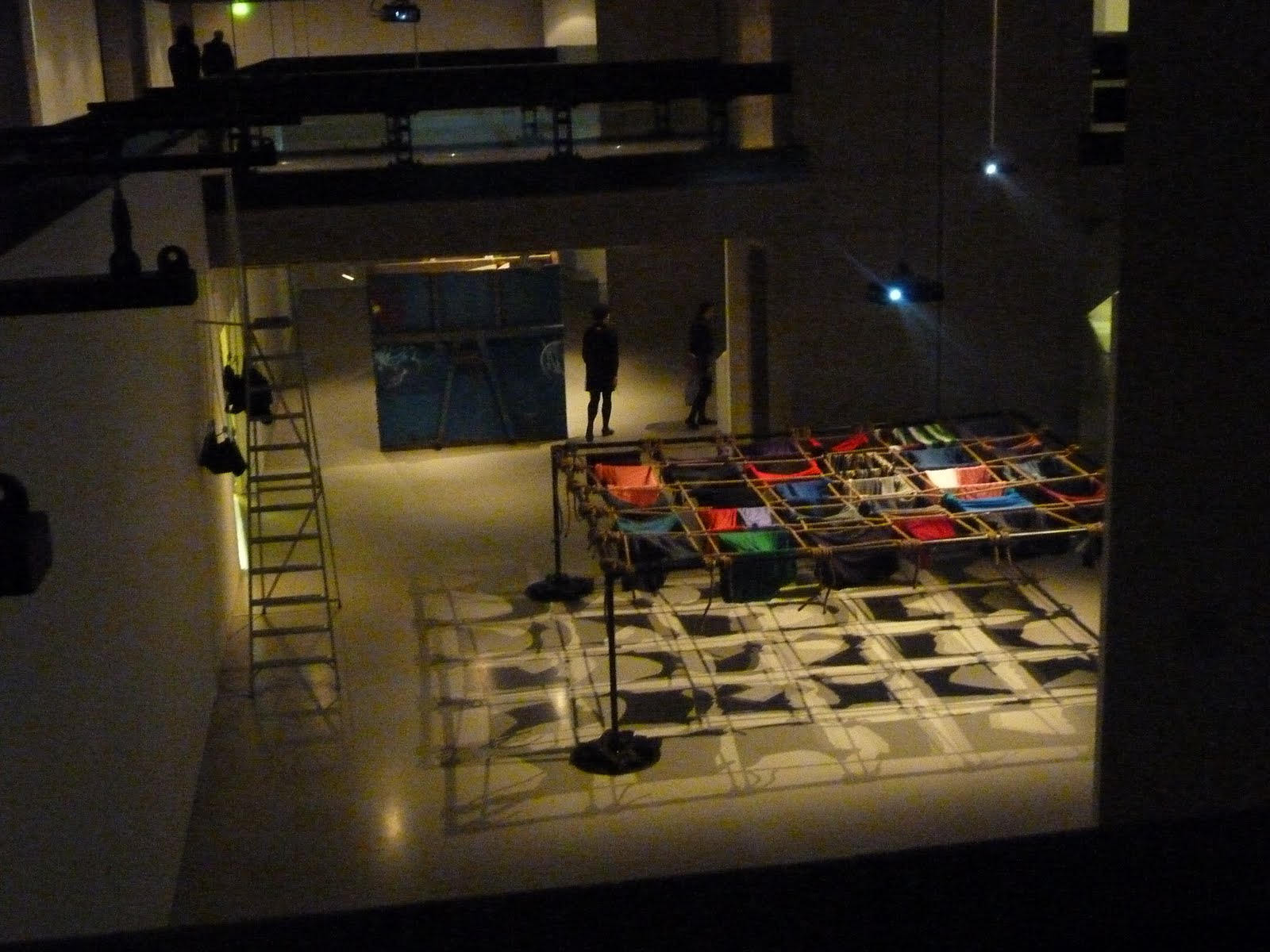 |
| View of 'Floor of the Forest', Barbican |
'Laurie Anderson, Trisha Brown and Gordon Matta-Clark - Pioneers of the Downtown Scene, New York, 1970s' is on until 22 May and I would recommend it to anyone in or visiting London. It was the last exhibition I went to see with a friend who's since moved back to Israel (if you're reading this, I hope you make it back to London soon!) and what a lovely day we had. It was lovely and sunny, we saw this exhibition, wandered around the Barbican complex, saw part of the original wall of London, then went to meet other friends in 'The Book Club' pub in Shoreditch - a packed and fun day!
I've read so much about New York in the 1970's, in Tim Lawrence's fantastic biography of Arthur Russell Hold On To Your Dreams, in Patti Smith's Just Kids, and most recently in City Boy by Edmund White. So I'd heard of Laurie Anderson, Trisha Brown and Gordon Matta-Clark without ever having seen or experienced their work. As the title states the exhibition is about their work in New York in the 1970s and it covers dance, performance art, photography, film - but none of them in quite such a straightforward way as that makes them sound. For example Gordon Matta-Clark's cut outs of buildings - at first I thought, yes interesting, replica's of sections of dilapidated buildings, however... they weren't replicas, it was actual sections of buildings! He had taken photographs of the cut-outs and it was just such a painstaking looking process and so clever, I loved it! I read a good post about him here, which is also where I got the image below from.
 |
| Interior view of conical intersect |
There were a large number of film pieces by Gordon Matta-Clark and Trisha Brown and whilst I really enjoyed all of them they also brought out my archivist side as the quality of some of them was great, they'd obviously been preserved, there were others which were really very grainy and quite difficult to make everything out clearly. That made me very sad as anyone who sees these works could see how deserving of preservation and care they are. Though I guess at the time if the artist just kept a print themselves, maybe in a loft or cupboard then the chances of it being well preserved are less. It was just so much fun to see them all though that the quality was really of minor importance to the effect and the experience!
Having read so much about the music scene in New York it was great to see another side to the New York of the 1970s - I know at the time it would have been edgy, no doubt dangerous, and pretty poor too - but I'd still have loved to have experienced it!
 |
| Tree in blossom outside the Barbican |
Sunday, 27 March 2011
The perks of being a cataloguer/researcher.
In my last week at Wessex Film and Sound Archive (WFSA) me and Zoe Viney had a research trip to Salisbury. We timed it perfectly, picking the sunniest day of the week to go! I hadn't been to Salisbury before and Zoe hadn't been in years so we did a bit of exploring whilst we were there.
The reason for your visit was to try and gather more information on Eda Moore, an amateur filmmaker from Salisbury whose films are held in WFSA. I love her films as they cover a wide date range, from the 1930s through to the 1970s/1980s and cover a wide range of subjects. The films which we catalogued though were all about Salisbury. This was because the project 'Revitalising the Regions' is all about films from Hampshire and the surroundings regions, including Dorset. Her films about Salisbury show local events, carnivals, parades, processions etc such as the clip shown below.
She also filmed her travels, including many visits back to South Africa. Unfortunately due to the nature of the project I was employed on, I couldn't really justify spending time sitting watching all of these but I did have a peak at a few of them and wish I'd had time to watch them all!
Eda Moore herself, though, was proving a good deal more elusive than her films. We couldn't find out much biographical information about her at all. So, a trip to Salisbury was called for - oh the hardships of being a film cataloguer/researcher! The first stop was at Salisbury Local Reference Library where we found lots of useful information, mostly through an obituary for her we found on the microfilm for the Salisbury Journal. We found the obituary because Zoe had found out her date of death through Ancestry - I'm ashamed to admit that it hadn't occurred to me to use something like Ancestry, some archivist eh!?
Our next port of call was Salisbury & South Wiltshire Museum, whom I had been in touch with via e-mail. They had informed us they had a box of archive material about Eda Moore's father, Francis John Moore, who had been Mayor of Salisbury 1953/1954. They suggested we might want to look through the material as it included a large book compiled of press cuttings. Another confession - I totally forgot to get in touch and set up an appointment so we just popped in when we were there. Terrible I know, just dropping in like that, but thankfully the staff there were super friendly and helpful! We had a walk round the museum (which I'd highly recommend) sat outside Salisbury Cathedral for lunch and then got to look through the material. It proved very illuminating and gave us lots of useful information - my favourite nugget was a page written by Eda Moore herself where she talks about carrying her Bolex around in her handbag with her. I love it! I have this image now of this very genteel lady, going to official events at the invite of her father the Mayor, all the while having her camera in her bag so she could film!
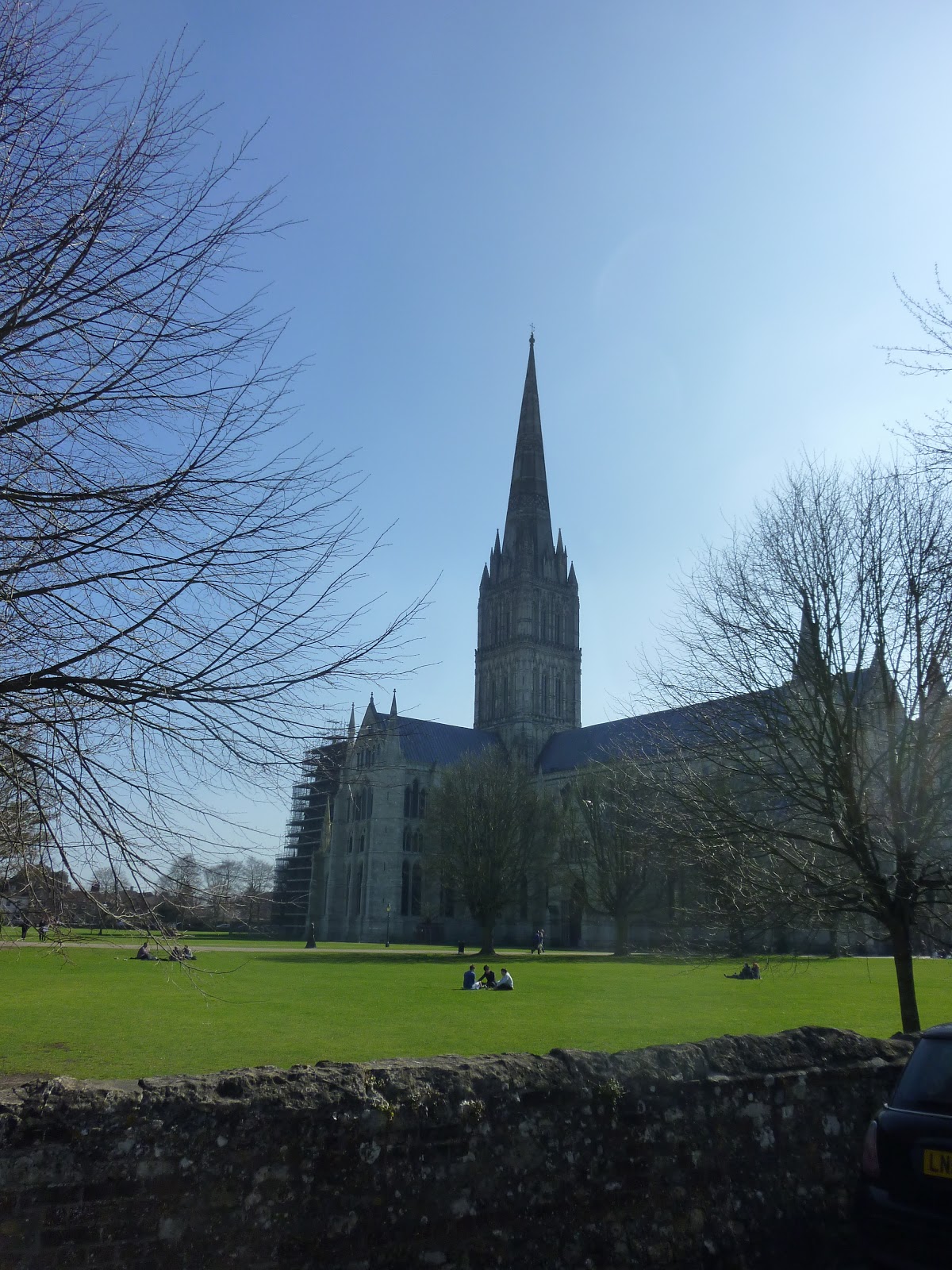
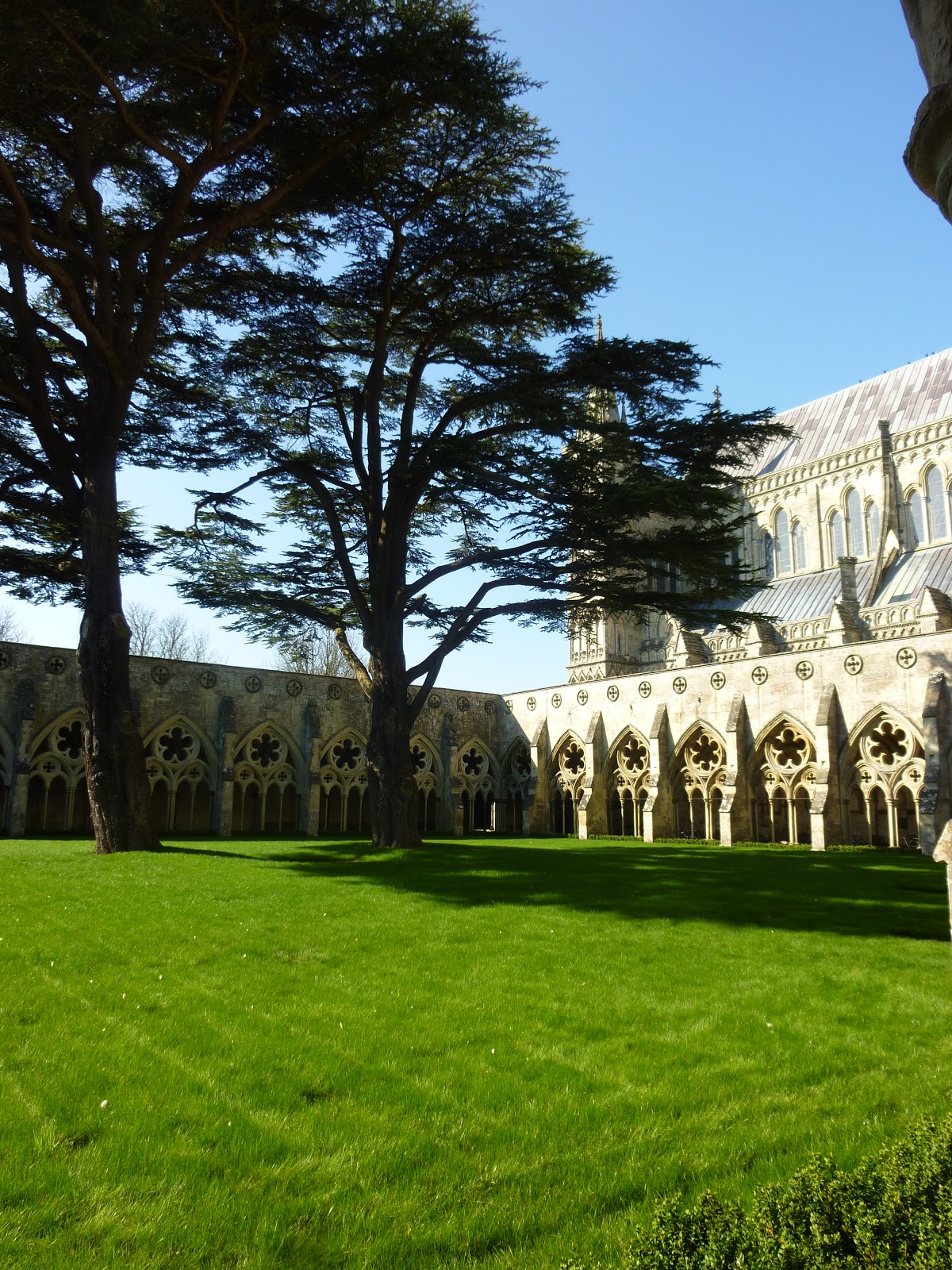
Whilst in Salisbury we also fitted in a visit to the Cathedral which was absolutely beautiful, both inside and out. My photos, as usual, don't do it justice. It was so satisfying to be able to fill in some gaps in the story of Eda Moore before finishing up at WFSA. I'm going to miss my colleagues, and the films of course!, but I know I can keep checking out the WFSA Flickr to see what's new.
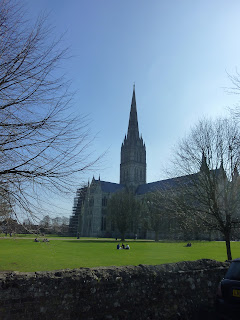
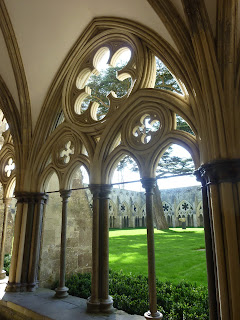
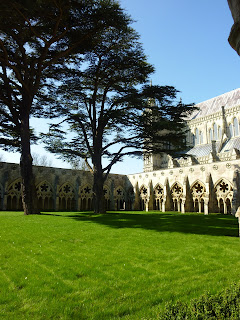
The reason for your visit was to try and gather more information on Eda Moore, an amateur filmmaker from Salisbury whose films are held in WFSA. I love her films as they cover a wide date range, from the 1930s through to the 1970s/1980s and cover a wide range of subjects. The films which we catalogued though were all about Salisbury. This was because the project 'Revitalising the Regions' is all about films from Hampshire and the surroundings regions, including Dorset. Her films about Salisbury show local events, carnivals, parades, processions etc such as the clip shown below.
She also filmed her travels, including many visits back to South Africa. Unfortunately due to the nature of the project I was employed on, I couldn't really justify spending time sitting watching all of these but I did have a peak at a few of them and wish I'd had time to watch them all!
Eda Moore herself, though, was proving a good deal more elusive than her films. We couldn't find out much biographical information about her at all. So, a trip to Salisbury was called for - oh the hardships of being a film cataloguer/researcher! The first stop was at Salisbury Local Reference Library where we found lots of useful information, mostly through an obituary for her we found on the microfilm for the Salisbury Journal. We found the obituary because Zoe had found out her date of death through Ancestry - I'm ashamed to admit that it hadn't occurred to me to use something like Ancestry, some archivist eh!?
Our next port of call was Salisbury & South Wiltshire Museum, whom I had been in touch with via e-mail. They had informed us they had a box of archive material about Eda Moore's father, Francis John Moore, who had been Mayor of Salisbury 1953/1954. They suggested we might want to look through the material as it included a large book compiled of press cuttings. Another confession - I totally forgot to get in touch and set up an appointment so we just popped in when we were there. Terrible I know, just dropping in like that, but thankfully the staff there were super friendly and helpful! We had a walk round the museum (which I'd highly recommend) sat outside Salisbury Cathedral for lunch and then got to look through the material. It proved very illuminating and gave us lots of useful information - my favourite nugget was a page written by Eda Moore herself where she talks about carrying her Bolex around in her handbag with her. I love it! I have this image now of this very genteel lady, going to official events at the invite of her father the Mayor, all the while having her camera in her bag so she could film!
Whilst in Salisbury we also fitted in a visit to the Cathedral which was absolutely beautiful, both inside and out. My photos, as usual, don't do it justice. It was so satisfying to be able to fill in some gaps in the story of Eda Moore before finishing up at WFSA. I'm going to miss my colleagues, and the films of course!, but I know I can keep checking out the WFSA Flickr to see what's new.

Monday, 7 March 2011
Where private and professional meet - or should do.
Yesterday I was reading Saturday's Guardian and was very happy to find an article The Rise and Rise of Family Photographs about the issues of personal archiving, appraisal, and digital obsolescence of family photographs. However as I continued to read through the article I got this awful sinking feeling in my stomach, the knowledge that I might have done something which is bad as both a family member, and, as an archivist. [takes a deep breath]... I think when I was clearing out my mum's house I may have chucked out a whole paper bag full of family photos. Now to qualify this slightly, they aren't my immediate family photos as in my Grandparents/Great Grandparents, they are photos which my mum got when she was helping to clear out the house of a Great Aunt. None of the photos had any names, dates or places on them and my mum didn't know who most of the people were in them. She did say a few times that she hoped to get round to trying to put names to at least some of them, but sadly she passed away before she could do this. I did however keep a leather envelope which contains photos belonging to the same Great Aunt and, given that these were selected and kept in better storage, it suggests they were considered of more importance, or maybe just the best of the collection. So, in retrospect maybe what I did, or may have done (as I haven't quite got round to going through everything that I packed up from my mum's house yet so am still unsure whether I merely packed the photos away) maybe it isn't so bad after all. I've still got a selection of the photographs, which were considered important, and I wouldn't have been able to put names to any of the faces anyway.
I've got two boxes full of me and my brother's family photographs with our parents and grandparents, the majority of which are in albums but very few of which have dates or places attached. I think decisions have to be made, and to me, my immediate family photographs come first. Me and my brother will need to sit down and go through these photos, probably with our dad, in order to remember where many of them were taken. For example the photo below is me and my brother - but where? This could have been taken on a summer holiday, most likely Arisaig or Arran, though it doesn't look like Arran to me, or it could have been a day trip away, maybe Millport or Troon - in other words even these relatively recent photos are in desperate need of labelling if they are to stay relevant to our family.
When I was going through the bags of our family photographs in my mum's house there were also loads of envelopes of photographs in addition to the albums - I made the decision that I wasn't just going to carry all these on with me - I was going to make like a good archivist and sort and appraise them! I did this with my brother, which was a great experience in itself, reminiscing about childhood memories. We decided to remove all duplication, we got rid of lots of photographs of scenery with no people in them keeping only the best shots of a place. For example we went to the Isle of Skye many years in a row, each year taking similar photos of the Cuillins and the Old Man of Storr, so we picked the best ones and kept them, getting rid of the others. We also narrowed it down by getting rid of photos that were very similar, for example photos of my 8th birthday - just how many photos do you need of me and my friends standing round the table laden down with cakes and treats - answer, not as many as immediate instinct would have you keep. We then put all the loose photos in spaces in the photo albums - at this point my archival practices went a bit out the window to be honest. I just wanted to get them all in albums so the didn't get bent and torn in transit so I still haven't tried to date or label any of them. Reading the Guardian article has made me want to devote a day, with my brother, to going through and doing that - not only would it be useful, but it would be fun too!
These personal examples I've given really resonated with another point in 'Culling Family Photographs' -
"Label, label, label. If a photo is worth keeping, you should provide its back-story. Use a photo safe pen or pencil to record the name of the person, place, and/or event depicted. If there is a "story" to the image, supply as much as you can of that too." (ArchivesInfo, Culling Family Photographs, March 5 2011).
Her article is full of useful advice about the issues of archiving family photographs, including the very important issue of appraisal i.e. do you keep it or not.
From personal experience I, like Melissa, do take exception to the point made in the Guardian article by Michael Hewitt that in regards to uncertainties over whether something will be of value to future generations "The only answer, therefore, is to hang on to all of it, and let our descendents do the sifting." Having been put in this position I am determined that I am not going to repeat it!
Another thread running through the Guardian article was the issue of digital obsolescence. Michael Hewitt makes the point that -
"we all seem to need something approaching an information technology degree. It's a problem that will become increasingly common as we gradually entrust all our photos and home movies to digital media. Not just because of disk crashes. Format obsolescence won't help either... American Scientist recently dubbed this potential loss of generations' worth of photos and home movies the "digital dark age". We should, it says, all make an effort now to preserve them before it's too late."
There are so many issues encased in the worries over digital obsolescence, not least the fact that it is something which most people don't think about until they have a problem, for example their computer crashes and the files weren't backed up, or the files were only on the memory drive in the camera and the camera was stolen. Also in terms of labelling - ok you might give the photo a title but where do you put the additional information - generally this would be on Facebook, Flickr, Twitpic or whatever other platform is used to share the photographs. This means that the information about the photographs is detached from the photograph files themselves, and even if the files are backed up elsewhere is this metadata about them carried over with them? I know that personally I didn't, until now, think of what happens to all the cataloguing I add to photographs on Flickr - not just places, dates, etc but the URL's that I'll add in to photographs of exhibitions, as just one example. Then there are all the family photographs I haven't put up on Flickr that are just on my laptop and my camera - I should clearly have these backed up somewhere, but how do I add metadata to the photos? I don't know how to do that, I'm sure I could ask an archivist/IT friend but will I ever get round to it - I doubt it. My option is still to print off the most important photos and put them in envelopes. I have albums but as yet still haven't got round to putting any of the photos in them.
It really gave me a warm glow to read this article in the Guardian though - to hear the terms archiving and digital obsolescence, and the concepts of cataloguing and tagging, discussed in such a thoughtful way. Although I know I have a long way to go in terms of properly labelling and preserving my family photographs at least I feel aware of all the issues involved - now all I have to do is act on it and use my professional archiving skills for the benefit of my personal and family life!
I've got two boxes full of me and my brother's family photographs with our parents and grandparents, the majority of which are in albums but very few of which have dates or places attached. I think decisions have to be made, and to me, my immediate family photographs come first. Me and my brother will need to sit down and go through these photos, probably with our dad, in order to remember where many of them were taken. For example the photo below is me and my brother - but where? This could have been taken on a summer holiday, most likely Arisaig or Arran, though it doesn't look like Arran to me, or it could have been a day trip away, maybe Millport or Troon - in other words even these relatively recent photos are in desperate need of labelling if they are to stay relevant to our family.
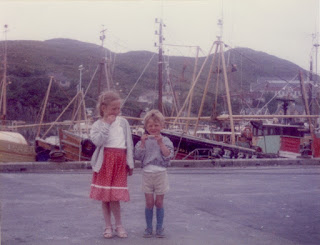 |
| © Kathryn Hannan (nee. Mackenzie) |
I tweeted about the Guardian article last night then today when I checked the blogs I follow I found a really interesting post by Melissa Manon at ArchivesInfo 'Culling Family Photographs'. In her article she makes the very important point
"We really do not need to keep everything. We do not need to be afraid to determine what is unnecessary. We do not need to leave the "dirty work" for our descendants. If we do, eventually someone is likely to get frustrated and just throw the whole kit-and-kaboodle into the trash. Handing down a well-managed collection of personal papers and photographs to loved ones encourages them to treasure the items, keep up their maintenance, AND to value the family history that they embody."
These personal examples I've given really resonated with another point in 'Culling Family Photographs' -
"Label, label, label. If a photo is worth keeping, you should provide its back-story. Use a photo safe pen or pencil to record the name of the person, place, and/or event depicted. If there is a "story" to the image, supply as much as you can of that too." (ArchivesInfo, Culling Family Photographs, March 5 2011).
Her article is full of useful advice about the issues of archiving family photographs, including the very important issue of appraisal i.e. do you keep it or not.
From personal experience I, like Melissa, do take exception to the point made in the Guardian article by Michael Hewitt that in regards to uncertainties over whether something will be of value to future generations "The only answer, therefore, is to hang on to all of it, and let our descendents do the sifting." Having been put in this position I am determined that I am not going to repeat it!
Another thread running through the Guardian article was the issue of digital obsolescence. Michael Hewitt makes the point that -
"we all seem to need something approaching an information technology degree. It's a problem that will become increasingly common as we gradually entrust all our photos and home movies to digital media. Not just because of disk crashes. Format obsolescence won't help either... American Scientist recently dubbed this potential loss of generations' worth of photos and home movies the "digital dark age". We should, it says, all make an effort now to preserve them before it's too late."
There are so many issues encased in the worries over digital obsolescence, not least the fact that it is something which most people don't think about until they have a problem, for example their computer crashes and the files weren't backed up, or the files were only on the memory drive in the camera and the camera was stolen. Also in terms of labelling - ok you might give the photo a title but where do you put the additional information - generally this would be on Facebook, Flickr, Twitpic or whatever other platform is used to share the photographs. This means that the information about the photographs is detached from the photograph files themselves, and even if the files are backed up elsewhere is this metadata about them carried over with them? I know that personally I didn't, until now, think of what happens to all the cataloguing I add to photographs on Flickr - not just places, dates, etc but the URL's that I'll add in to photographs of exhibitions, as just one example. Then there are all the family photographs I haven't put up on Flickr that are just on my laptop and my camera - I should clearly have these backed up somewhere, but how do I add metadata to the photos? I don't know how to do that, I'm sure I could ask an archivist/IT friend but will I ever get round to it - I doubt it. My option is still to print off the most important photos and put them in envelopes. I have albums but as yet still haven't got round to putting any of the photos in them.
It really gave me a warm glow to read this article in the Guardian though - to hear the terms archiving and digital obsolescence, and the concepts of cataloguing and tagging, discussed in such a thoughtful way. Although I know I have a long way to go in terms of properly labelling and preserving my family photographs at least I feel aware of all the issues involved - now all I have to do is act on it and use my professional archiving skills for the benefit of my personal and family life!
Wednesday, 7 April 2010
Initial reflections on 'Archiving the future: mobilizing the past'
There was so much going on at the conference and around the conference that I've struggled to start writing about it, so I'll just start with a short post on my initial reflections on the conference. It was huge - I mean 1500 people at one conference - I've never been to anything like that before! The conference programme was so packed with interesting sounds panels that it was really difficult to choose what ones to go to. As I was there in my professional capacity as an archivist I had to put those panels discussing archives first - not that this was a hardship as I can honestly say that I found all the panels I went to to be interesting (and as regular readers will know, I do happen to love my job, just a bit!). In addition to all the archive-related panels I also managed to squeeze in a bit of personal interest in the form of a panel 'Celebrating Chick Strand through screenings and discussions'.

I stayed in the conference hotel, The Westin Bonaventure, which was a fantastic experience in itself. I'm sure there are lots of huge hotels like that in America but that was the first time I'd ever stayed in one. The map in the conference programme was pretty clear and most of the rooms were close together so I never got lost in the hotel, something that worried me on initial arrival!
Our panel on 'The Cinema Authorship of Lindsay Anderson' went very well - even if I do say so myself. I'll talk more about all these things in later posts. However I just wanted to mention some of my lasting impressions. One thing that worried me a bit was the impression left from a few of the panels I attended that archivists were somehow in the way, that we wanted to block access to material. I know there is that stereotypical image of the 'dusty archive' but I really don't believe that to be applicable to the profession any more. However maybe the fact that this image still persists is something we need to think about. Are we really doing enough to encourage access? Do we worry too much about copyright, legalities etc? My answer to these would be Yes to the first (although of course that's not say it's ok to get complacenet about access) and No to the second (we do afterall, work for whichever institution is paying us and have a responsibility in this sense). However it still made me consider these issues - which can never be a bad thing.
So that's my one gripe/negative impression put to one side now. What about the positive? There were so many! The amazingly varied ways in which researchers use archival material as represented by all the hugely interesting papers I listened to. The sheer number of archives that are out there that I've never heard of - an exciting world of possibilities! The engagement between researchers/academics and archivists (as I said the image of archivists I referred to above seemed to be just that, an image, and not reflective of people's actual experiences, on the whole). The huge potential for crossover between archival work and academic research (this is me speaking in a personal capacity in terms of possibilities for PHD's, further study). The clear passion for their work that was evident in the academics, archivists and researchers at the conference.
I'll get back to more regular posting from now on, after my recent time off, and I'll write more about the various panels I attended, and other exciting things from our travels in America. Other highlights from Los Angeles include a visit to the Margaret Herrick Library and the screening of The Exiles at UCLA. One last thing I have to mention - the Nickel Diner (see business card below) is awesome for breakfast. It was really close to the hotel and did very tasty blueberry pancakes. I never did try the maple bacon donut though - maybe next time!


I stayed in the conference hotel, The Westin Bonaventure, which was a fantastic experience in itself. I'm sure there are lots of huge hotels like that in America but that was the first time I'd ever stayed in one. The map in the conference programme was pretty clear and most of the rooms were close together so I never got lost in the hotel, something that worried me on initial arrival!
Our panel on 'The Cinema Authorship of Lindsay Anderson' went very well - even if I do say so myself. I'll talk more about all these things in later posts. However I just wanted to mention some of my lasting impressions. One thing that worried me a bit was the impression left from a few of the panels I attended that archivists were somehow in the way, that we wanted to block access to material. I know there is that stereotypical image of the 'dusty archive' but I really don't believe that to be applicable to the profession any more. However maybe the fact that this image still persists is something we need to think about. Are we really doing enough to encourage access? Do we worry too much about copyright, legalities etc? My answer to these would be Yes to the first (although of course that's not say it's ok to get complacenet about access) and No to the second (we do afterall, work for whichever institution is paying us and have a responsibility in this sense). However it still made me consider these issues - which can never be a bad thing.
So that's my one gripe/negative impression put to one side now. What about the positive? There were so many! The amazingly varied ways in which researchers use archival material as represented by all the hugely interesting papers I listened to. The sheer number of archives that are out there that I've never heard of - an exciting world of possibilities! The engagement between researchers/academics and archivists (as I said the image of archivists I referred to above seemed to be just that, an image, and not reflective of people's actual experiences, on the whole). The huge potential for crossover between archival work and academic research (this is me speaking in a personal capacity in terms of possibilities for PHD's, further study). The clear passion for their work that was evident in the academics, archivists and researchers at the conference.
I'll get back to more regular posting from now on, after my recent time off, and I'll write more about the various panels I attended, and other exciting things from our travels in America. Other highlights from Los Angeles include a visit to the Margaret Herrick Library and the screening of The Exiles at UCLA. One last thing I have to mention - the Nickel Diner (see business card below) is awesome for breakfast. It was really close to the hotel and did very tasty blueberry pancakes. I never did try the maple bacon donut though - maybe next time!

Sunday, 7 February 2010
Archiving the Future - film archive symposium
Another exciting film archiving training opportunity has just been announced. 'Archiving the future - emerging practices in moving image archiving' is a two-day symposium on 27 and 28 February at York St John University (York, UK) in partnership with the Yorkshire Film Archive. I wish it had been announced sooner, or I had noticed it sooner, as I'd have loved to have gone. Maybe I missed it on the Archives - NRA list but I did receive notice about this event through the AMIA (Association of Moving Image Archivists) mailing list - a good reason for being on as many relevant mailing lists as possible so as not to miss anything! They state that "the event will inform those within the field of archiving about emerging technologies which could affect the future of their work, but also those in production roles of future practices which they may need to adopt as part of their practice." At £20 for the two days this sounds amazing, in fact, I wouldn't be surprised if it's already full up but I thought I would post a notice anyway in case it is of interest to anyone.
More details can be found here
Subscribe to:
Posts (Atom)


