Showing posts with label archive training. Show all posts

Monday, 30 May 2011

We are what we eat? - 'The Edible Archive'

I just got an e-mail through on the Archives NRA list from the Scottish Council on Archives.  As part of the Culture and Diversity 'What's your story?' theme of Archives Awareness 2011 the SCA have decided to create an archival cookbook.  Intrigued? - 


The idea is that the general public, archives users, and archives, will contribute recipes from personal cookbooks and from the archives.  These recipes will be compiled and used to create a cookbook.  Going on the belief that the food we eat reflects who we are, where we've been and where we live, the cookbook will reveal aspects of our family and our national history and culture.  "We're hopeful that The Edible Archive will represent the diversity of the regions, communities and archival collections across Scotland."

I love the idea of compiling a cookbook based on a mixture of contributions from people's personal cookbooks and from archives!  If I looked at the type of food that me and my husband cook then I'm not sure what it says much about our national history and culture as most of the food we cook is Mexican, Pan-Asian or Italian.  Although maybe that's me having far too limited an idea of national culture and history.  Maybe what our cooking says about us is a more general reflection of the internationalism and globalisation of our way of life - the wonderful chances we have to use ingredients from all over the world, to eat out in restaurants from all around the world.  I know for other friends what they cook now often reflects what they grow, or what they can buy that's in season - another reflection of attitudes of the time.  So yes, actually, on reflection I can see that the more thought I put into it the more things I could come up with that show how our cooking represents ideas of national history and culture.  Also there are still many recipes I cook, even if only very occasionally, that remind me of my family for example mince & tatties, scotch pancakes, macaroni cheese, chickpea & tomato curry, Cullen skink - all these have so many associated memories for me that even if I only cook the occasionally they still bring the memories flooding back.

Now I'm just wondering if you have to live in Scotland to participate? Could expats be included?!

The SCA are also planning to have feasts using all the recipes chosen for the cookbook - sounds fantastic!  So if you live in Scotland please get involved!  Whether you work in an archive and have a favourite recipe in a collection, or whether you have a favourite personal recipe, from a cookbook or passed down through the generations, then you can e-mail them to info@scoarch.org.uk (they also ask that if you have any information about the history of the recipe, or an image, then to include that).  

Submissions to be in by 1 July 2011.

Wednesday, 23 February 2011

Fun with statistics

Now, if you'd asked me any time up until this if I could have fun with statistics the answer would have been a very quick and very clear No!  However I've since rediscovered the StatCounter account I set up when I started Archives and Auteurs and I am amazed to find myself idly browsing my blog's statistics.   The reason I remembered about the account was thinking about the work Flickr I recently set up with Zoe Viney for the Wessex Film and Sound Archive.  We couldn't find any way for collecting statistical information through Flickr beyond the basic page views information.  I remembered about StatCounter and surprised myself by remembering my user name and password as well.  It had still been running even though I haven't been logging in but as I hadn't added my new IP addresses (work and home) to the list of addresses not to count then I think my results might be slightly skewed.  So, if anyone else is setting up StatCounter or any similar statistical service then it is always best to block your own computer's IP address so your figures are more accurate, unless your memory is really bad and you want to keep count of your own views of course.


The images I've included below show the breakdown by country of visitors to my blog over the course of last week, then the second one lists in more detail every country that views have come from.  you can narrow this down to city as well.  Other useful things you can check are which pages are the most popular, which websites people are directed to your site from, how long they stay (this can sometimes be a bit painful), and lots of other useful, or useless, information depending on your point of view/general inclination to nosiness.


What I found most useful was information on how people had found my blog - what terms they had searched for or what website they had come from.  This made me think more about the tagging I use on my posts and I have resolved to try and be a bit more thorough in my tagging - treating it more like my actual cataloguing work than I have done in the past.  

I haven't started using it yet for the WFSA Flickr account for two reasons, the first being I thought I would try it first with my Flickr account to see if it worked.  With StatCounter, and I assume it is similar whatever software you use, you have to input the HTML code in to your profile on Flickr then add the web pages to your statistic software account.  I'm find doing this with my own account but I was a bit unsure with the work one - does this give them access to other information on your Flickr account, do they have rights over the statistical data as it is displayed on their account?  These questions are things I would rather investigate more fully before using it for workplace statistics - but for now I'll keep enjoying using it for my own web pages.

Sunday, 7 February 2010

Archiving the Future - film archive symposium

Another exciting film archiving training opportunity has just been announced. 'Archiving the future - emerging practices in moving image archiving' is a two-day symposium on 27 and 28 February at York St John University (York, UK) in partnership with the Yorkshire Film Archive. I wish it had been announced sooner, or I had noticed it sooner, as I'd have loved to have gone. Maybe I missed it on the Archives - NRA list but I did receive notice about this event through the AMIA (Association of Moving Image Archivists) mailing list - a good reason for being on as many relevant mailing lists as possible so as not to miss anything! They state that "the event will inform those within the field of archiving about emerging technologies which could affect the future of their work, but also those in production roles of future practices which they may need to adopt as part of their practice." At £20 for the two days this sounds amazing, in fact, I wouldn't be surprised if it's already full up but I thought I would post a notice anyway in case it is of interest to anyone.

More details can be found here

Wednesday, 13 January 2010

Huntley Film Archives and Skillset course on 'Film Archive Collections: a practical management guide'

Given that the Huntley Film Archive have begun advertising their Spring course on 'Film Archive Collections - a Practical management Guide' I thought it was high time I got round to posting notes on my experience of this course in November 2009. I would highly recommend this course to anyone involved in, or interested in a career in, film archives.
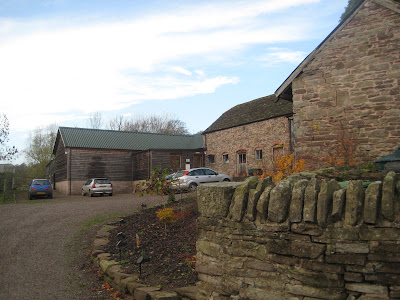
View of the Huntley Film Archive


Huntley Film Archives and Skillset will be holding a five day residential course in the UK on “Film Archive Collections : a practical management guide”


This intensive and very hands on course will help you evaluate, manage and utilise moving image collections to be held on Sunday 18th April to Friday 23rd April 2010

Whether you are looking to develop a career in film archiving, or you’ve got a collection and want to exploit it, this is the course for you.

By the end of the course, you will be able to :

- assess and evaluate archive film and other moving image collections

- learn how to handle all formats and gauges

- develop a preservation plan, address cataloguing issues and copying

- utilise and exploit those collections for the broadcast, education and other creative media

For more information, a full timetable and booking form caroline@huntleyarchives.com

+ 44 (0) 1981 241 580


Working with the Lindsay Anderson Collection has really fuelled and intensified my passion for film (unsurprisingly) and has made me determined to continue my career in the realm of film archives. So in November of last year I jumped at the opportunity to attend a residential training course at the Huntley Film Archives, near Hereford. Entitled 'Film Archives: a practical management guide' the course was absolutely full of useful, practical and interesting education and training. I really couldn't overemphasise how friendly and welcoming Amanda and John Huntley, Caroline Jenkins and the guest tutors were.
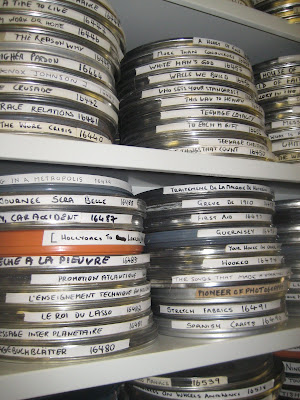


I've been meaning to write about the week for ages now but had a wee bit of a hiatus from the blog in December - partly due to lots of work, but also enjoying being away from a computer over the Christmas holidays! So, I thought this was the perfect time to write about the week at Huntley Film Archives as they are now advertising for their Spring course - which I would recommend to anyone interested in working in the field of audiovisual archives, or indeed to anyone interested in film who would like to gain more of an understanding of the issues of preservation and access.


After an epic train journey from Glasgow to Leamington Spa, then Leamington Spa to Hereford on the Sunday I arrived in Hereford in the dark. I was met at the station by Robert Dewar and, along with two other participants on the course, Rachael and David P, we set off for the Archives. Driving deep into the countryside we pulled up outside a beautiful big house, I couldn't believe that as well as learning about something that I'm passionate about, I was also going to get to spend a week in such lovely surroundings! There were eight of us on the course and the week started with a dinner in the local pub on the Sunday evening - the perfect opportunity for us to get to know each other. There were a variety of reasons people were doing the course, and a range of levels of experience of working with moving image archives.


Monday morning started with a very interesting talk by Amanda Huntley on the history of film and television from it's beginnings right up to the present day. This was followed by a tour of the vault and a discussion of the various gauges and formats used in the film industry. We then got some practical experience in how to identify types of film gauges and tape formats, how to identify nitrate film and how to date films. The afternoon session was taken by Richard Shenton from MACE (Media Archive for Central England) where we looked at the history of sounds and colour in films, as well as having a workshop in how to identify different sounds formats and colour processes. When I first read the timetable and noticed that the archive will be open 7-10 every night I remember thinking - that's a bit much! Indeed we discussed it on the first evening there and the general consensus was we'd be too full of information by the end of the day to go back in the evening. However, guess what, every single night after dinner, we would find ourselves back in the archive, asking more questions and getting more valuable experience of using the Steenbecks. The second day started with a hands-on session of using the Steenbecks - very intimidating but, knowing that we had expert guidance, we all really enjoyed it!


Rachael using a Steenbeck


David S. using a Steenbeck


Me (Kathryn Mackenzie) using a Steenbeck

Tuesday continued with a very useful afternoon class on preservation and restoration. We learned about the dangers of incorrect storage, we saw how films should be stored, and we had a go at removing mould from films. In the evening there was a film show which was great fun, and really interesting. A number of people had brought along films from their archives and Amanda and Robert had some from the Huntley Archive and we had a lovely evening of watching films, chatting and drinking wine!


On Wednesday we looked at film archives from the perspective of the television producer and television researcher. For someone with no experience in a commercial film archives this was all new to me, but all expertly explained by Amanda Huntley and the guest speaker, Steve Humphries. Then Wednesday afternoon was devoted to cataloguing - my favourite job! That isn't sarcasm at all, I really do love cataloguing, it's what I spend most of my time doing. However in cataloguing films, as opposed to film-related records, found that the style of description used and the types of information that are recorded varied significantly from the work that I do. For this reason alone it was a very valuable afternoon, but it was also just a lot of fun to get 'let loose' with real films and get a chance to catalogue.


Thursday morning Amanda Huntley led a very informative session on exploiting your film archive. Although at present i don't work in an archive dealing with films I still found this a useful session and feel that I learnt a lot about the different types of uses of film archives, and the way to get the most out of your archive. Thursday afternoon we got some expert advice from Belinda Harris, a Director of All Rights Clearance. This was pretty eye-opening stuff on the costs of copyright clearance, although the minefield that is copyright law is a familiar issue for archivists in any realm.


Friday was an overview of the week and some very helpful expert advice for each of us on our next step in furthering our careers. All the experts and teachers on the course were so helpful and friendly. The welcome from Amanda Huntley, Robert Dewar and Caroline Jenkins made us all feel instantly comfortable and able to ask questions and the informal evening sessions were of great benefit. Oh, and I couldn't write about the Huntley Film Archive without including a photograph of the Llama's - just one more aspect of the course that made it so enjoyable!